eLiberty Step 1 · Index Extraction
← Back to chapters

Chapter 3 · Aldehydes, Ketones and 157 Carboxylic Acids

12th_chemistry_em_part_2 · v1 · confirmed Source: Chapter8.zip · 7 sections, 97 questions
View JSON ⬇ Export CSV ⬇ Export HTML
69 parser warnings — click to expand
  • [answer-key] 24 consolidated answer-key block(s) matched no MCQ run: 1-10, 11-12, 1-10, 11-20, 21-30, 31-40, 41-50, 51-60, 61-70, 71-80, 81-90, 91-100, 101-110, 111-120, 121-130, 131-140, 141-150, 151-160, 161-170, 171-180, 181-190, 191-200, 201-210, 211-214 — an MCQ run may be missing its answers; see ANSWER-DETECTION.md
  • [vector-figure] rendered 0 group(s) as single images, 2 FAILED (left as-is)
  • Removed noise images: 59 section banners, 55 marks/year/topic badges, 25 note/clarification/puzzle callouts
  • Dropped running headers/banners from content: 1 repeating header pattern(s)
  • [figure] 21 figure(s) detected in the source but NOT assigned to any question: 434.png, 551.png, 552.png, 557.png, 573.png, 586.png, 592.png, 633.png … — a figure was dropped (question OR answer side); do not publish until every figure is attached
  • [section] index section 'Quick Find: Previous Board Questions' (3.6) has no matching region in the chapter — verify its questions were captured
  • [section] index section 'Assertion and Reason MCQs' (3.10) has no matching region in the chapter — verify its questions were captured
  • [section] index section 'True and False Statement Type MCQs' (3.11) has no matching region in the chapter — verify its questions were captured
  • [section] index section 'Previous Year BOARD and GUJCET Exam MCQs' (3.15) has no matching region in the chapter — verify its questions were captured
  • [section] index section 'Previous Year NEET Exam MCQs' (3.16) has no matching region in the chapter — verify its questions were captured
  • [section] index section 'Previous Year JEE-Main Exam MCQs' (3.17) has no matching region in the chapter — verify its questions were captured
  • [section] index section 'Booster MCQs' (3.18) has no matching region in the chapter — verify its questions were captured
  • [section] parsed region 'NCERT Intext Questions and Answers' (8 q) did not reconcile to any index section — unexpected/unlabelled banner
  • Q#55 (Topic-wise Questions and Answers): [layout] item body has 3 'Assertion :' lines — an Assertion-Reason run merged into one item; split per number
  • Q#78 (NCERT Textbook Exercise Questions And Answers): [options-as-answer] answer body is an option list (A/B/C/D) — options mis-routed into the answer; they belong to the question
  • Q#84 (NCERT Textbook Exercise Questions And Answers): [layout] item body has 2 'Assertion :' lines — an Assertion-Reason run merged into one item; split per number
  • Q#85 (NCERT Textbook Exercise Questions And Answers): [layout] item body has 2 'Assertion :' lines — an Assertion-Reason run merged into one item; split per number
  • Q#90 (Multiple Choice Questions (MCQs)): [assertion-reason] Assertion-Reason MCQ has no resolved answer
  • Q#90 (Multiple Choice Questions (MCQs)): [layout] item body has 15 'Assertion :' lines — an Assertion-Reason run merged into one item; split per number
  • Q#90 (MCQ): correct option not detected
  • Q#91 (NCERT Exemplar MCQs): [layout] question body is a consolidated answer key (NUMBER.(LETTER) pairs) — parse it into a number→letter map, not a question
  • Q#91 (MCQ): options + correct option not detected
  • Q#92 (MCQ): options + correct option not detected
  • Q#93 (NCERT Textbook Based MCQs): [layout] question body is a consolidated answer key (NUMBER.(LETTER) pairs) — parse it into a number→letter map, not a question
  • Q#93 (MCQ): options + correct option not detected
  • Q#94 (NCERT Textbook Based MCQs): [layout] question body is a consolidated answer key (NUMBER.(LETTER) pairs) — parse it into a number→letter map, not a question
  • Q#94 (MCQ): options + correct option not detected
  • Q#95 (NCERT Textbook Based MCQs): [layout] question body is a consolidated answer key (NUMBER.(LETTER) pairs) — parse it into a number→letter map, not a question
  • Q#95 (MCQ): options + correct option not detected
  • Q#96 (NCERT Textbook Based MCQs): [layout] question body is a consolidated answer key (NUMBER.(LETTER) pairs) — parse it into a number→letter map, not a question
  • … and 39 more
⚠ 2 MCQ(s) need an answer — review & set the correct option, or log an error
  • Q#90 correct option not detected
  • Q#92 options + correct option not detected
S src: Topic-wise Questions and Answers match 61% type: 61 Q ⤓ Export ZIP
#1 SUB 3M 🖼 4

Question

What is carbonyl group? Give information about the functional groups containing carbonyl group with their structures.

Answer

Carbonyl group: The organic compounds in which carbon-oxygen double bond (>C=O) containing functional group is present is called Carbonyl compounds and >C=O group is known as Carbonyl group.
Functional groups containing carbonyl group :
  • Aldehydes and ketones: In aldehydes, the carbonyl group is bonded to a carbon and hydrogen while in the ketone, it is bonded to two carbon atoms.
Carboxylic acids: The carbonyl compounds in which carbon of carbonyl group is bonded to carbon or hydrogen and oxygen of hydroxyl moiety (–OH) are known as carboxylic acid.
Amides and acyl halides: The carbonyl compounds in which carbon of carbonyl group is bonded to carbon or hydrogen and nitrogen of –NH2 moiety or to halogen are called amides and acyl halides respectively.
Esters and anhydrides: The compounds in which carbonyl carbon is bonded to a carbon or hydrogen and oxygen of alkoxy moiety (–OR’) and carbon of acyl moiety (–COR’) are known as esters and anhydrides respectively.
#2 SUB 2M

Question

Give importance of aldehydes, ketones and carboxylic acids.

Answer

Aldehydes, ketones and carboxylic acids are widespread in plants and animal kingdom.
They play an important role in biochemical process of life.
They add fragrance and flavour to nature, for example, vanillin (from vanilla beans), salicylaldehyde (from madow sweet) and cinnamaldehyde (from cinnamon) have very pleasant fragrance.
They are used in many food products and pharmaceuticals to add flavours.
Some of these families are manufactured for use as solvents (i.e. acetone) and for preparing materials like adhesives, paints, resins, perfumes, plastics, fabrics, etc.
#3 SUB 1M 🖼 8

Question

Write common names of following compounds.
(i) CH3CHO
(ii)
(iii)
(iv) (v)
(vi)
(vii)
(viii)
(ix) CH2 = CHCHO
(x) (xi) (CH3)2CHCHO
(xii) (CH3)2CHCOCH(CH3)2
(xiii)
(xiv) (CH3)2C=CHCOCH3

Answer

(i) Acetaldehyde
(ii) Benzaldehyde
(iii) b-Bromobutyraldehyde
(iv) Acetone
(v) Acetophenone
(vi) Propiophenone
(vii) Benzophenone
(viii) γ-Methylcyclohexanecarbaldehyde
(ix) Acrolein
(x) Phthaldehyde
(xi) Isobutyraldehyde
(xii) Diisopropyl ketone
(xiii) a-Methylcyclohexanone
(xiv) Mesityl oxide
#4 SUB 3M 🖼 2

Question

Discuss structure of the carbonyl group.

Answer

The carbonyl carbon atom is sp2-hybridised and forms three sigma (s) bonds.
The fourth valence electron of carbon remains in its p-orbital and forms a p-bond with oxygen by overlap with p-orbital of an oxygen.
In addition, the oxygen atom also has two non bonding electron pairs. Thus, the carbonyl carbon and the three atoms attached to it lie in the same plane and the p-electron cloud is above and below this plane.
The bond angles are approximately 120° as expected of a trigonal coplanar structure (Fig.).
The carbon-oxygen double bond is polarised due to higher electronegativity of oxygen relative to carbon. Hence, the carbonyl carbon is an electrophilic (Lewis acid), and carbonyl oxygen, a nucleophilic (Lewis base) centre. Carbonyl compounds have significant dipole moments and are polar than ethers. The high polarity of the carbonyl group is explained on the basis of resonance involving neutral (A) and a dipolar (B) structures as shown.

#5 SUB 2M 🖼 4

Question

Explain the preparation of aldehydes and ketones by oxidation of alcohols with suitable examples.

Answer

RCH2OH RCHO
A better reagent for oxidation of primary alcohols to aldehydes in good yield is pyridinium chlorochromate (PCC), a complex of chromium trioxide with pyridine and HCI.
CH3 – CH = CH – CH2OH
CH3 – CH = CH – CHO
Secondary alcohols are oxidised to ketones by chromic anhydride (CrO3)
#6 SUB 2M 🖼 3

Question

Explain the preparation of aldehydes and ketones by dehydrogenation of alcohols with suitable examples.

Answer

When the vapours of a primary or a secondary alcohol are passed over heated copper at 573 K, dehydrogenation takes place and an aldehyde or a ketone is formed.
#7 SUB 2M 🖼 1

Question

Explain the preparation of aldehydes and ketones by ozonolysis of alkenes with suitable example.

Answer

Ozonolysis: Ozonolysis of alkenes involves the addition of ozone molecule to alkene to form ozonide by Zn-H2O to smaller molecules. This reaction is highly useful in detecting the position of the double bond in alkenes or other unsaturated compounds.
#8 SUB 2M 🖼 2

Question

Explain the preparation of aldehydes and ketones by hydration of alkynes with suitable example.

Answer

Like alkanes and alkenes, alkynes are also immiscible and do not react with water. However, one molecule of water adds to alkynes on warming with mercuric sulphate and dilute sulphuric acid at 333 K to form carbonyl compounds.
#9 SUB 2M 🖼 1

Question

Explain Rosenmund reduction in brief.

Answer

Acyl chloride (acid chloride) is hydrogenated over catalyst palladium on barium sulphate. This reaction is called Rosenmund reduction.
#10 SUB 2M 🖼 2

Question

Explain Stephen reaction in brief.

Answer

Nitriles are reduced to corresponding imine with stannous chloride in the presence of hydrochloric acid, which on hydrolysis give corresponding aldehyde.
RCN + SnCl2 + HCl RCH=NH RCHO
This reaction is called Stephen reaction.
#11 SUB 2M 🖼 2

Question

Explain the reduction of nitriles and esters by diisobutylaluminium hydride (DIBAL-H) with suitable example.

Answer

Nitriles are selectively reduced by diisobutylaluminium hydride, (DIBAL-H) to imines followed by hydrolysis to aldehydes:
CH3–CH=CH–CH2CH2–CHO
Similarly, esters are also reduced to aldehydes with DIBAL-H.
#12 SUB 4M 🖼 6

Question

Explain with chemical equations, various methods for the preparation of benzaldehyde by oxidation of methylbenzene.
OR
Explain the preparation of benzaldehyde by Etard and Gatterman-Koch reaction.

Answer

(a) Use of chromyl chloride (CrO2Cl2): Chromyl chloride oxidises methyl group to a chromium complex, which on hydrolysis gives corresponding benzaldehyde.
This reaction is called Etard reaction.
(b) Use of chromic oxide (CrO3): Toluene or substituted toluene is converted to benzylidene diacetate on treating with chromic oxide in acetic anhydride. The benzylidene diacetate can be hydrolysed to corresponding benzaldehyde with aqueous acid.
By side chain chlorination followed by hydrolysis: Side chain chlorination of toluene gives benzal chloride, which on hydrolysis gives benzaldehyde. This is a commercial method of manufacture of benzaldehyde.

By Gatterman - Koch reaction: When benzene or its derivative is treated with carbon monoxide and hydrogen chloride in the presence of anhydrous aluminium chloride or cuprous chloride, it gives benzaldehyde or substituted benzaldehyde.
#13 SUB 2M 🖼 1

Question

Explain the preparation of ketones from acyl chlorides.

Answer

Treatment of acyl chlorides with dialkylcadmium, prepared by the reaction of cadmium chloride with Grignard reagent, gives ketones.
#14 SUB 2M 🖼 1

Question

Explain the preparation of ketones from nitriles.

Answer

Treating a nitrile with Grignard reagent followed by hydrolysis yields a ketone.
#15 SUB 2M 🖼 1

Question

Explain the preparation of ketone from benzene or substituted benzenes.

Answer

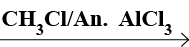
When benzene or substituted benzene is treated with acid chloride in the presence of anhydrous aluminium chloride, it affords the corresponding ketone. This reaction is known as Friedel-Crafts acylation reaction.
#16 SUB 2M

Question

Discuss the physical properties of aldehydes and ketones in term of their boiling point.

Answer

Methanal is gas at room temperature.
Ethanal is a volatile liquid.
Other aldehydes and ketones are liquid or solid at room temperature.
The boiling points of aldehydes and ketones are higher than hydrocarbons and ethers of comparable molecular masses.
It is due to weak molecular association in aldehydes and ketones arising out of the dipole-dipole interaction.
Also, their boiling points are lower than those of alcohols of similar molecular masses due to absence of intermolecular hydrogen bonding.
Hence, the order of boiling point of the organic compounds with similar molecular masses is: Hydrocarbons < Ether < Aldehyde or Ketone < Alcohol < Carboxylic acid
#17 SUB 2M 🖼 1

Question

Write a note on solubility of aldehydes and ketones.

Answer

The lower members of aldehydes and ketones such as methanal, ethanal and propanone are miscible with water in all proportion, because they form hydrogen bond with water.
However, the solubility of aldehydes and ketones decreases rapidly on increasing the length of alkyl chain. All aldehydes and ketones are fairly soluble in organic solvents like benzene, ether, methanol, chloroform, etc. The lower aldehydes have sharp pungent odours.
#18 SUB 3M 🖼 1

Question

Explain mechanism of nucleophilic addition reaction of aldehydes and ketones with figure.

Answer

A nucleophile attacks the electrophilic carbon atom of the polar carbonyl group from a direction approximately perpendicular to the plane of
sp2 hybridised orbitals of carbonyl carbon (Fig.).
The hybridization of carbon changes from
sp2 to sp3 in this process, and a tetrahedral alkoxide intermediate is produced. This intermediate captures a proton from the reaction medium to give the electrically neutral product. The net result is addition of Nu and H+ across the carbon oxygen double bond as shown in Fig.
#19 SUB 2M

Question

Discuss the reactivity of aldehydes and ketones towards the nucleophilic addition reaction.

Answer

Aldehydes are generally more reactive than ketones in nucleophilic addition reactions due to steric and electronic reasons. Sterically, the presence of two relatively large substituents in ketones hinders the approach of nucleophile to carbonyl carbon than in aldehydes having only one such substituent. Electronically, aldehydes are more reactive than ketones because two alkyl groups reduce the electrophilicity of the carbonyl more effectively than in former.
#20 SUB 3M 🖼 3

Question

Explain nucleophilic addition reaction of aldehydes and ketones with hydrogen cyanide (HCN).

Answer

Aldehydes and ketones react with hydrogen cyanide (HCN) to yield cyanohydrins.
This reaction occurs very slowly with pure HCN.
Therefore, it is catalysed by a base and generated cyanide ion (CN ) being a stonger nucleophile readily adds to carbonyl compounds to yield corresponding cyanohydrin.
Cyanohydrins are useful synthetic intermediates.
Examples:
(1)
(2)
#21 SUB 2M 🖼 2

Question

Explain nucleophilic addition reaction of aldehydes and ketones with sodium hydrogensulphite (NaHSO3).
OR
Explain the nucleophilic addition reaction which is useful for separation and purification of aldehydes.

Answer

Addition of sodium hydrogensulphite: Sodium hydrogensulphite adds to aldehydes and ketones to form the addition products.
(1)
(2)
The position of the equilibrium lies largely to the right hand side for most aldehydes and to the left for most ketones due to steric reasons.
The hydrogensulphite addition compound is water soluble and can be converted back to the original carbonyl compound by treating it with dilute mineral acid or alkali.
Therefore, these are useful for separation and purification of aldehydes.
#22 SUB 4M 🖼 2

Question

Explain with equations, the nucleophilic addition reaction of aldehydes and ketones with Grignard’s reagent (R’-Mg-X).
OR
Write only equations to obtain 1°, 2° and 3° alcohols from aldehydes and ketones.

Answer

Alcohols are produced by the reaction of Grignard reagents with aldehydes and ketones.
The first step of the reaction is the nucleophilic addition of Grignard reagent to the carbonyl group to form an adduct. Hydrolysis of the adduct yields and alcohol.
The overall reactions using different aldehydes and ketones are as follows:
You will notice that the reaction produces a primary alcohol with methanal, a secondary alcohol with other aldehydes and tertiary alcohol with ketones.
#23 SUB 4M 🖼 1

Question

Explain with equations, the nucleophilic addition reaction of aldehydes and ketones with alcohols. And also explain that why this reaction is carried out in the presence of dry hydrogen chloride?

Answer

Addition of alcohols: Aldehydes react with one equivalent of monohydric alcohol in the presence of dry hydrogen chloride to yield alkoxyalcohol intermediate, known as hemiacetals, which further react with one more molecule of alcohol to give a gem-dialkoxy compound known as acetal as shown in the reaction.
Ketones react with ethylene glycol under similar conditions to form cyclic products known as ethylene glycol ketals.
Dry hydrogen chloride protonates the oxygen of the carbonyl compounds and therefore, increases the electrophilicity of the carbonyl carbon facilitating the nucleophilic attack of ethylene glycol. Acetals and ketals are hydrolysed with aqueous mineral acids to yield corresponding aldehydes and ketones respectively.
#24 SUB

Question

Write detailed note on the addition reaction of aldehydes and ketones with ammonia derivatives .

Answer

Addition of ammonia and its derivatives: Nucleophiles, such as ammonia and its  derivatives H2N–Z add to the carbonyl group of aldehydes and ketones. The reaction is reversible and catalysed by acid.
The equilibrium favours the product formation due to rapid dehydration of the intermediate to form >C=N–Z.

Z

Reagent name

Carbonyl derivative

Product name

–H

Ammonia

Imine

–R

Amine

Substituted imine (Schiff’s base)

–OH

Hydroxylamine

Oxime

–NH2

Hydrazine

Hydrazone

Phenylhydrazine

Phenylhydrazone

2,4-Dinitrophenyl-

hydrazine

2,4 Dinitrophenyl-

hydrazone

Semicarbazide

Semicarbazone

#25 SUB 2M 🖼 4

Question

Explain with equations, the reaction to obtain alcohols by reduction of aldehydes and ketones.

Answer

Aldehydes and ketones are reduced to primary and secondary alcohols respectively by sodium borohydride (NaBH4) or lithium aluminium hydride (LiAlH4) as well as by catalytic hydrogenation.
RCHO + H2 RCH2OH
Examples:
CH3CHO + H2 CH3CH2OH
Ethanal Ethannol
#26 SUB 2M 🖼 4

Question

Explain with equations, the reactions to obtain hydrocarbons by reduction of aldehydes and ketones.
OR
Write a note on Clemmensen and Wolff-Kishner reduction.

Answer

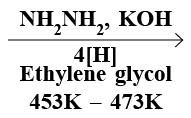
Reduction to hydrocarbons: The carbonyl group of aldehydes and ketones is reduced to CH2 group when treated with zinc amalgam and concentrated hydrochloric acid [Clemmensen reduction] or with hydrazine followed by heating with sodium or potassium hydroxide in high boiling solvent such as ethylene glycol (Wolff-Kishner reduction).
Examples:
Examples:
#27 SUB 2M 🖼 1

Question

Explain oxidation of aldehydes and ketones.

Answer

Aldehydes differ from ketones in their oxidation reactions. Aldehydes are easily oxidised to carboxylic acids on treatment with common oxidising agents like nitric acid, potassium permanganate, potassium dichromate, etc. Even mild oxidising agents, mainly Tollens’ reagent and Fehlings’ reagent also oxidise aldehydes.
R – CHO R–COOH
Ketones are generally oxidised under vigorous conditions, i.e., strong oxidising agents and at elevated temperatures. Their oxidation involves carbon-carbon bond cleavage to afford a mixture of carboxylic acids having lesser number of carbon atoms than the parent ketone.
#28 SUB 2M

Question

Explain the Tollens’ test to distinguish aldehydes from ketones with equation.
OR
Write a note on silver mirror test.

Answer

Tollens’ test: On warming an aldehyde with freshly prepared ammoniacal silver nitrate solution (Tollens’ reagent), a bright silver mirror is produced due to the formation of silver metal. The aldehydes are oxidised to corresponding carboxylate anion. The reaction occurs in alkaline medium.
RCHO + 2[Ag(NH3)2]+ + 3OH RCOO+ 2Ag + 2H2O + 4NH3
#29 SUB 2M

Question

Explain the Fehling’s test to distinguish aldehydes from ketones with equation.

Answer

Fehling’s test: Fehling reagent comprises of two solutions, Fehling solution A and Fehling solution B. Fehling solution A is aqueous copper sulphate and Fehling solution B is alkaline sodium potassium tartrate (Rochelle salt). These two solutions are mixed in equal amounts before test. On heating an aldehyde with Fehling’s reagent, a reddish brown precipitate is obtained. Aldehydes are oxidised to corresponding carboxylate anion. Aromatic aldehydes do not respond to this test.
R – CHO + 2Cu2+ + 5OH RCOO+ Cu2O + 3H2O Red-brown ppt
#30 SUB 3M 🖼 2

Question

Discuss in details the oxidation of methyl ketones by haloform reaction. And also mention that for detection of which type of group this reaction is useful?

Answer

Aldehydes and ketones having at least one methyl group linked to the carbonyl carbon atom (methyl ketones) are oxidised by sodium hypohalite to sodium salt of corresponding carboxylic acid having one carbon atom less than that of carbonyl compound.
The methyl group is converted to haloform.
This oxidation does not affect a carbon-carbon double bond, if present in the molecule.
Iodoform reaction with sodium hypoiodite is also used for detection of CH3CO group or CH3CH(OH) group which produces CH3CO group on oxidation.
#31 SN 3M 🖼 1

Question

Explain aldol condensation with suitable example.
OR
Write a short note: Aldol condensation.

Answer

Aldol condensation: Aldehydes and ketones having at least one a-hydrogen undergo a reaction in the presence of dilute alkali as catalyst to form b-hydroxy aldehydes (aldol) or b-hydroxy ketones (ketol), respectively. This is known as Aldol reaction.
The name aldol is derived from the names of the two functional groups, aldehyde and alcohol, present in the products. The aldol and ketol readily lose water to give a, b-unsaturated carbonyl compounds which are aldol condensation products and the reaction is called Aldol condensation. Though ketones give ketols (compounds containing a keto and alcohol groups), the general name aldol condensation still applies to the reactions of ketones due to their similarity with aldehydes.
#32 SN 4M 🖼 2

Question

Explain Cross aldol condensation with suitable example.
OR
Write a short note: Cross aldol condensation.

Answer

Cross aldol condensation: “When aldol condensation is carried out between two different aldehydes and / or ketones, it is called cross aldol condensation.” If both of them contain a-hydrogen atoms, it gives a mixture of four products. This is illustrated below by aldol reaction of a mixture of ethanal and propanal.
Ketones can also be used as one component in the cross aldol reactions.
#33 SUB 2M 🖼 1

Question

Write a note on Cannizzaro reaction.

Answer

Cannizzaro reaction: Aldehydes which do not have an a-hydrogen atom, undergo self oxidation and reduction (disproportionation) reaction on treatment with concentrated alkali. In this reaction, one molecule of the aldehyde is reduced to alcohol while another is oxidised to carboxylic acid salt.
#34 SUB 2M

Question

Explain the electrophilic substitution reaction of benzaldehyde with suitable example.

Answer

Electrophilic substitution reaction: Aromatic aldehydes and ketones undergo electrophilic substitution at the ring in which the carbonyl group acts as a deactivating and meta-directing group.
#35 SUB 3M

Question

Give Uses of aldehydes and ketones

Answer

In chemical industry aldehydes and ketones are used as solvents, starting materials and reagents for the synthesis of other products.
Formaldehyde is well known as formalin (40%) solution used to preserve biological specimens and to prepare bakelite (a phenol-formaldehyde resin), urea-formaldehyde glues and other polymeric products.
Acetaldehyde is used primarily as a starting material in the manufacture of acetic acid, ethyl acetate, vinyl acetate, polymers and drugs.
Benzaldehyde is used in perfumery and in dye industries. Acetone and ethyl methyl ketone are common industrial solvents. Many aldehydes and ketones, e.g., butyraldehyde, vanillin, acetophenone, camphor, etc. are well known for their odours and flavours.
#36 SUB 2M

Question

Give examples of the common names of carboxylic acid which are derived from Latin or Greek names of their natural sources.

Answer

Following are examples of the common names of carboxylic acid which are derived from Latin or Greek names of their natural sources.
Formic acid (HCOOH) was first obtained from red ants (Latin: formica, means ant).
Acetic acid (CH3COOH) was first synthesized from vinegar (Latin: acetum, means vinegar).
Butyric acid (CH3CH2CH2COOH) was first obtained from rancid butter (Latin: butyrum, means butter)
#37 SUB 1M 🖼 2 ▦ 1

Question

Write the IUPAC names of the following compounds:
(i) CH3CH2COOH
(ii) (CH3)2CHCOOH
(iii) HOOC–COOH
(iv) HOOC–CH2–COOH
(v) HOOC–(CH2)2–COOH
(vi) HOOC–(CH2)4–COOH
(vii) HOOC–(CH2)4–COOH
(viii) HOOC–CH2–CH(COOH)–CH2–COOH
(ix)
(x)

Answer

No.

Structure

IUPAC name

Common name

(i)

CH3CH2COOH

Propanoic acid

Propionic acid

(ii)

(CH3)2CHCOOH

2-Methyl-

propanoic acid

Isobutyric acid

(iii)

HOOC–COOH

Ethanedioic acid

Oxalic acid

(iv)

HOOC–CH2

–COOH

Propanedioic acid

Malonic acid

(v)

HOOC–(CH2)2

– COOH

Butanedioic acid

Succinic acid

(vi)

HOOC–(CH2)3

–COOH

Pentanedioic acid

Glutaric acid

(vii)

HOOC–(CH2)4

–COOH

Hexanedioic acid

Adipic acid

(viii)

HOOC–CH2

–CH(COOH)

–CH2–COOH

Propane-1, 2,

3-tricarboxylic acid

Tricarballylic acid OR

carballylic acid

(ix)

Benzene-1,2-dicarboxylic acid

Phthalic acid

(x)

2-Phenyl-

ethanoic acid

Phenylacetic acid

#38 SUB 2M 🖼 1

Question

Discuss the structure of carboxyl group.

Answer

In carboxylic acids, the bonds to the carboxyl carbon lie in one plane and are separated by about 120°. The carboxylic carbon is less electrophilic than carbonyl carbon because of the possible resonance structure shown below:
#39 SUB 2M 🖼 1

Question

Explain the preparation of carboxylic acid from primary alcohols.

Answer

Primary alcohols are readily oxidised to carboxylic acids with common oxidising agents such as potassium permanganate (KMnO4) in neutral, acidic or alkaline media or by potassium dichromate (K2Cr2O7) and chromium trioxide (CrO3) in acidic media.
#40 SUB 2M 🖼 1

Question

Explain the preparation of carboxylic acid from alkylbenzenes with necessary equations.

Answer

Aromatic carboxylic acids can be prepared by vigorous oxidation of alkyl benzenes with chromic acid or acidic or alkaline potassium permanganate. The entire side chain is oxidised to the carboxyl group irrespective of length of the side chain. Primary and secondary alkyl groups are oxidised in this manner while tertiary group is not affected. Suitably substituted alkenes are also oxidised to carboxylic acids with these oxidising reagents.
#41 SUB 2M 🖼 2

Question

Explain the preparation of carboxylic acid from nitriles and amides with necessary equations.

Answer

Nitriles are hydrolysed to amides and then to acids in the presence of H+ or OH as catalyst. Mild reaction conditions are used to stop the reaction at the amide stage.
#42 SUB 2M

Question

Explain the preparation of carboxylic acid from Grignard reagents with necessary equations.

Answer

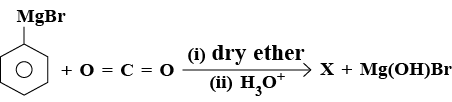
Grignard reagents react with carbon dioxide (dry ice) to form salts of carboxylic acids which in turn give corresponding carboxylic acids after acidification with mineral acid.
Ex.:
#43 SUB 2M 🖼 1

Question

Explain the preparation of carboxylic acid from acyl halides and anhydrides with necessary equations.

Answer

Acid chlorides when hydrolysed with water give carboxylic acids or more readily hydrolysed with aqueous base to give carboxylate ions which on acidification provide corresponding carboxylic acids. Anhydrides on the other hand are hydrolysed to corresponding acid(s) with water.
#44 SUB 2M 🖼 1

Question

Explain the preparation of carboxylic acid from esters with necessary equations.

Answer

Acidic hydrolysis of esters gives directly carboxylic acids while basic hydrolysis gives carboxylates, which on acidification give corresponding carboxylic acids.
#45 SUB 2M 🖼 1

Question

Discuss the physical properties of carboxylic acids in terms of their physical state and boiling point.

Answer

Aliphatic carboxylic acids upto nine carbon atoms are colourless liquids at room temperature with unpleasant odours.
The higher acids are wax like solids and are practically odourless due to their low volatility.
Carboxylic acids are higher boiling liquids than aldehydes, ketones and even alcohols of comparable molecular masses.
This is due to more extensive association of carboxylic acid molecules through intermolecular hydrogen bonding. The hydrogen bonds are not broken completely even in the vapour phase. In fact, most carboxylic acids exist as dimer in the vapour phase or in the aprotic solvents.
#46 SUB 2M 🖼 1

Question

Write a note on solubility of carboxylic acids.

Answer

Simple aliphatic carboxylic acids having upto four carbon atoms are miscible in water due to the formation of hydrogen bonds with water.
The solubility decreases with increasing number of carbon atoms. Higher carboxylic acids are practically insoluble in water due to the increased hydrophobic interaction of hydrocarbon part. Benzoic acid, the simplest aromatic carboxylic acid is nearly insoluble in cold water.
Carboxylic acids are also soluble in less polar organic solvents like benzene, ether, alcohol, chloroform, etc.
#47 SUB 2M 🖼 3

Question

Explain reaction of carboxylic acids with metals and alkalies.
OR
Write the equations for the reactions showing that carboxylic acids are acidic in nature and state the usefulness of this reactions.

Answer

The carboxylic acids like alcohols evolve hydrogen with electropositive metals and form salts with alkalies similar to phenols. However, unlike phenols they react with weaker bases such as carbonates and hydrogencarbonates to evolve carbon dioxide. This reaction is used to detect the presence of carboxyl group in an organic compound.
2R–COOH + 2Na 2R – CONa+ + H2
Sodium carboxylate
R–COOH + NaOH R–CONa+ + H2O
R–COOH + NaHCO3 R–CONa+ + H2O + CO2
#48 SUB 3M 🖼 2

Question

Give reason: carboxylic acids are more acidic than alcohols and phenols.
OR
Although phenoxide ion has more number of resonating structures than carboxylate ion, carboxylic acid is a stronger acid than phenol. Why?

Answer

Carboxylic acids dissociate in water to give resonance stabilised carboxylate anions and hydronium ion.
Phenols dissociate in water to give resonance stabilized phenoxide anions and hydronium ion.
The conjugate base of carboxylic acid, a carboxylate ion, is stabilised by two equivalent resonance structures in which the negative charge is at the more electronegative oxygen atom.
The conjugate base of phenol, a phenoxide ion, has non-equivalent resonance structures in which the negative charge is at the less electronegative carbon atom.
Therefore, resonance in phenoxide ion is not as important as it is in carboxylate ion. Further, the negative charge is delocalised over two electronegative oxygen atoms in carboxylate ion whereas it is less effectively delocalised over one oxygen atom and less electronegative carbon atoms in phenoxide ion.
Thus, the carboxylate ion is more stabilised than phenoxide ion, so carboxylic acids are more acidic than phenols.
#49 SUB 4M 🖼 3

Question

Explain the effect of substituents on the acidity of carboxylic acids.

Answer

Substituents may affect the stability of the conjugate base and thus, also affect the acidity of the carboxylic acids. Electron withdrawing groups increase the acidity of carboxylic acids by stabilising the conjugate base through delocalisation of the negative charge by inductive and/or resonance effects. Conversely, electron donating groups decrease the acidity by destabilising the conjugate base.
The effect of the following groups in increasing acidity order is
Ph < I < Br < Cl < F < CN < NO2 < CF3.
Thus, the following acids are arranged in order of decreasing acidity (based on pKa values):
CF3COOH > CCl3COOH > CHCl2COOH > NO2CH2COOH > NC–CH2COOH >
FCH2COOH > ClCH2COOH > BrCH2COOH > HCOOH > ClCH2CH2COOH >
[Continue]
C6H5COOH > C6H5CH2COOH > CH3COOH > CH3CH2COOH
[Continue]
Direct attachment of groups such as phenyl or vinyl to the carboxylic acid, increases the acidity of corresponding carboxylic acid, contrary to the decrease expected due to resonance effect shown below:
This is because of greater electronegativity of sp2 hybridised carbon to which carboxyl carbon is attached. The presence of electron withdrawing group on the phenyl of aromatic carboxylic acid increases their acidity while electron donating groups decrease their acidity.
#50 SUB 3M 🖼 2

Question

Explain with chemical reactions, the formation of anhydrides and esters from carboxylic acids.

Answer

Carboxylic acids on heating with mineral acids such as H2SO4 or with P2O5 give corresponding anhydride.
Carboxylic acids are esterified with alcohols or phenols in the presence of a mineral acid such as concentrated H2SO4 or HCl gas as a catalyst.
RCOOH + ROH RCOOR + H2O
#51 SUB 2M

Question

Explain with chemical reactions, the formation of acyl chlorides from carboxylic acids.
OR
Write a note on reaction of carboxylic acids with PCl3, PCl5 and SOCl2.

Answer

The hydroxyl group of carboxylic acids, behaves like that of alcohols and is easily replaced by chlorine atom on treating with PCl5, PCl3 or SOCl2. Thionyl chloride (SOCl2) is preferred because the other two products are gaseous and escape the reaction mixture making the purification of the products easier.
RCOOH + PCl5 RCOCl + POCl3 + HCl
3RCOOH + PCl3 3RCOCl + H3PO3
RCOOH + SOCl2 RCOCl + SO2 + HCl
#52 SUB 3M 🖼 3

Question

Explain with chemical reactions, the reaction of carboxylic acids with ammonia.

Answer

Carboxylic acids react with ammonia to give ammonium salt which on further heating at high temperature give amides. For example:
#53 SUB 2M 🖼 2

Question

Explain reduction reaction of carboxylic acids.

Answer

Carboxylic acids are reduced to primary alcohols by lithium aluminium hydride or better with diborane. Diborane does not easily reduce functional groups such as ester, nitro, halo, etc. Sodium borohydride does not reduce the carboxyl group.
R–COOH R–CH2OH
e.g.:
#54 SUB 2M 🖼 2

Question

Explain decarboxylation reaction of carboxylic acids.

Answer

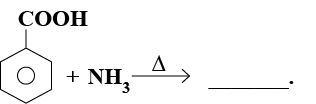
Carboxylic acids lose carbon dioxide to form hydrocarbons when their sodium salts are heated with sodalime (NaOH and CaO in the ratio of 3: 1). The reaction is known as decarboxylation.
R–COONa R–H + Na2CO3
#55 SUB 2M 🖼 2

Question

Explain Hell-Volhard-Zelinsky reaction of carboxylic acids.

Answer

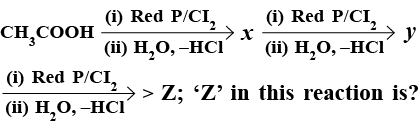
Carboxylic acids having an a-hydrogen are halogenated at the a-position on treatment with chlorine or bromine in the presence of small amount of red phosphorus to give a-halocarboxylic acids. The reaction is known as Hell-Volhard-Zelinsky reaction.
R–CH2–COOH
#56 SUB 2M 🖼 1

Question

Explain electrophilic substitution (ring substitution) reactions of aromatic carboxylic acid. Why aromatic carboxylic acids do not undergo Friedel-crafts reaction?

Answer

Aromatic carboxylic acids undergo electrophilic substitution reactions in which the carboxyl group acts as a deactivating and meta-directing group. They however, do not undergo Friedel-Crafts reaction (because the carboxyl group is deactivating and the catalyst aluminium chloride (Lewis acid) gets bonded to the carboxyl group).
#57 SUB 3M 🖼 3

Question

Complete the following reaction.
(i) C6H5 COOH + SOCl2
(ii)
(iii) CH3CH2COOH + NH3

Answer

(i) C6H5 COCl + SO2 + HCl
(ii)
(iii) CH3 CH2 CONH2
#58 SUB 3M 🖼 1

Question

Write chemical reactions to affect the following transformations.
(i) Butanal to butanoic acid
(ii) Acetone to propane
(iii) Benzaldehyde to m-nitro benzaldehyde

Answer

#59 SUB 3M 🖼 1

Question

Write reactions to obtain acetic acid from ethanenitrile, acetyl chloride and ethyl ethonoate.

Answer

#60 SUB 3M 🖼 2

Question

State the reaction equation to prepared benzoic acid from the following compounds.
(i) Ethyl benzene (ii) Benzoic anhydride
(iii)
Benzamide

Answer

(i) Ethyl benzene
(ii) Benzoic anhydride
(iii) Benzamide
#61 SUB 4M 🖼 5

Question

An organic compound with the molecular formula C8H8O forms 2, 4 - DNP derivative, reduce Tollen's reagent and undergoes cannizzaro reaction. On vigorous oxidation it gives 1, 4 benzene di-carboxylic acid. Identify the compound and write the equation for the reactions involved.

Answer

Organic compound is
(i)
(ii)
(iii)
(iv)
Class 12 Chemistry (Part 2) 012
S match 54% type: 8 Q ⤓ Export ZIP
#62 SUB 1M 🖼 6

Question

Write the structures of the following compounds.
(i) a-Methoxypropionaldehyde
(ii) 3-Hydroxybutanal
(iii) 2-Hydroxycyclopentane carbaldehyde
(iv) 4-Oxopentanal
(v) Di-sec. butyl ketone
(vi) 4-Fluoroacetophenone

Answer

(i)
(ii)
(iii)
(iv)
(v)
(vi)
#63 SUB 🖼 7

Question

Write the structures of products of the following reactions.
(i)
(ii) (C6H5CH2)2 Cd + 2 CH3COCl
(iii) H3C – C C – H
(iv)

Answer

(i) (ii)
(iii) (iv)
#64 SUB

Question

Arrange the following compounds in increasing order of their boiling points.
CH3CHO, CH3CH2OH, CH3OCH3, CH3CH2CH3

Answer

Increasing order of boiling point: CH3CH2CH3 < CH3–O–CH3 < CH3CHO < CH3CH2OH
All these given compounds possess similar molecular masses. Since only ethanol molecules are associated due to extensive intermolecular hydrogen bonding, therefore, the boiling point of ethanol would be the highest. CH3CHO is more polar than CH3-O-CH3. Therefore, the intermolecular dipole-dipole attraction is stronger in the former. Propane molecules have only weak van der Waals forces. Hence increasing order of boiling points of the given compounds is as follows: CH3CH2CH3
< CH3-O-CH3 < CH3CHO < CH3CH2OH
#65 SUB 1M

Question

Arrange the following compounds in increasing order of their reactivity in nucleophilic addition reactions.
(i) Ethanal, Propanal, Propanone, Butanone
(ii) Benzaldehyde, p-Tolualdehyde, p-Nitrobenzaldehyde, Acetophenone.

Answer

(i) Butanone < Propanone < Propanal < Ethanal
(ii) Acetophenone < p-Tolualdehyde < Benzaldehyde < p-Nitrobenzaldehyde
#66 SUB 1M 🖼 7

Question

Predict the products of the following reactions :
(i)
(ii)
(iii)
(iv)

Answer

(i) (ii)
(iii)
(iv)
#67 SUB 🖼 2

Question

Give the IUPAC names of the following compounds:
(i) Ph CH2CH2COOH
(ii) (CH3)2 C = CHCOOH
(iii)
(iv)

Answer

(i) 3-Phenylpropanoic acid
(ii) 3-Methylbut-2-enoic acid
(iii) 2-Methylcyclopentanecarboxylic acid. (iv) 2, 4, 6-Trinitrobenzoic acid
#68 SUB 🖼 4

Question

Show how each of the following compounds can be converted to benzoic acid:
(i) Ethylbenzene (ii) Acetophenone (iii) Bromobenzene (iv) Phenylethene (Styrene)

Answer

(i)
(ii)
(iii)
(iv)
#69 SUB 🖼 1

Question

Which acid of each pair shown here would you expect to be stronger?
(i) CH3CO2H or CH2FCO2H (ii) CH2FCO2H or CH2ClCO2H
(iii) CH2FCH2CH2CO2H or CH3CHFCH2CO2H (iv)

Answer

(i) CH2FCO2H (ii) CH2FCOOH (iii) CH3CHFCH2COOH (iv) F3C COOH
S src: NCERT Textbook Exercise Questions And Answers match 75% type: 20 Q ⤓ Export ZIP
#70 SUB 🖼 11

Question

What is meant by the following terms? Give an example of the reaction in each case.
(i) Cyanohydrin (ii) Acetal
(iii) Semicarbazone (iv) Aldol
(v) Hemiacetal (vi) Oxime
(vii) Ketal (viii) Imine
(ix) 2,4-DNP-derivative (x) Schiff’s base

Answer

(i) Cyanohydrin: gem-Hydroxynitrile compounds in which cyanide and hydroxyl groups are attached with the same carbon atom are called cyanohydrins. These are prepared by addition of HCN to aldehydes or ketones in a basic medium.
(ii) Acetal: gem-Dialkoxy compounds in which the two alkoxy groups are present on the same carbon atom are called acetals. These are prepared by the reaction of aldehyde with two equivalents monohydric alcohol in presence of dry HCl gas.
When dihydric alcohol is used cyclic acetal is formed
(iii) Semicarbazone: Semicarbazone comes from aldehydes and ketones, which is formed by the condensation reaction between a ketone or aldehyde and semicarbazide.
(iv) Aldol: An aldol is a β-hydroxy aldehyde or ketone. It is produced in the presence of a base by the condensation reaction of two molecules of the same or a single molecule, each of two different aldehydes or ketones.
(v) Hemiacetal: gem-alkoxyalcohol compounds are called hemiacetals. These are prepared by the reaction of aldehyde with one equivalent monohydric alcohol in presence of dry HCl gas.
(vi) Oxime: Oximes are produced when aldehydes and ketones react with hydroxyl amine in acidic medium.
(vii) Ketal: Ketals are produced when a ketone is heated with dihydric alcohols like ethylene glycol in presence of dry HCl.
(viii) Imine: The chemical compounds which have double bond between carbon-nitrogen are called Imines. These are prepared by the reaction of aldehydes or ketones with ammonia derivatives.
= N –– Z = N –– Z + H2O
Z = alkyl, aryl, –NH2, –OH, –NHC6H5, – NHCONH2, etc.
(ix) 2, 4-DNP-derivative: 2,4-Dinitrophenyl hydrazine are produced when aldehydes or ketones react with 2,4-dinitrophenyl hydrazine in weak acidic medium.
(2, 4-DNP derivatives are used for identification and characterisation of aldehydes and ketones.)
(x) Schiff’s base: Aldehydes and ketones in the presence of a residue of acid on treatment with primary aliphatic or aromatic amines yield a base of a Schiff.
e.g.,
CH3CH = NCH2CH3 + H2O
#71 SUB

Question

Name the following compounds according to IUPAC system of nomenclature.
(i) CH3CH (CH3) CH2CH2CHO
(ii) CH3CH2COCH(C2H5)CH2CH2CI
(iii) CH3CH = CHCHO
(iv) CH3COCH2COCH3
(v) CH3CH(CH3)CH2C(CH3)2COCH3
(vi) (CH3)3CCH2COOH
(vii) OHCC6H4CHO-p

Answer

(i) 4-Methylpentanal
(ii) 6-Chloro-4-ethylhexan-3-one
(iii) But-2-enal
(iv) Pentan-2, 4-dione
(v) 3,3,5-Trimethylhexan-2-one
(vi) 3,3-Dimethylbutanoic acid
(vii) Benzene-1,4-dicarbaldehyde
#72 SUB 🖼 8

Question

Draw the structures of the following compounds.
(i) 3-Methylbutanal
(ii) p-Nitropropiophenone
(iii) p-Methylbenzaldehyde
(iv) 4-Methylpent-3-en-2-one
(v) 4-Chloropentan-2-one
(vi) 3-Bromo-4-phenylpentanoic acid
(vii) p, p’-Dihydroxybenzophenone
(viii) Hex-2-en-4-ynoic acid

Answer

(i) 3-Methylbutanal:
(ii) pNitropropiophenone:
(iii) p-Methylbenzaldehyde:
(iv) 4-Methylpent-3-en-2-one:
(v) 4-Chloropentan-2-one:
(vi) 3-Bromo-4-phenylpentanoic acid:
(vii) p, p’-Dihydroxybenzophenone
(viii) Hex-2-en-4-ynoic acid:
#73 SUB 🖼 1 ▦ 1

Question

Write the IUPAC names of the following ketones and aldehydes. Wherever possible, give also common names.
(i) CH3CO(CH2)4CH3
(ii) CH3CH2CHBrCH2CH(CH3)CHO
(iii) CH3(CH2)5CHO
(iv) Ph-CH=CH-CHO
(v)
(vi) PhCOPh

Answer

No.

Structure

IUPAC

name

Common name

(i)

CH3CO(CH2)4CH3

Heptan-2-one

(ii)

CH3CH2CHBrCH2

CH(CH3)CHO

4-Bromo-2-

methylhexanal

γ-Bromo

a-methyl

capro aldehyde

(iii)

CH3(CH2)5CHO

Heptanal

(iv)

Ph-CH=CH-CHO

3-Phenylprop-

2-enal

b-Phenyl

acrolein

(v)

Cyclopentane-

carbaldehyde

(vi)

PhCOPh

Diphenyl-

methanone

Benzophenone

#74 SUB 🖼 6

Question

Draw structures of the following derivatives.
(i) The 2, 4-dinitrophenylhydrazone of benzaldehyde
(ii) Cyclopropanone oxime
(iii) Acetaldehyde dimethyl acetal
(iv) The semicarbazone of cyclobutanone
(v) The ethylene ketal of hexan-3-one
(vi) The methyl hemiacetal of formaldehyde

Answer

(i)
(ii)
(iii)
(iv)
(v) (vi)
#75 SUB 1M 🖼 4

Question

Predict the products formed when cyclohexane-carbaldehyde reacts with following reagents.
(i) PhMgBr and then H3O+
(ii) Tollens’ reagent
(iii) Semicarbazide and weak acid
(iv) Excess ethanol and acid
(v) Zinc amalgam and dilute hydrochloric
acid
[Topic 8.4] [1 Mark Each]

Answer

(i) Reaction of cyclohexanecarbaldehyde with PhMgBr and then H3O+:
(ii) Reaction of cyclohexane carbaldehyde with Tollen's reagent:
(iii) Reaction of cyclohexane carbaldehyde with semicarbazine and weak acid:
(iv) Reaction of cyclohexane carbaldehyde with excess ethanol and Acid:
(v) Reaction of cyclohexane carbaldehyde with zinc amalgam and dil. HCl
#76 SUB 🖼 4

Question

Which of the following compound undergoes to aldol condensation? Which compound give reaction with Cannizzaro process and which compound can not give reactions? Write the structures of the expected products of aldol condensation and Cannizzaro reaction.
(i) Methanal
(ii) 2-Methylpentanal
(iii) Benzaldehyde
(iv) Benzophenone
(v) Cyclohexanone
(vi) 1-Phenylpropanone
(vii) Phenylacetaldehyde
(viii) Butan-1-ol
(ix) 2,2-Dimethylbutanal

Answer

2-methylpentanal, cyclohexanone, 1-phenyl-propanone and phenylacetaldehyde contains one or more α-hydrogen and hence undergo aldol condensation. The reactions and the structures of the expected products are given below:
(i) Methanal
(ii) 2-Methylpentanal
(iii) Benzaldehyde
(v) Cyclohexanone
(vi) 1-Phenylpropanone
(vii) Phenylacetaldehyde
Methanal, benzaldehyde and 2,2-dimethylbutanal do not contain a-hydrogen and hence undergo Canizzaro reaction. The reactions and the structures of the expected products are given below:

(ix) 2,2-dimethylbutanal

Benzophenone (iv) is a ketone having no α-hydrogen while butan-1-ol (viii) is an alcohol. Both of these neither undergo aldol condensation nor cannizzaro reaction.
#77 SUB 🖼 3

Question

How will you convert ethanal into the following compounds?
(i) Butane-1,3-diol
(ii) But-2-enal
(iii) But-2-enoic acid

Answer

(i) Butane-1,3-diol
(ii) But-2-enal
(iii) But-2-enoic acid
#78 SUB 🖼 4

Question

Write structural formulas and names of four possible aldol condensation products from propanal and butanal. In each case, indicate which aldehyde acts as nucleophile and which act as electrophile.

Answer

(a) Propanal acts as both nucleophile as well as electrophile.
(b) Propanal as electrophile and butanal as nucleopile.
(c) Butanal as electrophile and propanal as nucleophile.
(d) Butanal acts as both nucleophile as well as an electrophile.
#79 SUB 🖼 1

Question

An organic compound with the molecular formula C9H10O forms 2, 4-DNP derivative, reduces Tollens’ reagent and undergoes Cannizzaro reaction. On vigorous oxidation, it gives 1,2-benzenedicarboxylic acid. Identify the compound.

Answer

The compound having molecular formula C9H10O forms 2, 4-DNP derivative and reduces Tollen’s reagent.
Therefore, the given compound must be an aldehyde.
Again, the compound gives 1, 2 benzene dicarboxylic acids and undergoes Cannizzaro reaction followed by oxidation.
Therefore, the −CHO group is directly attached to a benzene ring and this benzaldehyde is ortho-substituted.
Hence, the compound is found to be 2-ethylbenzaldehyde.
The given reactions can be explained by the following equations.
#80 SUB 🖼 1

Question

An organic compound (A) (molecular formula C8H16O2) was hydrolysed with dilute sulphuric acid to give a carboxylic acid (B) and an alcohol (C). Oxidation of (C) with chromic acid produced (B).
(C) on dehydration gives but-1-ene. Write equations for the reactions involved.

Answer

A is an organic compound with a molecular formula C8H16O2. This gives a carboxylic acid (B) and alcohol (C) on hydrolysis with dilute sulphuric acid. Thus, compound (A) must be an ester.
Further, oxidation of alcohol (C) with chromic acid gives acid (B). Thus, (B) and (C) must contain an equal number of carbon atoms.
A total of 8 carbon atoms are present in compound (A), each of (B) and (C) contain 4 carbon atoms.
Again, alcohol (C) gives but-1-ene on dehydration. Therefore, (C) is of straight-chain and hence, it is butan-1-ol.
On oxidation, Butan-1-ol gives butanoic acid. Hence, acid (B) is butanoic acid.
Hence, the ester with molecular formula C8H16O2 is butyl butanoate.
All the given reactions can be explained by the following equations.
#81 SUB

Question

Arrange the following compounds in increasing order of their property as indicated :
(i) Acetaldehyde, Acetone, Di-tert-butyl ketone, Methyl tert-butyl ketone (reactivity towards HCN)
(ii) CH3CH2CH(Br)COOH, CH3CH(Br) CH2COOH,
(CH3)2CHCOOH, CH3CH2CH2COOH
(acid strength)
(iii) Benzoic acid, 4-Nitrobenzoic acid, 3,4-Dinitrobenzoic acid, 4-Methoxybenzoic acid (acid strength)

Answer

(i) When HCN reacts with a compound, the attacking species is a nucleophile, CN. Therefore, the reactivity with HCN decreases, when the negative charge on the compound increases. The +I effect increases in the given compound. Steric hindrance also increases in the same. Hence, the given compounds can be arranged according to their increasing reactivities toward HCN as:
Di-tert-butyl ketone < Methyl tert-butyl ketone < Acetone < Acetaldehyde
(ii) The stability of the carboxyl ion increases by any group that helps to stabilize the negative charge, will increase the strength of the acid. Thus, groups having −I effect will increase the strength of the acids and groups having +I effect will decrease the strength of the acids. In the given compounds, Br− group has −I effect and −CH3 group has +I effect. Thus, acids containing Br− are stronger.
Now, the +I effect of isopropyl group is more than that of n-propyl group. Hence,
CH3CH2CH2COOH is a stronger acid than (CH3)2CHCOOH.
Also, as the distance increases, +I effect grows weaker. Hence, CH3CH2CH(Br)COOH is a stronger acid than CH3CH(Br)CH2COOH.
Hence, the strengths of the given acids increase as:
(CH3)2CHCOOH < CH3CH2CH2COOH < CH3CH(Br)CH2COOH < CH3CH2CH(Br) COOH
(iii) The strength of acid is decreased by the electron donating group, while the strengths of acid increases by electron-withdrawing groups. As methoxy group is an electron-donating group, benzoic acid is a stronger acid than 4-methoxybenzoic acid. Nitro group is an electron-withdrawing group and will increase the strengths of acid.
As 3,4-dinitrobenzoic acid contains two nitro groups, it is a slightly stronger acid than 4-nitrobenzoic acid. Hence, the strength of the given acids increases as:
4-Methoxybenzoic acid < Benzoic acid < 4-Nitrobenzoic acid < 3, 4-Dinitrobenzoic acid
#82 SUB 🖼 2

Question

Give simple chemical tests to distinguish between the following pairs of compounds.
(i) Propanal and Propanone
(ii) Acetophenone and Benzophenone
(iii) Phenol and Benzoic acid
(iv) Benzoic acid and Ethyl benzoate
(v) Pentan-2-one and Pentan-3-one
(vi) Benzaldehyde and Acetophenone
(vii) Ethanal and Propanal

Answer

(i) Propanal and Propanone: Propanal and Propanone can be distinguish by iodoform test. At least one methyl group should be present in aldehydes and ketones linked to the carbonyl carbon atom to respond to iodoform test. They are oxidized by sodium hypoiodite (NaOI) to give iodoforms. Propanone being a methyl ketone responds to this test, but propanal does not.
CH3COCH3 + 3NaOI CHI3 + CH3COONa + 2NaOH
Iodoform (Yellow ppts.)
(ii) Acetophenone and Benzophenone:
Acetophenone and Benzophenone can be distinguish by Iodoform test. C6H5COCH3 + 3NaOI CHI3 + C6H5COONa + 2NaOH
Iodoform
CH3CH2CHO + NaOl X (No reaction)
(Yellow ppts.)
C6H5COC6H5 + 3NaOI No yellow ppts.
(iii) Phenol and Benzoic acid: Phenol and benzoic acid can be distinguished by ferric chloride test.
Ferric chloride test: Phenol reacts with neutral FeCl3 to form an iron-phenol complex giving violet coloration.
6C6H5OH + FeCl3 [Fe(OC6H5)]3– + 3H+ + 3Cl
Phenol Iron-phenol complex (violet coloration)
A buff coloured ppt of ferric benzoate is produced when benzoic acid reacts with neutral FeCl3.

3C6H5OH + FeCl3 (C6H5COO)3Fe + 3HCl

Benzoic acid Ferric benzoate (Buff coloured ppt)
(iv) Benzoic acid and Ethylbenzoate: Benzoic acid and Ethyl benzoate can be distinguished by sodium bicarbonate test.
Sodium bicarbonate test: Brisk effervescence is produced when acids react with NaHCO3 due to the evolution of CO2 gas.
Benzoic acid being an acid respond to this test, but ethylbenzoate does not.
C6H5COOH + NaHCO3 C6H5COONa + H2O + CO2 ↑ + H2O
Benzoic acid Sodium benzoate
C6H5COOC2H5 + NaHCO3 No effervescence due to evolution of CO2 gas
(v) Pentan-2-one and Pentan-3-one: Pentan-2-one and pentan-3-one can be distinguished by iodoform test.
Iodoform test: Pentan-2-one responds to this test as it is a methyl ketone. But pentan-3-one not being a methyl ketone does not respond to this test.
(vi) Benzaldehyde and Acetophenone: Benzaldehyde and acetophenone can be distinguished by
Iodoform Test.
Iodoform Test: A yellow precipitate of iodoform is given by acetophenone (a methyl ketone) when it undergoes oxidation by sodium hypoiodite (NaOI). But benzaldehyde does not respond to this test.
(vii) Ethanal and Propanal: Ethanal and propanal can be distinguished by iodoform test.
Iodoform test: Carbonyl carbon atom having at least one methyl group in aldehydes and ketones responds to the iodoform test. Also, Ethanal having one methyl group linked to the carbonyl carbon atom responds to this test. But, there are no methyl group linked to the carbonyl carbon atom in propanal and thus, it does not respond to this state.
CH3CHO + 3NaOI
HCOONa + CHI3 + 2NaOH
CH3CH2CHO + NaOl X
Ethanal Sodium Iodoform
methanoate (yellow ppt)
#83 SUB 🖼 5

Question

How will you prepare the following compounds from benzene? You may use any inorganic reagent and any organic reagent having not more than one carbon atom:
(i) Methyl benzoate (ii) m-Nitrobenzoic acid (iii) p-Nitrobenzoic acid
(iv) Phenylacetic acid (v) p-Nitrobenzaldehyde.

Answer

(i)
(ii)
(iii)
(iv)
(v)
#84 SUB 🖼 2

Question

How will you bring about the following conversions in not more than two steps?
(i) Propanone to Propene (ii) Benzoic acid to Benzaldehyde
(iii) Ethanol to 3-Hydroxybutanal (iv) Benzene to m-Nitroacetophenone
(v) Benzaldehyde to Benzophenone (vi) Bromobenzene to l-Phenylethanol
(vii) Benzaldehyde to 3-Phenylpropan-1-ol (viii) Benazaldehyde to a-Hydroxyphenylacetic acid
(ix) Benzoic acid to m-Nitrobenzyl alcohol

Answer

(i) Propanone to propene:
(ii) Benzoic acid to benzaldehyde:
(iii) Ethanol to 3-hydroxy butanal:
(iv) Benzene to m-nitroacetophenone:
(v) Benzaldehyde to benzophenone:
(vi) Bromobenzene to 1-phenylethanol:
(vii) Benzaldehyde to 3-phenylpropan-1-ol:
(viii) Benzaldehyde to a-hydroxyphenylacetic acid:
(ix) Benzoic acid to m-nitrobenzyl alcohol:
#85 SUB 🖼 4

Question

Describe the following:
(i) Acetylation (ii) Cannizzaro reaction (iii) Cross aldol condensation (iv) Decarboxylation

Answer

(i) Acetylation: When an organic compound is introduced with an acetyl functional group, it is known as acetylation. Bases such as pyridine, dimethylaniline, etc. are present when this process is carried out. An acetyl group is substituted with an active hydrogen atom in this process. Acetylating agents such as acetyl chloride and acetic anhydride are commonly used in the process.
For example, acetylation of ethanol produces ethyl acetate.
CH3CH2OH + CH3COCl CH3COOCH2CH3 + HCl
Ethanol Acetyl Chloride Ethyl acetate
(ii) Cannizzaro reaction: Aldehydes which do not have an a-hydrogen atom, undergo self oxidation and reduction (disproportionation) reaction on treatment with concentrated alkali. In this reaction, one molecule of the aldehyde is reduced to alcohol while another is oxidised to carboxylic acid salt.
(iii) Cross aldol condensation: When aldol condensation is carried out between two different aldehydes
and / or ketones, it is called cross aldol condensation. If both of them contain
a-hydrogen atoms, it gives a mixture of four products.
(iv) Decarboxylation: The reaction in which carboxylic acids lose carbon dioxide to form hydrocarbons when their sodium salts are heated with soda-lime is called decarboxylation. When aqueous solutions of alkali metal salts of carboxylic acids are electrolyzed also results in decarboxylation. This electrolytic process is known as Kolbe’s electrolysis.
R–COONa R–H + Na2CO3
#86 SUB 🖼 20

Question

Complete each synthesis by giving missing starting material, reagent or products.
(i)
(ii)
(iii)
(iv)
(v)
(vi)
(vii)
(viii)
(ix)
(x)
(xi)

Answer

(i)
(ii)
(iii) C6H5CHO
C6H5CH = NNHCONH2 + H2O
(iv)
(v)
(vi)
(vii)
(viii)
(ix)
(x)
(xi)
#87 SUB 🖼 4

Question

Give plausible explanation for each of the following:
(i) Cyclohexanone forms cyanohydrin in
good yield but 2,2,6-trimethyl cyclo hexanone does not.
(ii) There are two –NH2 groups in semicarbazide. However, only one is involved in the formation of semicarbazones
(iii) During the preparation of esters from a carboxylic acid and an alcohol in the presence of an acid catalyst, the water or the ester should be removed as soon as it is formed.

Answer

(i) Cyanohydrins are formed by cyclohexanones according to the following equation.
In this case, there will not be any steric hindrance, hence the nucleophile CN can easily attack. However, in the case of 2, 2, 6-trimethylcyclohexanone, methyl groups at α-positions offer steric hindrances and as a result, CN cannot attack effectively.
(ii) Semicarbazide undergoes resonance involving only one of the two −NH2 groups, which is attached directly to the carbonyl-carbon atom.
Therefore, the electron density on −NH2 group involved in the resonance also decreases. As a result, it cannot act as a nucleophile. Since the other −NH2 group is not involved in resonance; it can act as a nucleophile and can attack carbonyl-carbon atoms of aldehydes and ketones to produce semicarbazones.
(iii) Ester along with water is formed reversibly from a carboxylic acid and an alcohol in presence of an acid.
RCOOH + R’OH RCOOR’ + H2O
Carboxylic acid Alcohol Ester Water
If either water or ester is not removed as soon as it is formed, then it reacts to give back the reactants as the reaction is reversible. Therefore, to shift the equilibrium in the forward direction i.e., to produce more ester, either of the two should be removed.
#88 SUB 🖼 1

Question

An organic compound contains 69.77% carbon, 11.63% hydrogen and rest oxygen. The molecular mass of the compound is 86. It does not reduce Tollens’ reagent but forms an addition compound with sodium hydrogensulphite and give positive iodoform test. On vigorous oxidation it gives ethanoic and propanoic acid. Write the possible structure of the compound.

Answer

% of carbon = 69.77 %
% of hydrogen = 11.63 %
% of oxygen = [100 − (69.77 + 11.63)] %
= 18.6 %

Element

Atomic mass (gm⁄mol)

Percentage

(%)

Atomic ratio =

Simple

ratio

NO.

of atoms

C

12

69.77

= 5.81

= 5.0

5

H

1

11.63

= 11.63

= 10.0

10

O

16

18.6

= 1.16

= 1.0

1

Therefore, the empirical formula of the compound is C5H10O. Now, the empirical formula mass of the compound can be given as:
= 5 × 12 + 10 × 1 + 1 × 16
= 86 gm/mol
Molecular mass of the compound = 86 gm/mol
Therefore, the molecular formula of the compound is given by C5H10O.
Tollen’s reagent is not reduced by the given compound, hence it is not an aldehyde.
A positive iodoform test is given by the compound and also forms sodium hydrogen sulphate addition products. Since the compound is not an aldehyde, it must be a methyl ketone.
The given compound also gives a mixture of ethanoic acid and propanoic acid.
Hence, the given compound is pentan−2−one.
#89 SUB

Question

Give reason: carboxylic acids are more acidic than alcohols and phenols.
OR
Although phenoxide ion has more number of resonating structures than carboxylate ion, carboxylic acid is a stronger acid than phenol. Why?

Answer

Refer Que. no. 48 Page no. 181
Class 12 Chemistry (Part 2) 013
S match 100% type: 1 Q ⤓ Export ZIP
#90 MCQ ⚠ needs answer review 1M 🖼 85

Question

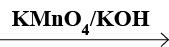
10. Which of the following compounds will give butanone on oxidation with alkaline KMnO4 solution?
11. In Clemmensen reduction, carbonyl compounds is treated with:
12. Compounds A and C in the following reactions are?
CH3CHO (A) (C)
1. The carbonyl compounds in which carbon of carbonyl group is bonded to carbon of alkyl group and oxygen of alkoxy group are known as _______.
2. In which of the following functional groups there are two sp2 hybridized carbon atoms?
3. Which type of organic compound camphor is?
4. The general molecular formula of aldehydes and ketones is _______ .
5. The general molecular formula of carboxylic acids and esters is _______ .
6. The number of σ and π bonds in acrolein are?
7. The ratio of σ and π bonds in mesityl oxide is _______ .
8. The number of sp2 hybridised carbon in 3-oxopentanal is?
9. The vanillin obtain from the vanilla beans does not contain which of the following group?
10. Which compound is responsible for the pleasant fragrance of cinnamon?
11. Which compound is used in paint and perfumes?
12. IUPAC name of the acrolein is?
13. The oxidation number of carbonyl carbon in benzophenone is _______.
14. All the three uniplanar σ-bond of carbonyl group are lying at _______ angle.
15. The carbonyl carbon of carbonyl group is _______ centre.
16. An IUPAC name of is ______.
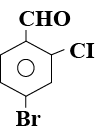
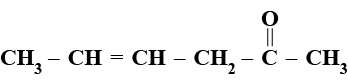
17. Common name of is _____.
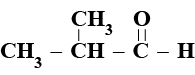
18. Common name of
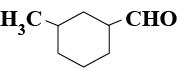
is _______.
19. An IUPAC name of phthaldehyde is _______.
20. The structure of valeraldehyde is:
21. Propanal and propanone are _______isomers.
22. The carbonyl carbon is _______ hybridised in compounds possessing carbonyl group.
23. The products obtained on ozonolysis of 2-methylbut-2-ene followed by hydrolysis with water in presence of zinc dust is:
24. Which catalyst is used in Rosenmund reduction?
25. The name of DIBAL-H is _______.
26. 4-Methylbenzaldehyde is obtained on a reaction of toluene with carbon monoxide and hydrogen chloride in presence of anhydrous aluminium chloride. Such reaction is known as _______.
27. Which of the given compound of molecular formula C5H10 will give acetone on ozonolysis?
28. Oxidation of which of the alcohol gives ketone?
29. What product will be obtained on hydrolysis of an additive product of ethyl cyanide and methyl magnesium bromide?
30. The final product obtained on a reaction between ethanenitrile and ethyl magnesium bromide is?
31. One mole of symmetrical alkene on ozonolysis gives two moles of an aldehyde of molar mass 44 u, then the alkene is?
32. PhC ≡ CMe _______
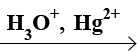
33. Which reagent is used to enter the formyl group in benzene ring?
34. CH3CH2 – C ≡ N CH3CH2 – CHO
Identify ‘X’ in the given reaction.
35.
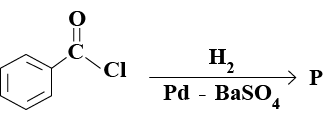
Organic product(P) of the reaction is?
36. Which compound is required to convert Grignard reagent in to aldehyde?
37.
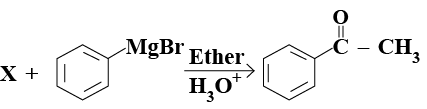
In this reaction X = ______.
38.
for the given reaction which among the following is correct for ‘X’?
39. Which of the following order of boiling point is correct?
40. Which of the following ascending order of boiling point is correct?
41. In which of the given reaction the number of carbon atoms of product molecule increases as compared to reactant molecule?
42. With which of the given compound cannizzaro reaction does not take place?
43. Which of the following is most reactive towards nucleophilic addition reaction?
44. The products obtained on oxidation of pentan-2-one with conc. HNO3 are:
45.
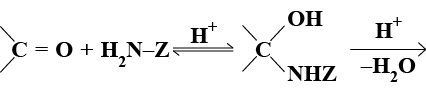
Schiff’s base, then Z = ______.
46. In Cannizzaro reaction the product obtained on reduction of formaldehyde is ______ .
47. Which of the given compound does not give aldol condensation reaction?
48. Gem-dialkoxy alkane compound is known by which other name?
49. With which of the given compound the reaction of ketone in presence of dry HCl is not possible?
50. Which of the given compound does not show reactivity towards the mixture of copper sulphate and Rochelle salt?
51. Which compound does not give iodoform test?
52. Which compound is reactive towards Fehling’s test?
53. A B C Butan-1-ol.
Identify compound A in this reaction.
54. The product which does not obtained on cross aldol condensation of propanal and ethanal is:
(D)2,3-Dimethylpent-2-enal
55. What is an IUPAC name of the major product obtained on cross aldol condensation reaction of formaldehyde and acetophenone?
56. Which reagent is used for separation of acetaldehyde from acetophenone?
57. A carbonyl compound gives cyanohydrine on a reaction with hydrogen cyanide, which on hydrolysis gives racemic mixture of α-hydroxy carboxylic acid. Then the carbonyl compound would be?
58. The product obtained on aldol condensation is:
59. The reduction of aldehyde and ketone to hydrocarbon by using zinc amalgam and conc. HCl is known as _______ .
60. An organic compound (A) having molecular formula C5H10O yields phenylhydrazone and gives negative response to the Tollens’ and Iodoform tests. it produces n-pentane on reduction. The compound (A) could be:
61. Which compound will give Cannizzaro reaction?
62. The oxidation of which compound is not possible?
63. Which compound will give Iodoform test?
64. ______ is obtained on reduction of ketone.
65. Which compound will not give silver mirror test?
66. The major product ‘y’ of the following reaction is?
x y
67. Acetyl bromide reacts with excess of CH3MgI followed by treatment with saturated solution of NH4Cl gives:
68. Which compound will give aldol condensation?
69. By which reaction methanol and formic acid can be prepared from formaldehyde?
70. Methyl ketone group is identified by:
71. On a reaction with concentrated alkali which compound does not give alcohol and salt of carboxylic acid?
72. When acetophenone is treated with hydrazine followed by heating with sodium hydroxide in presence of ethylene glycol then the end product formed is _______ .
73. On arranging in increasing order of boiling points of the following compounds, the compound which comes at second position is _______.
74. The correct reactivity order for the addition reaction with HCN of the following compound is:
I : CH3CHO, II : CH3COCH3, III : C6H5COCH3,
IV : HCHO
75. Which of the given reagent does not react with acetone and benzaldehyde?
76. CH3COCH3 X + H2O + N2
here X = _______.
77. Which reagent is used in Clemmesen reduction?
78. Grignard reagent forms _______ on reaction with acetone.
79. Which one of the following oxidises easily and gives carboxylic acid with same number of carbon atoms?
80. The oxidation of ketone with strong oxidising agent gives mixture of carboxylic acid by cleavage of _______ bond.
81. Tollens’ reagent can be reduced by which aldehyde?
82. Which aldehyde will give red precipitate with Fehling’s solution?
83. Which of the following compound does not give aldol condensation reaction?
84. With which of the following aldol condensation reaction does not take place?
85. The final product obtained on Cannizzaro reaction of benzaldehyde is ______ ?
86. Due to which reason shows Cannizzaro reaction?
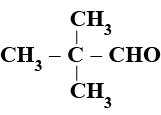
87. Butanone and pentan-3-one can differentiate by this reagent.
88. By which reagent butan-2-one can be convert in to propanoic acid?
89. Y, the final
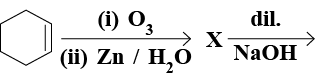
organic product ‘Y’ of the reaction is?
90. ,

here X = _______.
91. The correct increasing order of reactivity of the compounds HCHO, CH3CHO and CH3COCH3 is?
92. The correct increasing order of reactivity of the compounds C6H5COCH3, C6H5COC6H5 and C6H5CHO is?
93.
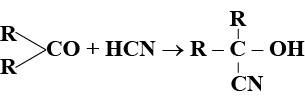
this reaction is:
94. The solubility of aromatic aldehydes and ketones is _______ than that of correspondent aliphatic aldehydes and ketones.
95. What change in odour of aldehydes is observed with increase in its molar mass?
96. Which compound is used to preserve biological specimens?
97. Which compound is used to prepare glues?
98. Which compound is used to produce Bakelite resin and other polymeric products?
99. Formalin is ______% aqueous solution of formaldehyde.
100. _______ is used in preparation of liquid nail polish and nail polish remover.
101. How many methylene groups are there in adipic acid?
102. Which of the following is not a pair of dicarboxylic acid?
103. How many carboxylic groups (–COOH) are there in carballylic acid?
104. Which acid was first obtained from rancid butter?
105. An aliphatic carboxylic acids known as fatty acids, occur in natural fats as ester of glycerol contains how many carbon atoms?
106. _______ was first obtained from red ants.
107. Latin word acetum means:
108. Aliphatic carboxylic acids containing _______ carbon atoms are known as fatty acids.
109. Why –COOH group is known as carboxyl group?
110. IUPAC name of o-phthalic acid is:
111. The common name of
HOOC – (CH2)2 – COOH is?
112. IUPA name of adipic acid is?
113. The oxidative product of which of the following compound is not a benzoic acid?
114. The product obtained on treating cyclohexene with basic solution of potassium permanganate is?
115. Which product will be obtained on a reaction of butan-1-ol with Jones reagent?
Class 12 Chemistry (Part 2) 014
116. Which reagent can convert butanal in to butyric acid?
117. Which gas evolved at anode during Kolbe electrolysis of sodium propionate?
118. Consider the following reaction
Phenol X Y
Z. Identify product Z.
119. The product obtained on hydrolysis of acetamide is?
120. Which of the given is Jones reagent?
121.
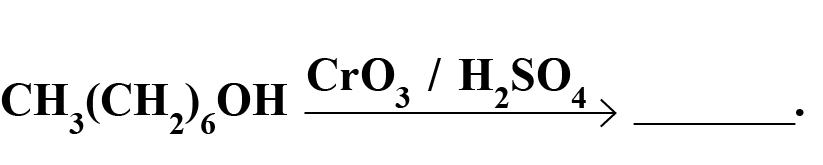
122. Terephthalic acid,
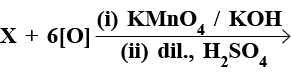
+ 2H2O here X = ______.
123. Ethylmethyl ketone can be obtained by the oxidation of _______ .
124. Ethane nitrile _______ .
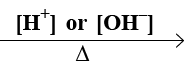
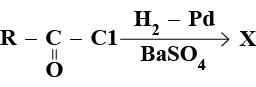
125.
what will be X in a given reaction?
126. ‘S’. The final product ‘S’ of this reaction is _______ ?
127. R – CH2 – OH R–CH2CI y R CH2COOH products x, y and z in this reaction are…?
x y z
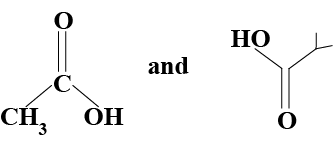
128. The hydrolysis of which of the following is to be carried out to obtain as a product?
129. Benzamide X + NH3
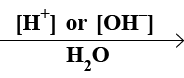
Identify X in this reaction.
130.
what will be X in a given reaction?
131. .
Identify X in this reaction.
132.

Identify X in this reaction.
133. What product will be obtained on hydrolysis of anhydride?
134. _______ will be obtained on hydrolysis of benzoic ethanoic anhydride?
135. Ethylethanoate P. Identify P in this reaction.
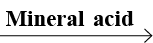
136. Benzoic acid can not be prepared by hydrolysis of which of the following compound?
137. Isobutyric acid will not be obtained as which of the following compound in presence of acidic or basic KMnO4 ?
138. The water solubility of which compound is least?
139. Which of the following is stongest acid?
140. What product will obtain on a reaction of benzoic acid with dichlorine gas in presence of ferric chloride catalyst?
141. Benzene can be obtained by heating benzoic acid with X or phenol with Y. X and Y respectively are:
142. CH3CHO B C D. Product D is:
143. Which of the following does not react with
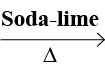
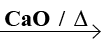
soda-lime?
144. Identify the correct order of pKa for
(i) 4-Methoxybenzoic acid (ii) 4-Nitrobenzoic acid and (iii) Benzoic acid.
145. A B Terephthalic acid. the correct option for compound A is?
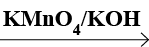
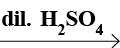
146. Which compound is used to detect the presence of carboxyl group in an organic compound?
147. Product obtained on strong heating of phthalamide with excess ammonia is:
148. Carboxylic acids having an α-hydrogen are halogenated at the α-position on treatment with bromine in the presence of small amount of red phosphorus to give α-halocarboxylic acids. The reaction is known as _______.
149. The conjugated base of which of the following acid is weak?
150. 2CH3COOH . The product obtained is:
151. The acidic strength of which of the following compound is maximum?
152. pKa = _______ .
153. Strongest acid among the following compound is?
154. Acetic acid on heating with which of the following compound gives acetic anhydride?
155. Among carboxylic acids and alcohols of comparable molecular masses the one with strong hydrogen bonding is?
156. Due to strong hydrogen bonding in the _______ most carboxylic acids exist as dimer.
157. Which of the following option is correct for the strength of acid?
158. The correct order of acidic strength for given compounds is?
159. Which among the following acid is stronger?
160. On which factor the dissociation constant of weak acid Ka depends?
161. Weak acids have pKa values between _______.
162. Acetic acid + PCI3 Acetyl chloride + X; here X = _______.
163. Which of the following is correct order of relative strength of carboxylic acid?
(CH3)2CHCOOH > (CH3)3CCOOH
CH3CH2COOH > (CH3)3CCOOH
CH3CH2COOH > CH3COOH
164. _______ is preferred for the production of acid chloride from carboxylic acid.
165. The product obtained on reduction of
prop-2-enoic acid by LiAlH4 is?
166. Benzoic acid + Methanol ______.
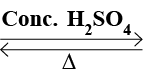
167. Acetyl chloride + Sodium acetate ______.
168.
169. Ammonium phthalate ______ X + NH3. ‘X’ in this
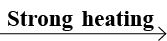
reaction is?
170. Acetic acid + Ammonia ________.
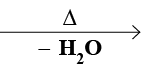
Y ; ‘Y’ in this reaction is?
171. Y;
the final product ‘Y’ in this reaction is?
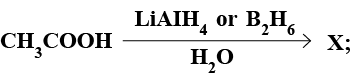
172.
‘X’ in this reaction is?
173. Which among the following is correct for soda-lime?
174. CH3COONa + NaOH ________.
175.
176. PhMe

the final product ‘R’ of above reaction is?
177. An organic compound ‘x’ on treatment with ammonia gives B, which on heating gives ‘C’. ‘C’, when treated with Br2 in the presence of KOH, produces ethylamine. Compound
‘x’ is :
178. Z; final product Z is :
179.
180. Phenol R; the product ‘R’ is :

181. CH3CH2COOH R; the final product of reaction is:
182. Which compound is used in the manufacture of nylon-6,6?
183. The salt of which acid is used as a food preservative?
184. _______ is used in the manufacture of nylon-6,6.
185. What is vinegar?
186. Methanoic acid is used in _______ industry.
187. ;
the product ‘M’ is:
188. Assertion : Benzaldehyde undergoes the Cannizzaro reaction when treated with concentrated NaOH.
Reason : Benzaldehyde contains no α-hydrogen atom.
189. Assertion : Ketones are less reactive than aldehydes in nucleophilic addition reactions.
Reason : Ketones have two alkyl groups that reduce the electrophilicity of the carbonyl carbon.
190. Assertion : Formaldehyde reacts with Tollens’ reagent to give a silver mirror.
Reason : Tollens’ reagent oxidizes formaldehyde to formic acid.
191. Assertion : Benzaldehyde gives a positive Fehling’s test.
Reason : Aromatic aldehydes cannot be oxidized by Fehling’s reagent.
192. Assertion : Aldehydes with no α-hydrogens undergo disproportionation in the presence of a base.
Reason : This reaction involves the oxidation of one molecule and the reduction of another.
193. Assertion : Acetone reacts with NaHSO3 to form a bisulphite addition compound.
Reason : Carbonyl carbons in ketones are nucleophilic.
194. Assertion : Aldehydes and ketones have higher boiling points than ethers of comparable molecular mass.
Reason : Aldehydes and ketones have significant dipole-dipole interactions.
195. Assertion : Acetaldehyde undergoes aldol condensation in the presence of dilute alkali.
Reason : Aldehydes with α-hydrogens form enolates, which act as nucleophiles.
196. Assertion : Carboxylic acids have higher boiling points than alcohols of comparable molecular weight.
Reason : Carboxylic acids form stronger hydrogen bonds due to dimerization.
197. Assertion : Acetone reacts with iodine and NaOH to give iodoform.
Reason : Acetone contains a methyl group directly attached to the carbonyl carbon.
198. Assertion : Carboxylic acids are less reactive than acid chlorides.
Reason : Acid chlorides have a better leaving group (-Cl) compared to carboxylic acids.
199. Assertion : Benzaldehyde is more reactive than acetophenone in nucleophilic addition reactions.
Reason : The resonance effect of the phenyl group reduces electrophilicity in acetophenone.
200. Assertion : Formic acid is a stronger acid than acetic acid.
Reason : Formic acid has an additional hydroxyl group for hydrogen bonding.
201. Assertion : Ketones do not respond to Tollens’ test.
Reason : Ketones cannot be easily oxidized to carboxylic acids under mild conditions.
202. Assertion : Ethyl acetate reacts with hydroxylamine to form oximes.
Reason : Hydroxylamine reacts with carbonyl groups to form oximes.
203. Select the correct option using T (True) or
F (False) symbol for the following statements.
(i) Formaldehyde can be oxidized to formic acid using Tollens’ reagent.
(ii) Ketones are more reactive than aldehydes in nucleophilic addition reactions.
(iii) The Cannizzaro reaction is a redox reaction where an aldehyde is both oxidized and reduced.
(iv) The boiling point of aldehydes is lower than that of alcohols of similar molecular mass.
204. Select the correct option using T (True) or
F (False) symbol for the following statements.
(i) Acetone can react with iodine and NaOH to produce iodoform.
(ii) Carboxylic acids have higher boiling points than aldehydes due to stronger hydrogen bonding.
(iii) The carbonyl carbon in aldehydes is more electrophilic than in ketones.
(iv) Aldehydes cannot undergo nucleophilic addition reactions with hydrogen cyanide (HCN).
205. Select the correct option using T (True) or
F (False) symbol for the following statements.
(i) Benzaldehyde can give a positive Fehling’s test.
(ii) Aldehydes generally undergo Cannizzaro reactions in the presence of concentrated NaOH.
(iii) Carboxylic acids can form dimers due to hydrogen bonding.
(iv) Acetophenone is more reactive in nucleophilic addition reactions than benzaldehyde.
206. Select the correct option using T (True) or
F (False) symbol for the following statements.
(i) Aldol condensation can only occur with aldehydes that have at least one α-hydrogen.
(ii) Formaldehyde reacts with NaHSO3 to form a bisulphite addition compound.
(iii) Carboxylic acids are more acidic than aldehydes and ketones.
(iv) The carbonyl group in aldehydes is sp²-hybridized.
207. Select the correct option using T (True) or
F (False) symbol for the following statements.
(i) Trichloroacetaldehyde undergoes the Cannizzaro reaction to form sodium trichloroacetate and 2,2,2-trichloroethanol.
(ii) Aldehydes without α-hydrogens undergo disproportionation in basic conditions.
(iii) Acetic acid is more acidic than formic acid.
(iv) Benzaldehyde cannot form a silver mirror in the Tollens’ test.
208. Select the correct option using T (True) or
F (False) symbol for the following statements.
(i) Ketones cannot undergo the Cannizzaro reaction.
(ii) The resonance effect of the phenyl group in acetophenone decreases its reactivity.
(iii) The formation of hemiacetals involves the reaction of an aldehyde or ketone with water.
(iv) Aldehydes and ketones form strong hydrogen bonds between molecules.
209. Select the correct option using T (True) or
F (False) symbol for the following statements.
(i) Aldehydes and ketones can form bisulphite addition products with sodium bisulphite.
(ii) The functional group in aldehydes is -CHO.
(iii) Acetone reacts with NaOH to produce an enolate ion that can undergo aldol condensation.
(iv) Carboxylic acids have higher boiling points than alcohols due to dimer formation.
210. Select the correct option using T (True) or
F (False) symbol for the following statements.
(i) The presence of two alkyl groups in ketones makes them more reactive than aldehydes.
(ii) Aldehydes with no α-hydrogens undergo the Cannizzaro reaction.
(iii) The boiling points of aldehydes and ketones are higher than those of alkanes of comparable molecular mass.
(iv) Formaldehyde is a solid at room temperature.
211. Select the correct option using T (True) or
F (False) symbol for the following statements.
(i) Aldehydes and ketones can be prepared by the oxidation of primary alcohols.
(ii) Benzaldehyde has an electron-withdrawing effect due to the phenyl group.
(iii) The Tollens’ test can be used to differentiate aldehydes from ketones.
(iv) Aldol condensation results in the formation of β-hydroxy ketones or aldehydes.
212. Select the correct option using T (True) or
F (False) symbol for the following statements.
(i) The carbonyl group in aldehydes has a higher dipole moment than in ketones.
(ii) Carboxylic acids can be reduced to primary alcohols using LiAlH₄.
(iii) Aldehydes are more polar than ethers.
(iv) The Cannizzaro reaction is catalyzed by dilute sulphuric acid.
213. Select the correct option using T (True) or
F (False) symbol for the following statements.
(i) Ketones are less polar than aldehydes.
(ii) The reaction between aldehydes and Grignard reagents yields secondary alcohols.
(iii) Aldehydes with an α-hydrogen can undergo aldol condensation in the presence of a base.
(iv) Acetic acid has a higher boiling point than ethanol.
214. Select the correct option using T (True) or
F (False) symbol for the following statements.
(i) Formaldehyde is used as a preservative in the form of formalin.
(ii) Carboxylic acids are formed when aldehydes are oxidized with strong oxidizing agents.
(iii) The presence of an additional hydroxyl group in formic acid makes it less acidic than acetic acid.
(iv) Acetophenone can undergo a Friedel-Crafts acylation reaction to form a ketone.

Options

  1. (A) TTFF
  2. (B) FTTF
  3. (C) TFFT
  4. (D) FTFT

Answer

not detected

S match 100% type: 1 Q ⤓ Export ZIP
#92 MCQ ⚠ needs answer review 1M

Question

(A) 12. (B)

Answer

not detected

S type: 0 Q ⤓ Export ZIP

No questions extracted under this section.

S src: Case Study Based Questions and Answers match 69% type: 6 Q ⤓ Export ZIP
#115 CS

Question

Aldehydes, ketones, and carboxylic acids are vital in the chemical industry and biological systems. They are found in natural substances like vanillin from vanilla beans and cinnamaldehyde from cinnamon. These compounds are extensively used in perfumes, flavourings agents, and pharmaceuticals. For instance, acetone serves as a common solvent, while benzaldehyde is used in dyes and perfumes. Chemically, these compounds exhibit significant reactivity due to the polar nature of the carbonyl group (>C=O), which makes them electrophilic and attack to nucleophilic addition reactions.
(a) What are carbonyl compounds?
(b) Why are aldehydes more reactive than ketones?
(c) What role do aldehydes and ketones play in industry?
(d) How does the carbonyl group influence reactivity?

Answer

(a) Carbonyl compounds contain the >C=O group. Aldehydes and ketones are examples, where aldehydes have at least one hydrogen atom bonded to the carbonyl carbon, while ketones have two alkyl or aryl groups attached.
(b) Aldehydes are more reactive because they have less steric hindrance and fewer electron-donating groups, which makes the carbonyl carbon more electrophilic.
(c) They are used in synthesizing resins, perfumes, and adhesives, with acetone being a widely used solvent.
(d) The electronegativity difference between carbon and oxygen in the carbonyl group induces polarity, making the carbon atom electrophilic and prone to nucleophilic attack.
#116 CS

Question

Aldehydes and ketones undergo nucleophilic addition reactions due to the electrophilic nature of the carbonyl carbon. For example, the reaction with hydrogen cyanide (HCN) forms cyanohydrins, which are important intermediates in organic synthesis. The reaction is catalyzed by a base that generates the cyanide ion (CN), which attacks the carbonyl carbon to form a tetrahedral intermediate.
(a) What is a cyanohydrin?
(b) Why are aldehydes more reactive in nucleophilic addition than ketones?
(c) What is the significance of cyanohydrins?
(d) Why is the reaction with HCN slow without a catalyst?

Answer

(a) It is a compound where a hydroxyl group
(–OH) and a cyanide group (–CN) are attached to the same carbon.
(b) Aldehydes are less sterically hindered and have fewer electron-donating groups.
(c) Cyanohydrins are used as intermediates in the synthesis of amino acids and other organic compounds.
(d) Pure HCN has weak nucleophilicity, so a base is used to generate the stronger nucleophile, CN.
#117 CS

Question

When an aldehyde with no α-hydrogen reacts with concentrated aqueous NaOH, half the aldehyde is converted to a carboxylic acid salt, and the other half is converted to an alcohol. In this reaction, one molecule of the aldehyde is oxidized, and the other is reduced. This process is called the Cannizzaro reaction.
(a) What are the products of the reaction between benzaldehyde and formaldehyde with aqueous NaOH?
(b) Which compounds undergo Cannizzaro reactions?
(c) What are the products when trichloroacetaldehyde undergoes Cannizzaro reaction with NaOH?
(d) What is the slowest step in the Cannizzaro reaction?

Answer

(a) Benzyl alcohol and sodium format are formed.
(b) Compounds without α-hydrogen, like formaldehyde and benzaldehyde, undergo this reaction.
(c) Sodium trichloroacetate and 2,2,2-trichloroethanol are formed.
(d) The transfer of hydride ion (H) from one aldehyde molecule to another is the rate-determining step.
#118 CS 🖼 2

Question

Ethanal undergoes aldol condensation in the presence of dilute alkali to form 3-hydroxybutanal, which dehydrates to form
but-2-enal (crotonaldehyde).
Reaction Steps:
(1) Formation of aldol :
2CH3CHO CH3CH(OH) CH2CHO
(2) Dehydration :
CH3CH(OH)CH2CHO CH3CH=CHCHO
(a) What is the product of aldol condensation of ethanal?
(b) Why is dilute NaOH used as a catalyst?
(c) What are the functional groups in the aldol intermediate?
(d) Why is the product α,β-unsaturated?

Answer

(a) But-2-enal (crotonaldehyde).
(b) It generates the enolate ion, which is necessary for the reaction.
(c) An aldehyde (–CHO) and an alcohol (–OH).
(d) Dehydration of the aldol forms a conjugated double bond system. i.e α,β-unsaturated aldhyde.
#119 CS

Question

A pharmaceutical synthesis unit produces Paracetamol, Aspirin and various aromatic drugs. These reactions involve aldehydes, ketones, and carboxylic acid.
During the development of new drug intermediates, chemist perform experiments on:
Nucleophilic addition reaction of carbonyl compound.
Oxidation - reduction behavior
Acidity of carboxylic acid.
Reactivity of aromatic vs aliphatic aldehydes
Derivatives such as hydrazones, oximes and 2, 4-DNP compounds.
They observe reaction:

Compound

With Tollen's reagent

With 2, 4-DNP

lodoform Test

Ethanal

+ve

+ve

+ve

Propanone

–ve

+ve

+ve

Benzaldehyde

+ve

+ve

–ve

Acetic Acid

–ve

–ve

–ve

Additional Facts:
Aromatic aldehydes oxidize easily but do not give iodoform test.
Ketones generally resist oxidation except methyl ketones.
Carboxylic acid are least reactive toward nucleophiles.
(a) Why does ethanal give a positive iodoform test but benzaldehyde does not?
(b) Explain why aldehydes are more reactive than ketones toward nucleophilic addition.
(c) Why does propanone fail the Tollen's test while ethanol passes it?
(d) Arrange the following in increasing acidity: Ethanol, Acetic Acid, Phenol.

Answer

(a) Iodoform test is positive for compounds containing CH3 – C = O or CH3 – CH(OH) –
Ethanol: CH3 – CHO contain CH3 – CO that is why positive
Benzaldehyde = C6H5– CHO No CH3 group So, Negative
(b) Reason:
(i) Less steric hindrance around carbonyl carbon in aldehydes.
(ii) Aldehydes have only one alkyl group, so less +I effect
(iii) Carbonyl carbon is more δ+ more easily attacked.
(c) Tollen's reagent oxidizes aldehydes, not ketones.
Ethanal oxidized give silver mirror propanone ketone cannot be oxidize under mild condition, so negative.
(d) Ethanol < Phenol < Acetic acid
Reason :
Carboxylate ion (–COO) is stabilized by resonance strongest acid.
Phenoxide ion has resonance but weaker.
Ethoxide ion has no resonance weaker acid.
#120 CS 🖼 1

Question

A chemical industry synthesizes perfume aldehydes, ketons for polymers and carboxylic acid for soaps.
To optimize production, they study Cannizzaro reaction, Aldol condensation, decarboxylation, esterification and oxidation of 1° and 2° alcohols.
They conduct experiments:
(i) Benzaldehyde gives Cannizzaro Reaction in concentrated base.
(ii) Acetaldehyde undergoes aldol condensation.
(iii) Heating sodium acetate with soda lime gives methane (decarboxylation).
(iv) Ethanol + Acetic Acid Ethyl acetate.
(v) Acidified KMnO4 oxidizes toluene benzoic Acid.
Additional insight :
Aldehydes without α - hydrogen Cannizzaro.
Aldehydes with α - hydrogen Aldol
Carboxylic acid lose CO2 during decarboxylation.
(a) Why does benzaldehyde undergoes Cannizzaro reaction while acetaldehyde undergoes aldol condensation?
(b) Write the product and mechanism type when sodium acetate is heated with soda lime.
(c) Explain why esterification requires acid catalyst.
(d) Predict the product when benzaldehyde + NaOH (Conc.) react.

Answer

(a) (i) Benzaldehyde has no α - hydrogen, so cannot form enolate undergoes Cannizzaro.
(ii) Acetaldehyde had α - hydrogen, so form enolate undergoes aldol condensation.
(b) CH3COONa + NaOH CH4 + Na2CO3
This is decarboxylation reaction.
(c) Acid (H+) : It activates carbonyl carbon increase electrophilicity and removes water to shift equilibrium forward. Thus, ester formation increases.
(d) It's Cannizzaro reaction.
2C6H5CHO C6H5CH2OH + C6H5COONa
+ Benzyl Sodium
Conc. NaOH alcohol benzoate
Carbonyl Group: C=O functional unit where carbon is sp2 hybridised and electrophilic (Cδ+).
Aldehyde: Carbonyl compound with at least one H on the carbonyl carbon (R–CHO).
Ketone: Carbonyl compound with two carbon substituents on the carbonyl carbon (R–CO–R′).
Carboxylic Acid: Compound containing –COOH; acidic due to resonance-stabilised carboxylate.
Acyl Chloride (Acid Chloride): R–CO–Cl, highly reactive derivative of carboxylic acids used for acylation.
Nucleophilic Addition: Mechanism where a nucleophile attacks Cδ+ of C=O to give a tetrahedral intermediate.
Cyanohydrin: Product of HCN addition to a carbonyl (R–C(OH)–CN), useful for chain extension.
Bisulfite Addition: Reversible addition of NaHSO3 to carbonyls forming water-soluble adducts used for purification.
Hemiacetal / Acetal: Hemiacetal = R–C(OH)(OR′); acetal = R–C(OR′)2 formed by alcohol addition (acetal = protected carbonyl).
Imine (Schiff Base): C=NR formed by condensation of carbonyl with primary amine (–H eliminated).
Oxime / Hydrazone / Semicarbazone: C=N derivatives (from hydroxylamine, hydrazine, semicarbazide) used for characterization.
Clemmensen Reduction: Zn(Hg)/HCl reduction of C=O → CH2 (useful for acid-sensitive substrates).
Wolff–Kishner Reduction: NH2NH2 / KOH, high-temp reduction of C=O → CH2 (strongly basic conditions).
Tollen’s Test: Ag(NH3)+2 oxidises aldehydes to carboxylates; gives silver mirror (detects aldehydes).
Fehling’s Test: Cu2+ (alkaline) reduces to Cu2O (brick-red) with aliphatic aldehydes (not aromatic).
Aldol Condensation: Base/acid-catalysed coupling of carbonyls forming β-hydroxy carbonyls → α,β-unsaturated carbonyls on dehydration.
Cross-aldol: Aldol between two different carbonyls leading to mixed products (regioselectivity matters).
Cannizzaro Reaction: Disproportionation of non-enolisable aldehydes in conc. base → one molecule reduced to alcohol, one oxidised to acid.
Rosenmund Reduction: H2 / Pd–BaSO4 hydrogenation of acyl chlorides → aldehydes (partial reduction).
Stephen Reaction: Reduction of nitriles (SnCl2/HCl) to iminium then hydrolysis to aldehyde.
DIBAL-H / LiAlH(i-Bu)2: Selective hydride reagents — DIBAL at low temp reduces esters/nitriles to aldehydes; LiAlH4 fully reduces to alcohols.
Popov’s Rule (Oxidative Cleavage): In oxidation of unsymmetrical ketones, the C–CO bond breaking pattern leaves the keto carbon with the smaller alkyl group.
Hell–Volhard–Zelinsky (HVZ) Reaction: α-halogenation of carboxylic acids via acyl halide intermediate (X2 / P).
Esterification (Fischer): Acid-catalysed reversible condensation of carboxylic acid + alcohol → ester + water.
Decarboxylation: Loss of CO2 from carboxylates on heating (e.g., with soda-lime) yielding hydrocarbon (often 1 C less).
Acid Derivatives Interconversions: Carboxylic acids → acyl chlorides (SOCl2/PCl5), anhydrides, esters, amides — key synthetic transformations.
Acidity Factors: Electron-withdrawing groups (EWG) increase carboxylic acid acidity; resonance stabilisation of anion is crucial.

Confirm chapter

Confirming locks this chapter's content for downstream steps. Validation runs first — every question must have a section & type.

This chapter is confirmed.