eLiberty Step 1 · Index Extraction
← Back to chapters

Chapter 2 · Alcohols, Phenols and Ethers

12th_chemistry_em_part_2 · v1 · confirmed Source: Chapter7.zip · 7 sections, 100 questions
View JSON ⬇ Export CSV ⬇ Export HTML
72 parser warnings — click to expand
  • [answer-key] 25 consolidated answer-key block(s) matched no MCQ run: 1-10, 11-16, 1-10, 11-20, 21-30, 31-40, 41-50, 51-60, 61-70, 71-80, 81-90, 91-100, 101-110, 111-120, 121-130, 131-140, 141-150, 151-160, 161-170, 171-180, 181-190, 191-200, 201-210, 211-220, 221-226 — an MCQ run may be missing its answers; see ANSWER-DETECTION.md
  • [vector-figure] rendered 0 group(s) as single images, 2 FAILED (left as-is)
  • Removed noise images: 37 section banners, 60 marks/year/topic badges, 45 note/clarification/puzzle callouts
  • [figure] 25 figure(s) detected in the source but NOT assigned to any question: 379.png, 380.png, 381.png, 382.png, 383.png, 396.png, 523.png, 525.png … — a figure was dropped (question OR answer side); do not publish until every figure is attached
  • [section] index section 'Quick Find: Previous Board Questions' (2.6) has no matching region in the chapter — verify its questions were captured
  • [section] index section 'Assertion and Reason MCQs' (2.10) has no matching region in the chapter — verify its questions were captured
  • [section] index section 'True and False Statement Type MCQs' (2.11) has no matching region in the chapter — verify its questions were captured
  • [section] index section 'Previous Year BOARD and GUJCET Exam MCQs' (2.15) has no matching region in the chapter — verify its questions were captured
  • [section] index section 'Previous Year NEET Exam MCQs' (2.16) has no matching region in the chapter — verify its questions were captured
  • [section] index section 'Previous Year JEE-Main Exam MCQs' (2.17) has no matching region in the chapter — verify its questions were captured
  • [section] index section 'Booster MCQs' (2.18) has no matching region in the chapter — verify its questions were captured
  • [section] parsed region 'NCERT Intext Questions and Answers' (12 q) did not reconcile to any index section — unexpected/unlabelled banner
  • Q#49 (NCERT Intext Questions and Answers): no answer detected
  • Q#54 (NCERT Intext Questions and Answers): [options-as-answer] answer body is an option list (A/B/C) — options mis-routed into the answer; they belong to the question
  • Q#67 (NCERT Textbook Exercise Questions And Answers): no answer detected
  • Q#93 (NCERT Textbook Exercise Questions And Answers): [qa-boundary] answer has 1 content line(s) before its answer marker ('Ans. Following is the mechanis') — pre-marker content belongs to the question
  • Q#94 (Multiple Choice Questions (MCQs)): [assertion-reason] Assertion-Reason MCQ has no resolved answer
  • Q#94 (Multiple Choice Questions (MCQs)): [layout] item body has 16 'Assertion :' lines — an Assertion-Reason run merged into one item; split per number
  • Q#94 (MCQ): correct option not detected
  • Q#95 (NCERT Exemplar MCQs): [layout] question body is a consolidated answer key (NUMBER.(LETTER) pairs) — parse it into a number→letter map, not a question
  • Q#95 (MCQ): options + correct option not detected
  • Q#96 (NCERT Exemplar MCQs): [layout] question body is a consolidated answer key (NUMBER.(LETTER) pairs) — parse it into a number→letter map, not a question
  • Q#96 (MCQ): options + correct option not detected
  • Q#97 (NCERT Textbook Based MCQs): [layout] question body is a consolidated answer key (NUMBER.(LETTER) pairs) — parse it into a number→letter map, not a question
  • Q#97 (MCQ): options + correct option not detected
  • Q#98 (NCERT Textbook Based MCQs): [layout] question body is a consolidated answer key (NUMBER.(LETTER) pairs) — parse it into a number→letter map, not a question
  • Q#98 (MCQ): options + correct option not detected
  • Q#99 (NCERT Textbook Based MCQs): [layout] question body is a consolidated answer key (NUMBER.(LETTER) pairs) — parse it into a number→letter map, not a question
  • Q#99 (MCQ): options + correct option not detected
  • Q#100 (NCERT Textbook Based MCQs): [layout] question body is a consolidated answer key (NUMBER.(LETTER) pairs) — parse it into a number→letter map, not a question
  • … and 42 more
⚠ 1 MCQ(s) need an answer — review & set the correct option, or log an error
  • Q#94 correct option not detected
S src: Topic-wise Questions and Answers match 61% type: 48 Q ⤓ Export ZIP
#1 SUB 3M

Question

What are alcohol, phenol and ether compounds?

Answer

Alcohol compounds: An alcohol contains one or more hydroxyl (OH) group(s) directly attached to carbon atom(s), of an aliphatic system. For example, CH3OH.
Phenol compounds: A phenol contains one or more hydroxyl (OH) group(s) directly attached to carbon atom(s), of an aromatic system. For example, C6H5OH.
Ether compounds: The substitution of a hydrogen atom in a hydrocarbon by an alkoxy or aryloxy group (R-O/Ar-O) yields another class of compounds known as ‘ethers’. For example, dimethyl ether (CH3OCH3).
In short, ether is a compound which is formed by substituting the hydrogen atom of hydroxyl group of an alcohol or phenol by an alkyl or aryl group.
#2 SUB 2M 🖼 1

Question

Discuss the classification of monohydric alcohols containing Csp2–OH bond.

Answer

Compounds containing Csp2–OH bond: These alcohols contain –OH group bonded to a carbon-carbon double bond i.e., to a vinylic carbon or to an aryl carbon. These alcohols are also known as vinylic alcohols.
Vinylic alcohol: CH2= CH OH
Phenols:
#3 SUB 3M 🖼 2

Question

Discuss the classification of monohydric alcohols containing Csp3 –OH bond.

Answer

Csp3 – OH bond: In this class of alcohols, the –OH group is attached to an sp3 hybridised carbon atom of an alkyl group. They are further classified as follows:
Primary, secondary and tertiary alcohols:
In these three types of alcohols, the –OH group is attached to primary, secondary and tertiary carbon atom, respectively as depicted below:
–CH2–OH CH–OH C–OH
Primary (1°) Secondary (2°) Tertiary (3°)
Allylic alcohols: In these alcohols, the –OH group is attached to an sp3 hybridised carbon next the carbon-carbon double bond, that is to an allylic carbon. For example,
Benzylic alcohols: In these alcohols, the –OH group is attached to an sp3 – hybridised carbon atom next to an aromatic ring. For example,
Allylic and benzylic alcohols may be primary, secondary or tertiary.
#4 SUB 2M 🖼 1

Question

Explain the classification of alcohols and phenols on the basis of number of hydroxyl groups.

Answer

Alcohols and phenols may be classified as
mono–, di–, tri– or polyhydric compounds depending on whether they contain one, two, three or many hydroxyl groups respectively in their structures as given below:
#5 SUB 2M ▦ 1

Question

Write common name and IUPAC name of following alcohol compounds.

Answer

Compound

Common Name

IUPAC Name

CH3–OH

Methyl alcohol

Methanol

CH3–CH2–CH2–OH

n-Propyl alcohol

Propan-1-ol

Isopropyl alcohol

Propan-2-ol

CH3–CH2–CH2–CH2–OH

n-Butyl alcohol

Butan-1-ol

sec-Butyl alcohol

Butan-2-ol

Isobutyl alcohol

2-Methyl

propan-1-ol

tert-Butyl alcohol

2-Methyl

propan-2-ol

Glycerol

Propane -1,2,

3-triol

#6 SUB 2M 🖼 1

Question

How is the nomenclature of cyclic alcohol compound carried out? Give two examples.

Answer

Cyclic alcohols are named using the prefix cyclo and considering the –OH group attached to C–1.
#7 SUB 3M 🖼 2

Question

Explain the nomenclature of phenols by giving examples.

Answer

The simplest hydroxyl derivative of benzene is phenol. It is its common name and also an accepted IUPAC name. As structure of phenol involves a benzene ring, in its substituted compounds the term ortho
(1,2- disubstituted), meta (1,3- disubstituted) and para (1,4- disubstituted) are often used in the common names.
Example:
Dihydroxy derivatives of benzene are known as 1, 2-, 1, 3- and 1, 4-benzenediol.
#8 SUB 1M ▦ 1

Question

Write IUPAC name of the following ether compounds. Also write common names wherever possible.

Answer

Compound

Common name

IUPAC name

CH3OCH3

Dimethyl ether

Methoxymethane

C2H5OC2H5

Diethyl ether

Ethoxyethane

CH3OCH2CH2CH3

Methyl n-propyl ether

1-Methoxypropane

C6H5OCH3

Methylphenyl ether (Anisole)

Methoxybenzene (Anisole)

C6H5OCH2CH3

Ethylphenyl ether

(Phenetole)

Ethoxybenzene

C6H5O(CH2)6–CH3

Heptylphenyl ether

1-Phenoxyheptane

Methylisopropyl ether

2-Methoxypropane

Phenyl isopentyl ether

3- Methylbutoxybenzene

CH3–O–CH2–CH2–OCH3

1,2-Dimethoxyethane

2-Ethoxy-

-1,1-dimethylcyclohexane

#9 SUB 3M 🖼 1

Question

Give information about C-O-H bond angle in alcohol, phenol and ether with suitable example.

Answer

In alcohols, the oxygen of –OH group is attached to carbon by a sigma (s) bond formed by the overlap of an sp3 hybridised orbital of carbon with sp3 hybridised orbital of oxygen.
Figure depicts structural aspects of methanol, phenol and methoxymethane.
The bond angle in alcohols is slightly less than the tetrahedral angle
(109°-28’).
It is due to the repulsion between the unshared electron pairs of oxygen.
In phenols, the –OH group is attached to sp2 hybridised carbon of an aromatic ring.
The carbon-oxygen bond length (136 pm) in phenol is slightly less than that in methanol.
This is due to (i) partial double bond character on account of the conjugation of unshared electron pair of oxygen with the aromatic ring and (ii) sp2 hybridised state of carbon to which oxygen is attached.
In ethers, the four electron pairs, i.e., the two bond pairs and two lone pairs of electron on oxygen are arranged approximately in a tetrahedral arrangement.
The bond angle is slightly greater than the tetrahedral angle due to the repulsive interaction between the two bulky (-R) groups.
The C-O bond length (141 pm) is almost the same as in alcohols.

#10 SUB 3M 🖼 1

Question

What is meant by hydroboration-oxidation reaction? Illustrate it with an example.

Answer

By hydroboration-oxidation: Diborane (BH3)2, reacts with alkenes to give trialkyl boranes as addition product. This is oxidised to alcohol by hydrogen peroxide in the presence of aqueous sodium hydroxide.
The addition of borane to the double bond takes place in such a manner that the boron atom gets attached to the sp2 carbon carrying greater number of hydrogen atoms. The alcohol so formed looks as if it a way opposite to the Markovnikov’s rule. In this reaction, alcohol is obtained in excellent yield.
#11 SUB 3M 🖼 4

Question

Explain the preparation of alcohol from alkene by acid catalyzed hydration with its mechanism.
OR
Write the mechanism of hydration of ethene to yield ethanol.

Answer

By acid catalysed hydration: Alkenes react with water in the presence of acid as catalyst to form reaction takes place in accordance with Markovnikov’s rule.
Mechanism:
The mechanism of the reaction involves the following three steps:
  • Step - 1: Protonation of alkene to form carbocation by electrophilic attack of H3O+.
H2O + H+ H3O+
Step - 2: Nucleophilic attack of water on carbocation.
Step - 3: Deprotonation to form an alcohol.
#12 SUB 2M 🖼 4

Question

Show how will you synthesise:
(i) 1-phenylethanol from a suitable alkene.
(ii) cyclohexylmethanol using an alkyl halide by an SN2 reaction.
(iii) pentan-1-ol using a suitable alkyl halide?

Answer

(i) 1-Phenylethanol can be synthesised by the reaction between phenylethene (Styrene) and water in acidic medium.
(ii) Cyclohexylmethanol can be synthesised by hydrolysis of cyclohexyl methylchloride in presence of aqueous NaOH.
(iii) When 1-bromopentane is treated with aqueous NaOH, pentan-1-ol is obtained.
#13 SUB 🖼 3

Question

Explain the preparation of alcohol by reduction of aldehydes and ketones.

Answer

By reduction of aldehydes and ketones : Aldehydes and ketones are reduced to the corresponding alcohols by addition of hydrogen in the presence of catalysts (catalytic hydrogenation). The usual catalyst is a finely divided metal such as platinum, palladium or nickel. It is also prepared by treating aldehydes and ketones with sodium borohydride (NaBH4) or lithium aluminium hydride (LiAlH4).
Aldehydes yield primary alcohols whereas ketones give secondary alcohols.
RCHO + H2 RCH2OH
Examples:
#14 SUB 2M 🖼 4

Question

How are alcohol compounds prepared by reduction of carboxylic acids and esters? Explain.

Answer

By reduction of carboxylic acids and esters : Carboxylic acids are reduced to primary alcohols in excellent yields by lithium aluminium hydride, a strong reducing agent.
RCOOH RCH2OH
Example:
However, LiAlH4 is an expensive reagent and therefore, used for preparing special chemicals only. Commercially, acids are reduced to alcohols by converting them to esters followed by their reduction using hydrogen in the presence of catalyst (catalytic hydrogenation).
RCOOH RCOOR' RCH2OH + R'OH
#15 SUB 3M 🖼 9

Question

Explain the nucleophilic substitution reaction of aldehydes and ketones with Grignard reagent (R’-Mg-X) with chemical equations.
OR
Write only chemical reactions to obtain 1°, 2° and 3° alcohols from aldehyde and ketone compounds.

Answer

Alcohols are produced by the reaction of Grignard reagents with aldehydes and ketones.
The first step of the reaction is the nucleophilic addition of Grignard reagent to the carbonyl group, forming an adduct. Hydrolysis of the adduct yields an alcohol.
The overall reactions using different aldehydes and ketones are as follows:
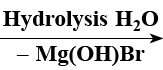
HCHO + RMgX RCH2OMgX RCH2OH + Mg(OH)X
RCHO + R'MgX + Mg(OH)X
RCOR + R'MgX
+ Mg(OH)X
You will notice that the reaction produces a primary alcohol with methanal, a secondary alcohol with other aldehydes and tertiary alcohol with ketones.
#16 SUB 2M 🖼 1

Question

Explain why propanol has higher boiling point than that of the hydrocarbon butane ?

Answer

The molecules of hydrocarbon butane are attached with each other by weak Van der Waals attraction force, whereas molecules of propanol are attached with each other by strong intermolecular hydrogen bond, therefore the boiling point of propanol is much higher than that of hydrocarbon butane.
#17 SUB 4M 🖼 3

Question

Explain the preparation of phenol compounds with chemical equations.
OR
Explain the preparation of phenol from chlorobenzene, benzenesulphonic acid, aniline and cumene.

Answer

(i) From haloarenes: (Exercise Q.7.10)
Chlorobenzene is fused NaOH at 623 K and 300 atmospheric pressure. Phenol is obtained by acidification of sodium phenoxide.
(ii) From benzenesulphonic acid:
Benzene is sulphonated with oleum and benzene sulphonic acid so formed is converted to sodium phenoxide on heating with molten sodium hydroxide. Acidification of the sodium salt gives phenol.
(iii) From diazonium salts:
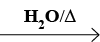
Dizonium salt is formed by treating an aromatic primary amine with nitrous acid (NaNO2 + HCl) at 273-278 K. Diazonium salts are hydrolysed to phenols by warming with water or by treating with dilute acids.
(iv) From cumene:
Phenol is manufactured from the hydrocarbon, cumene. Cumene (isopropylbenzene) is oxidised in the presence of air to cumene hydroperoxide. It is converted to phenol and acetone by treating it with dilute acid. Acetone, a by-product of this reaction, is also obtained in large quantities by this method.
#18 SUB 3M 🖼 2

Question

Explain the effect of hydrogen bond on boiling point of alcohol and phenol.

Answer

The boiling points of alcohols and phenols increase with increase in the number of carbon atoms (increase in van der Waals forces).
In alcohols, the boiling points decrease with increase of branching in carbon chain (because of decrease in van der Waals forces with decrease in surface area).
The –OH group in alcohols and phenols involved in intermolecular hydrogen bonding is as
shown below:
It is interesting to note that boiling points of alcohols and phenols are higher in comparison to other classes of compounds, namely hydrocarbons, ethers, haloalkanes and haloarenes of comparable molecular masses. For example, ethanol and propane have comparable molecular masses but their boiling points differ widely. The boiling point of methoxymethane is intermediate of the two boiling points.
The high boiling points of alcohols are mainly due to the presence of intermolecular hydrogen bonding in them which is lacking in ethers and hydrocarbons.
#19 SUB 2M 🖼 1

Question

Write a note on solubility of alcohol and phenol compounds in water.
OR
Alcohols are comparatively more soluble in water than hydrocarbon of comparable molecular masses. Explain this fact.

Answer

Solubility of alcohols and phenols in water is due to their ability to form hydrogen bonds with water molecules as shown. The solubility decreases with increase in size of alkyl/aryl (hydro-phobic) groups. Several of the lower molecular mass alcohols are miscible with water in all proportions.
#20 SUB 2M 🖼 1

Question

‘Alcohols are versatile compounds’ discuss this statement by giving suitable example.

Answer

Alcohols are versatile compounds. They react both as nucleophiles and electrophiles. The bond between O – H is broken when alcohols react as nucleophiles.
Alcohols as nucleophiles:
(i)
(ii) The bond between C – O is broken when they react as electrophiles. Protonated alcohols react in this manner.
Protonated alcohols as electrophiles:
#21 SUB 3M 🖼 4

Question

Explain the acidic nature of alcohols and phenols by their reaction with metals.
OR
‘Alcohols and phenols are acidic in nature’ verify the truth of this statement by a reaction with metals.

Answer

Reaction with metals: Alcohols and phenols react with active metals such as sodium, potassium and aluminium to yield corresponding alkoxides/phenoxides and hydrogen.
In addition to this, phenols react with aqueous sodium hydroxide to form sodium phenoxides.
The above reactions show that alcohols and phenols are acidic in nature. In fact, alcohols and phenols are bronsted acids i.e., they can donate a proton to a stronger base (B:).
#22 SUB 3M 🖼 2

Question

Write a note on acidity of alcohols.

Answer

Acidity of alcohols: The acidic character of alcohols is due to the polar nature of O – H bond. An electron-releasing group (–CH3, –C2H5) increases electron density on oxygen tending to decrease the polarity of O – H bond. This decreases the acid strength. For this reason, the acid strength of alcohols decreases in the following order:
Alcohols are, however, weaker acids than water. This can be illustrated by the reaction of water with an alkoxide.
This reaction shows that water is a better proton donor (i.e., stronger acid) than alcohol. Also, in the above reaction, we note that an alkoxide ion is a better proton acceptor than hydroxide ion, which suggests that alkoxides are stronger bases (sodium ethoxide is a stronger base than sodium hydroxide).
Alcohols can act as both bronsted bases as well as acids. It is due to the presence of unshared electron pairs on oxygen. which makes them proton acceptors.
#23 SUB 2M

Question

Write a note on acidity of phenols.

Answer

Acidity of phenols: The reactions of phenol with metals (e.g., sodium, aluminium) and sodium hydroxide indicate its acidic nature. The hydroxyl group, in phenol is directly attached to the sp2 hybridised carbon of benzene ring which acts as an electron withdrawing group. Due to this, the charge distribution in phenol molecule, as depicted in its resonance structures, causes the oxygen of –OH group to be positive.
The reaction of phenol with aqueous sodium hydroxide indicates that phenols are stronger acids than alcohols and water.
#24 SUB 3M 🖼 4

Question

Why a compound in which hydroxyl group attached to an aromatic ring is more acidic than the one in which hydroxyl group is attached to an alkyl group?

Answer

The ionization of an alcohol and a phenol takes place as follows:
R – – H R – + H+
Due to the higher electronegativity of sp2 hybridised carbon of phenol to which –OH is attached, electron density decreases on oxygen. This increases the polarity of O–H bond and results in an increase in ionization of phenols than that of alcohols.
Now let us examine the stabilities of alkoxide and phenoxide ions. In alkoxide ion, the negative charge is localised on oxygen while in phenoxide ion, the charge is delocalised.
The delocalisation of negative charge (structures I-V) makes phenoxide ion more stable and favours the ionization of phenol.
Although there is also charge delocalisation in phenol, its resonance structures have charge separation due to which the phenol molecule is less stable than phenoxide ion.
#25 SUB 3M 🖼 4

Question

Write a note on esterification of alcohols and phenols.
OR
Write equation of preparing Aspirin from phenol in these steps.

Answer

Alcohols and phenols react with carboxylic acids, acid chlorides and acid anhydrides to form esters.
Ar/RO–H + R'-COOH Ar/ROCOR' + H2O
Ar/R-OH + (R'CO)2O Ar/ROCOR' + R'COOH
R/ArOH + R'COCl R/ArOCOR' + HCl
The reaction with carboxylic acid and acid anhydride is carried out in the presence of a small amount of concentrated sulphuric acid. The reaction is reversible, and therefore, water is removed as soon as it is formed. The reaction with acid chloride is carried out in the presence of a base (pyridine) so as to neutralise HCl which is formed during the reaction. It shifts the equilibrium to the right hand side. The introduction of acetyl (CH3CO) group in alcohols or phenols is known as acetylation. Acetylation of salicylic acid produces aspirin.
#26 SN 2M 🖼 1

Question

Explain the reaction of alcohols with hydrogen halides.
OR
Write a short note on Lucas test.

Answer

Alcohols react with hydrogen halides to form alkyl halides.
R-OH + HCl R-Cl + H2O
The difference in reactivity of three classes of alcohols with HCl distinguishes them from one another.
Alcohols are soluble in Lucas reagent (conc. HCl and ZnCl2) while their halides are immiscible and produce turbidity in solution.
In case of tertiary alcohols, turbidity is produced immediately as they form the halides easily.
Primary alcohols do not produce turbidity at room temperature.
This is how alcohols can be distinguished by Lucas test.
#27 SUB 2M 🖼 3

Question

Write the mechanism of acid-dehydration of ethanol to yield ethene.
OR
Explain dehydration reaction of alcohol to form alkene.

Answer

The mechanism of dehydration of ethanol involves the following steps:
Mechanism:
Step 1: Formation of protonated alcohol
Step 2: Formation of carbocation: It is the slowest step and hence, the rate determining step of the reaction.
Step 3: Formation of ethene by elimination of a proton.
The acid used in step 1 is released in step 3. To drive the equilibrium to the right, ethene is removed as it is formed.
#28 SUB 2M

Question

Write a note on the reaction of alcohols with phosphorus trihalides.

Answer

Alcohols react with phosphorus trihalides to give corresponded alkyl halides. This reaction is useful for preparation of alkyl halides from alcohols.
3R–OH + PX3 3R-X + H3PO3 (X = Cl, Br)
3CH3OH + PCl3 3CH3Cl + H3PO3
3CH3CH2OH + PBr3 3CH3CH2Br + H3PO3
#29 SUB 3M 🖼 4

Question

Explain dehydration of alcohols with chemical equations. Also give the order for relative ease of dehydration of alcohols.

Answer

Dehydration: Alcohols undergo dehydration (removal of a molecule of water) to form alkenes on treating with a protic acid e.g., concentrated H2SO4 or H3PO4, or catalysts such as anhydrous zinc chloride or alumina.
Ethanol undergoes dehydration by heating it with concentrated H2SO4 at 443 K.
C2H5OH CH2 = CH2 + H2O
Secondary and tertiary alcohols are dehydrated under milder conditions. For example
Thus, the relative ease of dehydration of alcohols follows the following order:
Tertiary > Secondary > Primary
#30 SUB 3M 🖼 5

Question

Write a note on oxidation reaction of alcohols.
OR
Explain oxidation of alcohols with chemical reactions.

Answer

Oxidation: Oxidation of alcohols involves the formation of a carbon oxygen double bond with cleavage of an O-H and C-H bonds.
Such a cleavage and formation of bonds occur in oxidation reactions. These are also known as dehydrogenation reactions as these involve loss of dihydrogen from an alcohol molecule. Depending on the oxidising agent used, a primary alcohol is oxidised to an aldehyde which in turn is oxidised to a carboxylic acid.
Strong oxidising agents such as acidified potassium permanganate are used for getting carboxylic acids from alcohols directly. CrO3 in anhydrous medium is used as the oxidising agent for the isolation of aldehydes.
RCH2OH RCHO
A better reagent for oxidation of primary alcohols to aldehydes in good yield is pyridinium chlorochromate (PCC), a complex of chromium trioxide with pyridine and HCl.
CH3 – CH = CH – CH2OH
CH
3 – CH = CH – CHO [March 2025]
Secondary alcohols are oxidised to ketones by chromic anhydride (CrO3).
Tertiary alcohols do not undergo oxidation reaction. Under strong reaction condition such as strong oxidizing agents (KMnO4) and elevated temperature, cleavage of various C-C bonds place and mixture of carboxylic acid containing lesser number of carbon atoms is formed.
#31 SUB 2M 🖼 3

Question

What happens when the vapours of a primary, secondary and tertiary alcohol are passed over heated copper at 573K temperature? Explain with chemical equation.

Answer

When the vapours of a primary, secondary and tertiary alcohol are passed over heated copper at 573 K, dehydrogenation takes place and an aldehyde or a ketone is formed while tertiary alcohols undergo dehydration.
RCH2OH RCHO
#32 SUB 3M 🖼 3

Question

Explain nitration of phenol in detail.

Answer

Nitration: With dilute nitric acid at low temperature (298 K), phenol yields a mixture of ortho and para nitrophenols.
The ortho and para isomers can be separated by steam distillation. o-Nitrophenol is steam volatile due to intramolecular hydrogen bonding while p-nitrophenol is less volatile due to intermolecular hydrogen bonding which causes the association of molecules.
With concentrated nitric acid, phenol is converted to 2,4,6-trinitrophenol. The product is commonly known as picric acid. The yield of the reaction product is poor.
Nowadays picric acid is prepared by treating phenol first with concentrated sulphuric acid which converts into phenol-2,4-disulphonic acid, and then with concentrated nitric acid to get 2,4,6-trinitrophenol.
#33 SUB 2M 🖼 1

Question

While separating a mixture of ortho and para nitrophenols by steam distillation, name the isomer which will be steam volatile. Give reason.

Answer

The ortho and para isomers can be separated by steam distillation. o-Nitrophenol is steam volatile due to intramolecular hydrogen bonding while p-nitrophenol is less volatile due to intermolecular hydrogen bonding which causes the association of molecules.
#34 SUB 3M 🖼 2

Question

Write a note on halogenation of phenol.

Answer

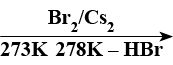
Halogenation: On treating phenol with bromine, different reaction products are formed under different experimental conditions.
(a) When the reaction is carried out in solvents of low polarity such as CHCl3 or CS2 and at low temperature, monobromophenols are formed.
The usual halogenation of benzene takes place in the presence of a Lewis acid, such as FeBr3, which polarises the halogen molecule. In case of phenol, the polarization of bromine molecule takes place even in the absence of Lewis acid. It is due to the highly activating effect of –OH group attached to the benzene ring.
(b) When phenol is treated with bromine water, 2, 4, 6-tribromophenol is formed as white precipitate.
#35 SUB 2M 🖼 1

Question

Explain Kolbe’s reaction of phenol.
OR
Explain the reaction to obtain salicylic acid from phenol.
OR
Expalin the following with an example
Kolbe’s reaction.

Answer

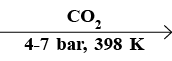
Phenoxide ion generated by treating phenol with sodium hydroxide is even more reactive than phenol towards electrophilic aromatic substitution. Hence, it undergoes electrophilic substitution with carbon dioxide, a weak electrophile. Ortho hydroxybenzoic acid is formed as the main reaction product.
#36 SUB 2M 🖼 1

Question

Explain the Reimer-Tiemann reaction of phenol.
OR
Explain the reaction to obtain salicylaldehyde from phenol.
OR
Explain the following with an example (ii) Reimer-Tiemann reaction.

Answer

On treating phenol with chloroform in the presence of sodium hydroxide, a –CHO group is introduced at ortho position of benzene ring. This reaction is known as Reimer - Tiemann reaction.
The intermediate substituted benzal chloride is hydrolysed in the presence of alkali to produce salicylaldehyde.
#37 SUB 2M 🖼 2

Question

Explain the following with an example
(i) Reaction of phenol with zinc dust.
(ii) Oxidation reaction of phenol.

Answer

Reaction of phenol with zinc dust: Phenol is converted to benzene on heating with zinc dust.
Oxidation: Oxidation of phenol with chromic acid produces a conjugated diketone known as benzoquinone. In the presence of air, phenols are slowly oxidised to dark coloured mixtures containing quinones.
#38 SUB 2M 🖼 2

Question

Give equations of the following reactions:
(i) When tertiary alcohol heated at 573K in presence of copper (Cu)
(ii) Oxidation of phenol with chromic acid.

Answer

(i) When tertiary alcohol heated at 573K in presence of copper (Cu)
(ii) Oxidation of phenol with chromic acid
#39 SUB 3M 🖼 1

Question

State the preparation, properties and uses of methanol.

Answer

Methanol, CH3OH, also known as ‘wood spirit’, was produced by destructive distillation of wood. Today, most of the methanol is produced by catalytic hydrogenation of carbon monoxide at high pressure and temperature and in the presence of ZnO – Cr2O3 catalyst.
CO + 2H2 CH3OH
Methanol is a colourless liquid and boils at
337K. It is highly poisonous in nature. Ingestion of even small quantities of methanol can cause blindness and large quantities causes even death. Methanol is used as a solvent in paints, varnishes and chiefly for making formaldehyde.
#40 SUB 4M 🖼 4

Question

State the preparation, properties and uses of ethanol.

Answer

Ethanol, C2H5OH, is obtained commercially by fermentation, the oldest method is from sugars. The sugar in molasses, sugarcane or fruits such as grapes is converted to glucose and fructose, (both of which have the formula C6H12O6), in the presence of an enzyme, invertase. Glucose and fructose undergo fermentation in the presence of another enzyme, zymase, which is found in yeast.
C12H22O11 + H2O +
C6H12O6 2C2H5OH + 2CO2
In wine making, grapes are the source of sugars and yeast. As grapes ripen, the quantity of sugar increases and yeast grows on the outer skin. When grapes are crushed, sugar and the enzyme come in contact and fermentation starts. Fermentation takes place in anaerobic conditions i.e. in absence of air. Carbon dioxide is released during fermentation.
The action of zymase is inhibited once the percentage of alcohol formed exceeds 14 percent. If air gets into fermentation mixture, the oxygen of air oxidises ethanol to ethanoic acid which in turn destroys the taste of alcoholic drinks.
Ethanol is a colourless liquid with boiling point 351K. It is used as a solvent in paint industry and in the preparation of a number of carbon compounds. The commercial alcohol is made unfit for drinking by mixing in it some copper sulphate (to give it a colour) and pyridine (a foul smelling liquid). It is known as denaturation
of alcohol.
#41 SUB 3M 🖼 4

Question

Explain the preparation of ethers with mechanism by dehydration of alcohols.

Answer

Alcohols undergo dehydration in the presence of protic acids (H2SO4, H3PO4). The formation of the reaction product, alkene or ether depends on the reaction conditions. For example, ethanol is dehydrated to ethene in the presence of sulphuric acid at 443K. At 413K, ethoxyethane is the main product.
The formation of ether is a nucleophilic bimolecular reaction (SN2) involving the attack of alcohol molecule on a protonated alcohol, as indicated below:
(i)
(ii)
(iii)
Acidic dehydration of alcohols, to give an alkene is also associated with substitution reaction to give an ether.
#42 SUB 2M

Question

Discuss the classification of ethers.
OR
Explain the following with an example.
(iv) Unsymmetrical ether.

Answer

Ethers are classified as simple or symmetrical, if the alkyl or aryl groups attached to the oxygen atom are the same, and mixed or unsymmetrical, if the two groups are different. Diethyl ether, C2H5OC2H5, is a symmetrical ether whereas C2H5OCH3 and C2H5OC6H5 are unsymmetrical ethers.
#43 SN 4M 🖼 1

Question

Write short note: Williamson synthesis.
OR
Explain the following with an example:
(iii) Williamson ether synthesis:

Answer

It is an important laboratory method for the preparation of symmetrical and unsymmetrical ethers. In this method, an alkyl halide is allowed to react with sodium alkoxide.
Ethers containing substituted alkyl groups (secondary or tertiary) may also be prepared by this method. The reaction involves SN2 attack of an alkoxide ion on primary alkyl halide.
Better results are obtained if the alkyl halide is primary. In case of secondary and tertiary alkyl halides, elimination competes over substitution. If a tertiary alkyl halide is used, an alkene is the only reaction product and no ether is formed. For example, the reaction of CH3ONa with
(CH3)3C–Br gives exclusively 2-methylpropene.
It is because alkoxides are not only nucleophiles but strong bases as well. They react with alkyl halides leading to elimination reactions.
Phenols are also converted to ethers by this method. In this, phenol is used as the phenoxide moiety.
#44 SUB 3M

Question

Illustrate with examples the limitation of williamson synthesis for the preparation of certain type of ethers.

Answer

Williamson synthesis is an important laboratory method for the preparation of symmetrical and unsymmetrical ethers.
However, selection of appropriate reactants is required for the preparation of unsymmetrical ethers.
Williamson synthesis occurs via SN2 mechanism and primary alkyl halides are more reactive towards SN2 reaction.
Thus, better results are obtained if the alkyl halide is primary and alkoxide ion is primary, secondary or tertiary.
For example, tert-butyl ether can be prepared by treating methyl bromide with tert-butyloxide ion.
The above ether can not be prepared by the reaction between sodium methoxide and tert-butyl bromide. Because in this case elimination competes over substitution and alkene compound iso-butylene obtain as a product.
It is because alkoxides are not only nucleophiles but strong bases as well. They react with alkyl halides leading to elimination reactions.
Aryl and vinyl halides can not be used as reactant in Williamson synthesis as they are very less reactive towards nucleophilic reaction.
#45 SUB 2M

Question

Preparation of ether by acid dehydration of secondary or tertiary alcohols is not a suitable method. Give reason.

Answer

The acid dehydration method is suitable for the preparation of ethers having primary alkyl groups only.
The alkyl group should be unhindered and the temperature be kept low.
Otherwise the reaction favours the formation of alkene.
The reaction follows SN1 pathway when the alcohol is secondary or tertiary.
However, the dehydration of secondary and tertiary alcohols to give corresponding ethers is unsuccessful as elimination competes over substitution and as a consequence, alkenes are easily formed.
#46 SUB 2M 🖼 1

Question

Explain the fact in aryl alkyl ethers:
(i) The alkoxy group activates the benzene ring towards electrophilic substitution and
(ii) It directs the incoming substituents to ortho and para position in benzene ring.

Answer

(i) The alkoxy group (– OR) is ortho, para directing and activates the aromatic ring towards electrophilic substitution in the same way as in phenol.
(ii) From the above resonance structures, we infer that the electron density on ortho and para position is more than that of meta position. Therefore, the substituent which is electrophile is directed to the ortho and para position of the benzene ring.
#47 SUB 2M 🖼 2

Question

Write equations of the following reactions:
(i) Friedel-Crafts reaction – alkylation of anisole.
(ii) Nitration of anisole.
(iii) Bromination of anisole in ethanoic acid medium.
(iv) Friedel-Crafts acetylation of anisole.

Answer

(i) Friedel-Crafts reaction – alkylation of anisole:
(ii) Nitration of anisole:
(iii) Bromination of anisole in ethanoic acid medium:
(iv) Friedel-Crafts acetylation of anisole:
#48 SUB 4M 🖼 7

Question

Write products of the following reactions.
(i)
(ii)
(iii)
(iv)

Answer

(i) (ii)
(iii) (iv)
Class 12 Chemistry (Part 2) 007
S match 54% type: 12 Q ⤓ Export ZIP
#49 SUB 🖼 4

Question

Classify the following as primary, secondary and tertiary alcohols:
(i)
(ii) H2C = CH – CH2OH
(iii) CH3 – CH2 – CH2 – OH
(iv) (v)
(vi)
#50 SUB 🖼 1

Question

Identify allylic alcohols in the above examples.

Answer

(i) H2C = CH – CH2OH and
(ii)
Allylic alcohols in above example.
#51 SUB 🖼 5

Question

Give IUPAC names of the following compounds:
(i)
(ii)
(iii)
(iv)
(v)

Answer

(i) 3-Chloromethyl-2-isopropy pentanol
(ii) 2, 5-Dimethylhexane- 1, 3-diol
(iii) 3-Bromocyclohexanol
(iv) Hex-1-en-3-ol
(v) 2-Bromo-3-methylbut-2-en-1-ol
#52 SUB 🖼 4

Question

Show how the following alcohols are prepared by the reaction of a suitable Grignard reagent on methanal ?
(i) (ii)

Answer

#53 SUB 🖼 6

Question

Write structures of the products of the following reactions:
(i) CH3 – CH = CH2
(ii)
(iii)

Answer

(i)
(ii)
(iii)
#54 SUB 🖼 6

Question

Give structures of the products you would expect when each of the following alcohol reacts with
(a) HCl - ZnCl2 (b) HBr and (c) SOCl2.
(i) Butan-1-ol (ii) 2-Methylbutan-2-ol

Answer

(a) With HCl-ZnCl2:
CH3CH2CH2CH2OH + HCl reaction does not take place at room temperature.
Butan-1-ol
(b) With HBr:
CH3CH2CH2CH2OH + HBr CH3CH2CH2CH2Br + H2O
Butan-1-ol 1-bromobutane
(c) With SOCl2:
CH3CH2CH2CH2OH + SOCl2 CH3CH2CH2CH2Cl + SO2 + HCl
Butan-1-ol 1-bromobutane
#55 SUB 🖼 1

Question

Predict the major product of acid catalysed dehydration of (i) 1-methylcyclohexanol and
(ii) butan-1-ol
?

Answer

(i) 1-Methylcyclohexene
(ii) But-1-ene
CH3CH2CH2CH2OH CH3CH=CHCH3+H2O
But-2-ene (major)
#56 SUB 3M 🖼 2

Question

Ortho and para nitrophenols are more acidic than phenol. Draw the resonance structures of the corresponding phenoxide ions.

Answer

The resonating structures of ortho and para nitrophenoxide ions are as below:
o-nitrophenoxide ion:
p-nitrophenoxide ion:
It can be seen that presence of nitro group increases stability of phenoxide ion.
#57 SUB 2M 🖼 1

Question

Write the equations involved in the following reactions:
(i) Reimer - Tiemann reaction
(ii) Kolbe’s reaction

Answer

(i) Reimer-Tiemann reaction:
(ii) Kolbe’s reaction:
#58 SUB 🖼 3

Question

Write the reactions of Williamson synthesis of 2-ethoxy-3-methylpentane starting from ethanol and 3-methylpentan-2-ol.

Answer

C2H5OH C2H5Br
#59 SUB 🖼 2

Question

Which of the following is an appropriate set of reactants for the preparation of 1-methoxy-4-nitrobenzene and why?
(i) (ii)

Answer

In a first set double bond character is observed between C-Br bond due to resonance, which is difficult to break. Therefore, for the preparation of 1-methoxy-4-nitrobenzene set (ii) is more appropriate.
#60 SUB 🖼 7

Question

Predict the products of the following reactions:
(i) CH3 – CH2 – CH2 – O – CH3 + HBr
(ii) + HBr
(iii)
(iv) (CH3)3 C – OC2H5

Answer

(i) CH3 – CH2 – CH2 – O – CH3 + HBr
CH3CH2CH2OH + CH3Br
(ii)
(iii)
(iv) (CH3)3 C – OC2H5 (CH3)3 C – I + C2H5OH
S src: NCERT Textbook Exercise Questions And Answers match 75% type: 33 Q ⤓ Export ZIP
#61 SUB 🖼 9 ▦ 1

Question

Write IUPAC name of the following compounds:
(i) (ii)
(iii) (iv)
(v) (vi) (vii) (viii)
(ix) (x) C6H5–O–C2H5 (xi) C6H5–O–C7H15(n–)
(xii)

Answer

By Williamson synthesis:
3 CH3 – CH2 – CH2 – OH + PBr3 3 CH3 – CH2 – CH2 – Br + H3PO3
Propan-1-ol 1-Bromopropane
CH3 – CH2 – CH2 – OH + Na CH3 – CH2 – CH2 + H2
Propan-1-ol Sodium propoxide

No.

Structure

IUPAC name

(i)

2,2,4-Trimethylpentan-3-ol

(ii)

5-Ethylheptan-2,4-diol

(iii)

Butan-2,3-diol

(iv)

Propan-1,2,3-triol

(v)

2-Methylphenol

(vi)

4-Methylphenol

(vii)

2,5-Dimethylphenol

(viii)

2,6-Dimethylphenol

(ix)

1-Methoxy-2-methylpropane

(x)

C6H5 – O – C2H5

Ethoxybenzene

(xi)

C6H5 – O – C7H15(n–)

1-Phenoxyheptane

(xii)

2-Ethoxybutane

#62 SUB ▦ 1

Question

Write the structures of the compounds whose IUPAC names are as follows:
(i) 2-Methylbutan-2-ol (ii) 1-Phenylpropan-2-ol
(iii) 3,5-Dimethylhexane –1, 3, 5-triol (iv) 2,3 – Diethylphenol
(v) 1 – Ethoxypropane (vi) 2-Ethoxy-3-methylpentane
(vii) Cyclohexylmethanol (viii) 3-Cyclohexylpentan-3-ol
(ix) Cyclopent-3-en-1-ol (x) 4-Chloro-3-ethylbutan-1-ol.

Answer

By acid-dehydration of alcohol:
Primary carbocation attacks on another molecule of propan-1-ol via SN1 mechanism.

No.

IUPAC Name

Structure

(i)

2-Methylbutan-2-ol

(ii)

1-Phenylpropan-2-ol

(iii)

3,5-Dimethylhexane – 1, 3, 5-triol

(iv)

2,3 – Diethylphenol

(v)

1 – Ethoxypropane

CH3CH2 – O – CH2CH2CH3

(vi)

2-Ethoxy-3-methylpentane

(vii)

Cyclohexylmethanol

(viii)

3-Cyclohexylpentan-3-ol

(ix)

Cyclopent-3-en-1-ol

(x)

4-Chloro-3-ethylbutan-1-ol.

#63 SUB 4M

Question

(i) Draw the structures of all isomeric alcohols of molecular formula C5H12O and give their
IUPAC names.
(ii) Classify the isomers of alcohols in question 7 (i) as primary, secondary and tertiary alcohols.

Answer

The structures, IUPAC names and classification of all isomeric alcohols of molecular formula C5H12O
is as below:

No.

Structure

IUPAC name

Type

(i)

Pentan-1-ol

Primary (1°)

(ii)

3-Methylbutan-1-ol

Primary (1°)

(iii)

2-Methylbutan-1-ol

Primary (1°)

(iv)

2,2-Dimethylpropan-1-ol

Primary (1°)

(v)

Pentan-2-ol

Secondary (2°)

(vi)

3-Methylbutan-2-ol

Secondary (2°)

(vii)

2-Methylbutan-2-ol

Tertiary (3°)

(viii)

Pentan-3-ol

Secondary (2°)

#64 SUB

Question

Explain why propanol has higher boiling point than that of the hydrocarbon butane ?

Answer

Refer Que. 16 (Page No.95)
#65 SUB 2M

Question

Alcohols are comparatively more soluble in water than hydrocarbon of comparable molecular masses. Explain this fact.

Answer

Refer Que. 19 (Page No.96)
#66 SUB

Question

What is meant by hydroboration-oxidation reaction? Illustrate it with an example.

Answer

Refer Que. 10 (Page No.93)
#67 SUB 2M

Question

Give the structure and IUPAC name
of monohydric phenols of molecular
formula, C
7H8O.
#68 SUB

Question

While separating a mixture of ortho and para nitrophenols by steam distillation, name the isomer which will be steam volatile. Give reason.

Answer

Refer Que. 33 (Page No.100)
#69 SUB

Question

Give the equations of reactions for the preparation of phenol from cumene.

Answer

Refer Que. 17 (Page No.95)
#70 SUB 1M

Question

Write chemical reaction for the preparation of phenol from chlorobenzene.

Answer

Refer Que. 17 (Page No.95)
#71 SUB 3M

Question

Write the mechanism of hydration of ethene to yield ethanol.

Answer

Refer Que. 11 (Page No.93)
#72 SUB 2M

Question

You are given benzene, conc. H2SO4 and NaOH. Write the equation for the preparation of phenol using these reagents.

Answer

Refer Que. 17 (Page No.95)
#73 SUB

Question

Show how will you synthesise:
(i) 1-phenylethanol from a suitable alkene.
(ii) cyclohexylmethanol using an alkyl halide by an SN2 reaction.
(iii) pentan-1-ol using a suitable alkyl halide?

Answer

Refer Que. 12 (Page No.93)
#74 SUB 🖼 2

Question

Give two reactions that show the acidic nature of phenol. Compare acidity of phenol with that of ethanol.

Answer

The reactions that show acidic nature of phenol are as below:
Phenol is more acidic than ethanol because the phenoxide ion formed gets stabilised due to resonance than the ethoxide ion formed after deprotonation of ethanol.
#75 SUB 2M

Question

Explain why is ortho nitrophenol more acidic than ortho methoxyphenol ?
OR
Explain the relative acidity of substituted phenols.

Answer

In substituted phenols, the presence of electron withdrawing groups such as nitro group, enhances the acidic strength of phenol. This effect is more pronounced when such a group is present at ortho and para positions. It is due to the effective delocalisation of negative charge in phenoxide ion.
On the other hand, electron releasing groups, such as alkyl groups, in general, do not favour the formation of phenoxide ion resulting in decrease in acid strength. For example, cresols, are less acidic than phenol.
#76 SUB

Question

Explain how does the –OH group attached to a carbon of benzene ring activate it towards electrophilic substitution?

Answer

Phenol has the I-V resonating structures as shown below.
Due to +R effect of –OH group, the electron density on benzene ring increases which eases the attack of electrophile.
In other words, the –OH group attached to the benzene ring activates it towards electrophilic substitution.
It directs the incoming group to ortho and para positions in the ring as these positions become electron rich due to the resonance effect caused by –OH group.
#77 SUB 🖼 1

Question

Give equations of the following reactions:
(i) Oxidation of propan-1-ol with alkaline KMnO4 solution.
(ii) Bromine in CS2 with phenol.
(iii) Dilute HNO3 with phenol.
(iv) Treating phenol with chloroform in presence of aqueous NaOH.

Answer

(i) Oxidation of propan-1-ol with alkaline KMnO4 solution.
CH3CH2COOH + H2O
(ii) Bromine in CS2 with phenol.
(iii) Dilute HNO3 with phenol.
(iv) Treating phenol with chloroform in presence of aqueous NaOH.
#78 SUB

Question

Explain the following with an example.
(i) Kolbe’s reaction. [Topic 7.4]
(ii) Reimer-Tiemann reaction. [Topic 7.4]
(iii) Williamson ether synthesis. [Topic 7.6]
(iv) Unsymmetrical ether. [Topic 7.1]

Answer

Refer Que. 35 (Page No.101)
Refer Que. 36 (Page No.101)
Refer Que. 43 (Page No.103)
Refer Que. 42 (Page No.103)
#79 SUB

Question

Write the mechanism of acid-dehydration of ethanol to yield ethene.

Answer

Refer Que. 27 (Page No.99)
#80 SUB 🖼 3

Question

How are the following conversions carried out?
(i) Propene Propan-2-ol.
(ii) Benzyl chloride Benzyl alcohol.
(iii) Ethyl magnesium chloride Propan-1-ol.
(iv) Methyl magnesium bromide 2-Methylpropan 2-ol

Answer

(i) Propene Propan-2-ol
(ii) Benzyl chloride Benzyl alcohol
(iii) Ethyl magnesium chloride Propan-1-ol.
(iv) Methyl magnesium bromide 2-Methylpropan-2-ol
#81 SUB

Question

Name the reagents used in the following reactions:
(i) Oxidation of a primary alcohol to carboxylic acid.
(ii) Oxidation of a primary alcohol to aldehyde.
(iii) Bromination of phenol to 2,4,6-tribromophenol.
(iv) Benzyl alcohol to benzoic acid.
(v) Dehydration of propan-2-ol to propene.
(vi) Butan-2-one to butan-2-ol.

Answer

(i) Acidic potassium dichromate or neutral/acidic/alkaline KMnO4.
(ii) Pyridinium chlorochromate (PCC), a complex of chromium trioxide with pyridine and HCl.
(iii) Bromine water Br2/H2O.
(iv) Acidic or alkaline potassium permanganate.
(v) Conc. H2SO4 at 443 K.
(vi) Ni/H2 or NaBH4 or LiAlH4.
#82 SUB

Question

Give reason for the higher boiling point of ethanol in comparison to methoxymethane.

Answer

The molecules of ethanol are associated due to the formation of intermolecular hydrogen bond. Hence, more energy is required to break the inter molecular force of attraction between ethanol molecules, Therefore the boiling point of ethanol is relatively high. Whereas the methoxymethane molecules can readily convert in to vapour because only weak Van der Waals force of attraction exist between them. Hence, its boiling point is lower than that of ethanol.
#83 SUB 🖼 3 ▦ 1

Question

Give IUPAC names of the following ethers:
(i)
(ii) CH3OCH2CH2Cl
(iii) O2N–C6H4–OCH3(p)
(iv) CH3CH2CH2OCH3
(v) (vi)

Answer

No.

Structure

IUPAC name

(i)

1-Ethoxy-2-methylpropane

(ii)

CH3OCH2CH2Cl

2-Chloro-1-methoxyethane

(iii)

O2N–C6H4–OCH3(p)

4-Nitroanisole

(iv)

CH3CH2CH2OCH3

1-Methoxypropane

(v)

4-Ethoxy-1,

1-dimethylcyclo-

hexane

(vi)

Ethoxybenzene

#84 SUB 🖼 3

Question

Write the names of reagents and equation for the preparation of the following ethers by Williamson’s synthesis:
(i) 1-propoxypropane [March 2025]
(ii) Ethoxybenzene [March 2025]
(iii) 2-methoxy-2-methylpropane [March 2025]
(iv) 1-Methoxyethane

Answer

(ii)
(iii)
(iv)
#85 SUB

Question

Illustrate with examples the limitation of williamson synthesis for the preparation of certain type of ethers.

Answer

Refer Que. 44 (Page No.104)
#86 SUB 🖼 2

Question

How is 1-propoxypropane synthesised from propan-1-ol? Write the mechanism of this reaction.

Answer

Propoxypropane from propan-1-ol can be synthesised by two different methods:
#87 SUB

Question

Preparation of ether by acid dehydration of secondary or tertiary alcohols is not a suitable method. Give reason.

Answer

Refer Que. 45 (Page No.104)
#88 SUB 3M 🖼 3

Question

Write the equation of the reaction of hydrogen iodide with:[Topic 7.6]
(i) 1-propoxypropane (ii) methoxybenzene and (iii) benzyl ethyl ether

Answer

(i) 1-propoxypropane:
(ii) Methoxybenzene:
(iii) Benzyl ethyl ether:
#89 SUB

Question

Explain the fact in aryl alkyl ethers:
(i) The alkoxy group activates the benzene ring towards electrophilic substitution and
(ii) It directs the incoming substituents to ortho and para position in benzene ring.

Answer

Refer Que. 46 (Page No.105)
#90 SUB 🖼 3

Question

Write the mechanism of the reaction of HI with methoxymethane.

Answer

The reaction of methoxymethane with concentrated HI starts with protonation of ether molecule.
Step-1: Protonation of methoxymethane:
  • Step-2: Nucleophilic attack of I . Iodide is a good nucleophile. It attacks on either carbon of the oxonium ion formed in step-1 and displaces an alcohol molecule by SN2 mechanism.
Step-3: When HI is in excess and the reaction is carried out at high temperature. Methanol reacts with another molecule of HI and is converted to methyl iodide.
#91 SUB

Question

Write equations of the following reactions:
(i) Friedel-Crafts reaction – alkylation of anisole.
(ii) Nitration of anisole.
(iii) Bromination of anisole in ethanoic acid medium.
(iv) Friedel-Crafts acetylation of anisole.

Answer

Refer Que. 47 (Page No.105)
#92 SUB 🖼 4

Question

Show how would you synthesise the following alcohols from appropriate alkenes?
(i) (ii)
(iii) (iv)

Answer

The alcohols given above can be synthesised by applying Markovnikov’s rule through acid-catalysed hydration of appropriate alkenes.
(i) For this reaction 1-methylcyclohexene can be used.
(ii) Acid-catalysed hydration of 4-methylhept-3-ene yields 4-methylheptan-4-ol.
(iii) Acid-catalysed hydration of pent-1-ene yields pentan-2-ol.
(iv) 2-cyclohexylbut-2-ene will give 2-cyclohexylbutan-2-ol on acid-catalysed hydration.
#93 SUB 🖼 2

Question

When 3-methylbutan-2-ol is treated with HBr, the following reaction takes place :

Answer

Give a mechanism for this reaction.
Ans. Following is the mechanism of given reaction:
Protonation of the given alcohol gives a protonated alcohol from which a water molecule is removed
to give the carbocation (I), which being less stable, rearranges via 1,2-hydride shift to form the more stable carbocation (II). This results in a nucleophilic attack of Br ion on the carbocation (II) to give the final product.
Class 12 Chemistry (Part 2) 008
S match 100% type: 1 Q ⤓ Export ZIP
#94 MCQ ⚠ needs answer review 1M 🖼 105 ▦ 1

Question

is:
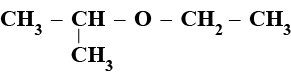
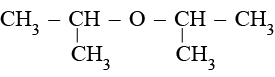
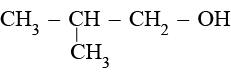
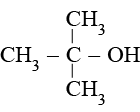
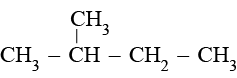
36. The structure of ethyl isopropyl ether
is ______.
(A)
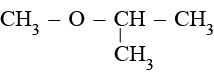
(B)
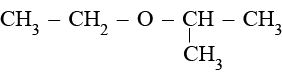
(C)
37. What is the C-O-H bond angle in phenol?
38. What is the C-O-H bond angle in methanol?
39. What is the hybridization of O-atom in ether?
40. Which of the given compound does not release CO2 gas on reaction with sodium carbonate?
41. What observation you will get on reaction of iso-butyl alcohol with anhydrous ZnCl2 in presence of concentrated HCl?
42. Which product is obtained during slow step of dehydration reaction of alcohol?
43. Phenol + Ethanoyl chloride
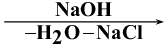
X,
Identify X in this reaction.
44. Which of the given alcohol is least acidic?
45. What is IUPAC name of the product obtained by hydroboration-oxidation reaction of hex-1-ene?
46. How many mole of dihydrogen gas will be produce during the reaction of methanol with 23 gm of sodium metal?
47. The acidity of which compound is maximum?
48. (CH3)3C – OH Y,
the product Y is:
49. The order of acidity of alcohol is:
50. The correct ascending order of boiling point is:
51. Which among the following alcohol has the least boiling point?
52. X + RMgBr Intermediate compound
Neopentylalcohol.
Identify X in a given reaction.
53. X + R1MgBr Intermediate compound Secondary pentylalcohol.
In the given reaction which of the following compound is not possible as X?
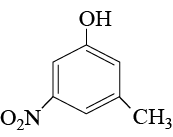
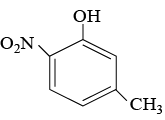
54. The product of a given reaction is:
(C)
(D)
55. In which of the given reaction the product obtained is alcohol and the number of carbon atoms of product is more than that of the reactant?
56. Aldehyde as a product can be obtained by which reaction of alcohol ?
57. Which catalyst is used in dehydration reaction of alcohol?
58. How much bromine will be used for complete bromination reaction of 47 g of phenol with bromine water? (The molecular masses of phenol and bromine are 94 and 160 g. Mole–1 respectively)
59. If tertiary-pentyl alcohol is obtained on hydrolysis of an intermediate product which is obtained by reaction of Y with RMgX, then identify R and Y respectively.
60. The correct order of solubility in water for given compound is:
61. The products obtained on oxidation and reduction of phenol are respectively:
62. At laboratory temperature the Lucas reagent reacts faster with:
63. Which of the given mixture is useful for preparation of 3-methylbutan-2-ol?
64. If theoretically 28 liters H2 gas is obtained on reaction of ethanol with Mg metal at STP and 20 g Mg metal remains unreacted, then initially how many grams of Mg metal has been taken in the reaction mixture? (Mg = 24)
65. The molecular formula of cumene is:
66. The product which is obtained on reduction of alcohol:
67. During dehydration of alcohol, the hybridization of –OH group containing carbon atom changes from ___ to ____.
68. The reaction of which of the given compounds is difficult with Lucas reagent?
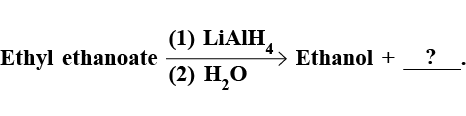
69. If compound B is obtained on reaction of organic compound A with Na2Cr2O7 and H2SO4, and ethyl alcohol is obtained on reduction of compound B with , then compound A is:
70. On treating phenol with chloroform in the presence of sodium hydroxide salicyaldehyde is obtained. This reaction is known as:
71. Arrange the following compounds in descending order of their acidity.
72. Which among the following is most preferable reagent for the reaction
R – CH2 – OH R – CHO?
73. Among the given reactions, in which reaction the product obtained is propan-2-ol?
(i) H2C == CH – CH3 + H2O
(ii) CH3CHO
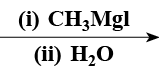
(iii) HCHO
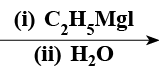
(iv) H2C == CH – CH3
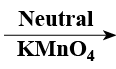
74. Which product will be obtained on heating sodium phenoxide with ethyl iodide?
75. Which product will be obtained on passing the vapour of secondary alcohol over heated copper at 573K?
76. In which of the given compounds intramolecular hydrogen bonding is formed?
77. The reactivity order of alcohol with haloacid is: (A) 1° > 2° > 3° (B) 3° > 2° > 1°
78. Identify X and Y in the given reaction.
X Y pBromophenol
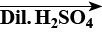
79. Match the following:
80. The correct order of acidity is:
81. Which compound is useful for the preparation of analgesic?
82. In the reaction Phenol p-Bromophenol,
the reagent ‘X’ is________.
83. Which of the following compound has the highest boiling point?
84. Chlorobenzene and phenol can be distinguished by ________.
85. How many primary alcohol are possible for the compound possessing molecular formula C5H11OH?
86. What is the final product? When phenol dissolved in aqueous solution of sodium hydroxide is heated with carbon dioxide gas at 398K temperature and 4-7 bar pressure?
87. Which reagent is used in hydroboration reaction?
88. Identify product of the following reaction:
CH3–CH2–CH2–CH=CH2 Product
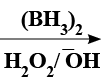
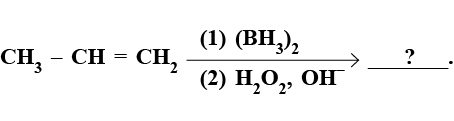
89. The general molecular formula of homologous series of alcohol is?
90. Carbolic acid means:
91. By which of the following reactions ethanol and phenol will be distinguished?
92. R-OH + NaBr + H2SO4 X + NaHSO4+H2O Identify product X in this reaction.
93. Which compound is more soluble in water?
94. In which of the given, intermolecular hydrogen bond is absent?
95. What is cumene?
96. Oxidation of which of the given alcohol is not possible?
97. Alkyl halide can be prepared by the reaction of alcohol with ________.
98. What is a by product of cumene method?
99. The other name of Aspirin is __________.
100. Picric acid means ________.
101. Lucas test is useful for which compound?
102. How many moles of bromine is required to obtain 2,4,6-tribromophenol from 94 g phenol?
103. Industrially ethanol is prepared by ________.
104. The preparation of alcohol from unsymmetrical alkene by acid catalysed hydration follows _______ rule.
105. Complete the following reaction:
106.
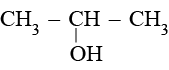
(A)
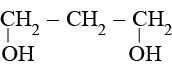
(C)
107. By _______ propene converts in to
propan-1-ol.
108. Which reagent is to be used to obtain
but-2-en-1-ol from but-2-enal?
109. Complete the reaction :
110. Q CH2 P,
products P and Q respectively, are:
111.
product ‘X’ of this reaction is:
112.
113.
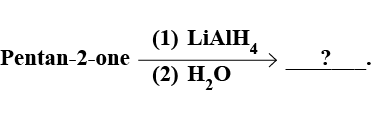
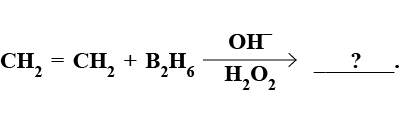
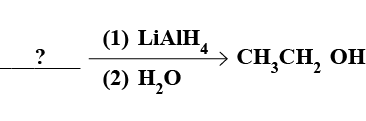
114.
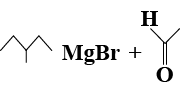
115. The final product of the reaction of HCHO with C2H5MgI is _______.
116. _______ will be obtained on a reaction of acetone with methyl magnesium iodide.
117.
118. Formaldehyde gives an additive product on a reaction with methyl magnesium iodide, which on hydrolysis gives _______.
119. Which is the major product obtained by hydrolysis of compound formed by reaction between acetaldehyde and ethyl magnesium bromide?
120. Which alcohol is obtained as a final product during the reaction of ketone with Grignard reagent?
121. Which alcohol is obtained by fermentation ?
122. By which enzyme, glucose and fructose convert into ethanol?
123. _______ is useful as an anti-freezing agent in automobile radiator.
124. Prop-1-ene is converted to propan-1-ol by oxidation, which of the following reagents can be considered best for this reaction?
125. CH3–Br A B
C then, C = ______.
126. What will we obtain on a reaction of methyl alcohol with 23 g Na? (Atomic mass of
Na = 23 g/mol)
127. _______ can not react with sodium metal.
128. Give IUPAC name of ester product obtained by reaction of ethanol with acetic acid.
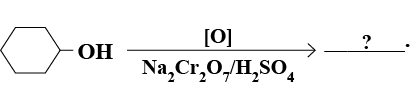
129. _______ will be obtained on oxidation of 2°-alcohol by chromic acid.
130.
131. If compound A of a molecular formula C4H10O gives ketone of a molecular formula C4H8O on oxidation, then what would be the possible structure of compound A?
132. _______ will be obtained on oxidation of
iso-propyl alcohol.
133. An alcohol compound ‘A’ with molecular formula C3H8O on vigorous oxidation produces an acid B with a molecular formula C3H6O2, then alcohol A is most likely to be:
134. ______ gives tert-butyl chloride on reaction with tert-butyl alcohol.
135. Ketone will obtain on oxidation of _______.
136. Complete the reaction:
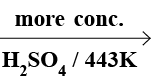
CH3CH2OH ______.
Class 12 Chemistry (Part 2) 009
137. Complete the reaction:
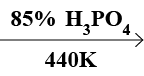
Propan-2-ol _______.
138. _______ dehydrates easily.
139. Which compound gives more stable carbocation?
(A)
(B)
(D)
140. Which of the following is correct for dehydration of alcohol?
141. Which of the following alcohol gives corresponding alkyl chloride on reaction with conc. HCl + anhy. ZnCl2 at normal temperature?
142. Ethanol X Y Z. Then, Z = _______.
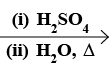
143. By which reagent n-propanol and iso-propyl alcohol can be distinguished chemically?
144. What will be obtained on catalytic dehydrogenation of primary alcohol?
145. HBr reacts faster with which of the given compound?
146. Which is the most suitable reagent for the conversion: R – CH2 – OH R – CHO.
147. CH3CH2OH A B C
D. Then, D = _______.
148. Which is the most suitable reagent to convert pent-3-en-2-ol into pent-3-en-2-one?
149. The reactivity order of hydrogen halide
for the reaction of alcohol with hydrogen halide is _______.
150. Tertiary alcohol _______.
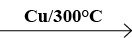
151. The product obtained on reaction of sodium benzene sulphonate with NaOH followed by acidic hydrolysis is _______.
152. Which product will be obtained during oxidation reaction of iso-propylbenzene with air in presence of dilute acid?
153. In the given reaction, the compounds A and B are respectively.
A B
154. Phenol is more acidic than alcohol because_______.
155. _______ is acidic amongst the given.
156. Choose the correct option for given statements. T = True statement, F = False statement
(i) Phenol is a weak acid.
(ii) Phenol is an aromatic compound.
(iii) Phenol produces CO2 gas on a reaction with Na2CO3.
(iv) Phenol is soluble in NaOH.
157. What will be obtained on heating phenol with Zn dust?
158. Complete the reaction: _____.
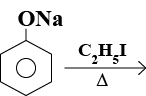
159. What will be obtained on a reaction of sodium phenoxide with methyl iodide?
160. Picric acid is obtained on a nitration of which compound?
161. The product obtained on a reaction of phenol with conc. HNO3 is:
162. Which of the following compounds is known as a picric acid?
163. Which product will be obtained on a reaction of phenol dissolved in a non polar solvent with Br2 at 273-278K temperature?
164. How many moles of bromine is required to prepare 2,4,6-tribromophenol from 1 mole phenol?
165. What will be obtained on a reaction of phenol with bromine water at normal temperature?
166. Kolbe’s reaction is useful for preparation
of _________.
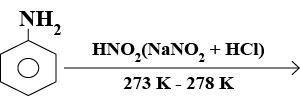
167. The final product (Z) of following reaction is:
Phenol X Y
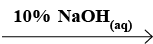
Z
168. _______ reaction is useful for preparation of salicyaldehyde from phenol.
169. From which of the following, salicylaldehyde can be prepared?
170. Phenol x y Z.
171. How much bromine is required to convert 2 g phenol into 2,4,6-tribromophenol?
(Molecular mass: phenol = 94 and Br2 = 160 g
mole–1)
172. The major final product obtained on a reaction of phenol with sodium hydroxide and carbon dioxide is ________.
173. Which of the following compounds is most acidic?
174. Identify correct order of acidity.
(i) Phenol (ii) Methylphenol
(iii) m-Nitrophenol (iv) p-Nitrophenol
175. The compound obtained after the reaction of phenol with Zn is treated with propyl chloride by Friedel-Crafts reaction in presence of AlCl3 gives compound (B). B on oxidation in presence of air gives (C), then the structure of C is ______.
176. + CO2 B C,
the product ‘C’ of reaction is _______.
177. o-Nitrophenol is less soluble in water than p-nitrophenol because:
178. Which of the following evolves carbon dioxide on a reaction with sodium bicarbonate?
179. Which of the following alcohol reacts faster during Lucas test? And by which mechanism?
180. To obtain ethanol, fermentation of D-glucose is carried out by which enzyme?
181. Which alcohol is produced from water gas?
182. Willamson synthesis is which type of reaction?
183. Which product will we obtain on a reaction of ethanol with sulphuric acid at 413K temperature?
184. The product obtained on Friedel-Crafts methylation of methoxybenzene is ________.
185. Compound B is obtained on a reaction of compound A with Na, while compound C is obtained on a reaction of A with PCl3. Moreover, on a reaction of compound B with C forms diethyl ether, then identify compounds A, B and C respectively.
186. The major products obtain on a heating of following compounds with HI are:
(A)
(B)
(C)
(D)
187. Which among the given pair of reagent will give anisole as a product?
188. Which of the following is not an isomer of anisole?
189. Alcohol possesses an isomerism with ______.
190. Anisole + X p-bromoanisole. Identify reagent X in this reaction.
191. The preparation of ether by Williamson synthesis is ______ reaction.
192. The general formula of homologus series of ether is:
193. Complete the reaction:
2CH3CH2OH _______.
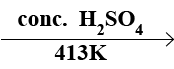
194. Which among the given pairs of reagent will give anisole as a product?
195.
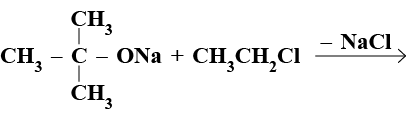
This reaction is known by which name?
196. Which of the following compound does not react with sodium?
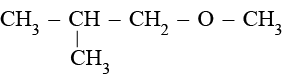
197. Which of the following ether produces methanol on a reaction with conc. HI?
(A)
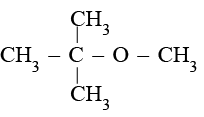
(B)
(D)
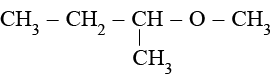
198.
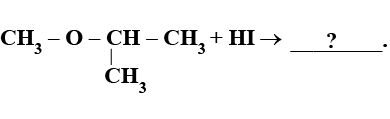
(Major product)
(A)
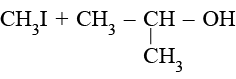
(B)
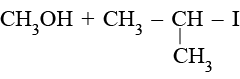
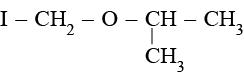
(C)
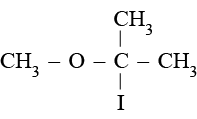
(D)
199. The reaction of solution of phenol prepared in sodium hydroxide with which compound is known as Williamson synthesis?
200. Which reaction is suitable for the preparation of tert-butylmethylether?
201.
202. Assertion : Phenols react with bromine water to give 2,4,6-tribromophenol as a white precipitate.
Reason : The -OH group in phenol strongly deactivates the benzene ring, making it sensitive to electrophilic substitution.
203. Assertion : Ethers are less reactive than alcohols toward nucleophiles.
Reason : Ethers lack an –OH group, which reduces their tendency to form hydrogen bonds.
204. Assertion : Primary alcohols can be oxidized to carboxylic acids in one step using strong oxidizing agents like KMnO4.
Reason : Primary alcohols first oxidize to aldehydes, which are then further oxidized to carboxylic acids.
205. Assertion : Lucas reagent can distinguish between primary, secondary, and tertiary alcohols.
Reason : Lucas reagent reacts fastest with primary alcohols to form alkyl chlorides.
206. Assertion : Phenols are more acidic than ethanol.
Reason : The phenoxide ion formed after deprotonation of phenol is resonance stabilized, whereas the ethoxide ion is not.
207. Assertion : Methanol has a lower boiling point than ethanol.
Reason : Methanol molecules are incapable of forming intermolecular hydrogen bonds.
208. Assertion : Williamson’s synthesis is not suitable for preparing tert-butyl methyl ether.
Reason : Tertiary alkyl halides undergo elimination instead of substitution during Williamson’s synthesis.
209. Assertion : Phenol reacts with sodium hydroxide to form sodium phenoxide.
Reason : Phenol is more acidic than water.
210. Assertion : Ethers can undergo cleavage with concentrated HI to form alcohols and alkyl iodides.
Reason : Ethers are highly reactive due to the lone pair of electrons on oxygen.
211. Assertion : Dehydration of ethanol at 443K produces ethene.
Reason : Ethanol reacts with concentrated H2SO4, which acts as a dehydrating agent.
212. Assertion : Phenol is soluble in water due to the formation of hydrogen bonds.
Reason : The -OH group in phenol allows intermolecular hydrogen bonding with water molecules.
213. Assertion : Boiling points of alcohols increase with an increase in molecular mass.
Reason : Higher molecular mass alcohols have stronger Van der Waals forces and more hydrogen bonding sites.
214. Assertion : The reaction of phenol with benzoyl chloride in the presence of NaOH gives phenyl benzoate.
Reason : Phenol reacts with benzoyl chloride via an electrophilic substitution mechanism.
215. Assertion : Methanol is more acidic than ethanol.
Reason : Methanol has a smaller alkyl group, which decreases the electron-donating inductive effect compared to ethanol.
216. Assertion : Ethers are good solvents for Grignard reagents.
Reason : Ethers can stabilize the Grignard reagent by coordinating with the magnesium atom through lone pairs on oxygen.
217. Assertion : Phenol reacts with FeCl3 to give a violet-coloured complex.
Reason : The phenoxide ion forms a coordination complex with ferric ions.
218. Select the correct option using T (True) or F (False) symbol for the following statements.
(i) Alcohols exhibit higher boiling points than ethers of comparable molecular mass.
(ii) Phenols are more acidic than alcohols due to resonance stabilization of the phenoxide ion.
(iii) The oxidation of a primary alcohol gives a ketone.
(iv) Ethers are less reactive than alcohols due to the absence of the –OH group.
219. Select the correct option using T (True) or F (False) symbol for the following statements.
(i) Lucas test is used to distinguish between primary, secondary, and tertiary alcohols.
(ii) Phenols undergo electrophilic substitution more readily than benzene.
(iii) Methanol reacts with concentrated HCl to form methyl chloride.
(iv) The reaction of alcohols with PCl5 gives alkyl halides and water.
220. Select the correct option using T (True) or
F (False) symbol for the following statements.
(i) Williamson’s synthesis is used to prepare both symmetrical and unsymmetrical ethers.
(ii) The dehydration of alcohols follows Saytzeff’s rule.
(iii) Primary alcohols dehydrate more readily than tertiary alcohols.
(iv) Phenols form hydrogen bonds with water.
221. Select the correct option using T (True) or F (False) symbol for the following statements.
(i) Ethers have lower boiling points than alcohols of similar molecular mass.
(ii) Ethers can undergo cleavage with concentrated HI.
(iii) Tertiary alcohols form carbocations more readily than primary alcohols.
(iv) Ethers are highly reactive with water.
222. Select the correct option using T (True) or
F (False) symbol for the following statements.
(i) Phenols give violet color with neutral FeCl3.
(ii) Tertiary alcohols give turbidity immediately with Lucas reagent.
(iii) Alcohols react with acids to form esters.
(iv) Ethers react with Grignard reagents to form alkanes.
223. Select the correct option using T (True) or
F (False) symbol for the following statements.
(i) Methanol can be oxidized to formaldehyde.
(ii) Phenol reacts with NaOH to form sodium phenoxide.
(iii) Diethyl ether reacts with excess HI to form ethanol and ethyl iodide.
(iv) Alcohols are weaker acids than water.
224. Select the correct option using T (True) or F (False) symbol for the following statements.
(i) Phenols are less acidic than alcohols.
(ii) Ethers are used as solvents in organic reactions.
(iii) Glycerol undergoes esterification with acetic acid.
(iv) Primary alcohols are oxidized to carboxylic acids in one step using strong oxidizing agents.
225. Select the correct option using T (True) or F (False) symbol for the following statements.
(i) Ethers can form intermolecular hydrogen bonds with water.
(ii) Phenol undergoes bromination with bromine water to form 2,4,6-tribromophenol.
(iii) Secondary alcohols can be oxidized to ketones.
(iv) Tertiary alcohols undergo oxidation to form carboxylic acids.
226. Select the correct option using T (True) or
F (False) symbol for the following statements.
(i) Alcohols and phenols react with carboxylic acids to form esters.
(ii) Dehydration of ethanol gives ethene at 443K.
(iii) Methanol reacts with phenol to form anisole.
(iv) Lucas reagent distinguishes between different types of phenols.

Group-1

Group-2

(a)

Bromination

of phenol

(I)

Ortho

hydroxybenzoic acid

(b)

Reimer-

Tiemann reaction

(II)

Ortho hydroxyphenyl alkyl ketone

(c)

Fries

rearrangement

(III)

Electrophilic

substitution reaction

(d)

Kolbe-

Schmitt reaction

(IV)

Ortho hydroxyl benzaldehyde

Options

  1. (A) TFFF
  2. (B) FTTF
  3. (C) TFFT
  4. (D) FTFT

Answer

not detected

S type: 0 Q ⤓ Export ZIP

No questions extracted under this section.

S type: 0 Q ⤓ Export ZIP

No questions extracted under this section.

S src: Case Study Based Questions and Answers match 69% type: 6 Q ⤓ Export ZIP
#120 CS 🖼 1

Question

Alcohols, phenols, and ethers are organic compounds containing oxygen. Alcohols have a hydroxyl (-OH) group attached to a saturated carbon atom, phenols have the -OH group attached to an aromatic ring, and ethers consist of an oxygen atom connected to two alkyl or aryl groups. These compounds exhibit distinct physical and chemical properties and are widely used in industries, laboratories, and everyday life.
Ethanol (C2H5OH) is a widely used alcohol. It is synthesized by fermenting glucose (C6H12O6) under anaerobic conditions with the help of the enzyme zymase.
(a) Write the reaction for the fermentation of glucose to produce ethanol.
(b) Why does ethanol have a higher boiling point than butane?
(c) Explain why ethanol is soluble in water.
(d) Describe the reaction when ethanol reacts with sodium.

Answer

(a) C6H12O6 2C2H5OH + 2CO2
(b) Ethanol forms strong intermolecular hydrogen bonds, whereas butane exhibits only weak Van der Waals forces.
(c) The -OH group in ethanol can form hydrogen bonds with water molecules, making it highly soluble.
(d) 2C2H5OH + 2Na 2C2H5ONa + H2
#121 CS 🖼 3

Question

Dehydration of alcohols involves the removal of a water molecule to form either alkenes or ethers. The reaction is facilitated by protonic acids like concentrated H2SO4, H3PO4, or catalysts such as anhydrous ZnCl2 or Al2O3.
Formation of Alkenes: When primary alcohols are heated with concentrated H2SO4 at 433–443 K, they undergo intramolecular dehydration to form alkenes. Secondary and tertiary alcohols dehydrate under milder conditions, and the order of dehydration ease is: 3° > 2° > 1°.
Saytzeff’s Rule: The major product is the alkene with the more substituted double bond.
Formation of Ethers: Primary alcohols, when heated with a protic acid like H2SO4 at
413K, undergo intermolecular dehydration to form dialkyl ethers.
Chemical Reactions:
CH3CH2OH CH2 = CH2 + H2O
2CH3CH2OH CH3CH2–O–CH2CH3 + H2O
(a) What products are formed during the dehydration of ethanol at 433K and 413K?
(b) Why is dehydration of tertiary alcohols easier than that of primary alcohols?
(c) State the rule followed during alkene formation by dehydration.
(d) Write the reaction for the dehydration of propan-2-ol at 443K.

Answer

(a) At 433K: Ethene (C2H4) is formed.
At 413K: Diethyl ether (C2H5OC2H5) is formed.
(b) Tertiary alcohols form more stable carbocations, which facilitates the dehydration process.
(c) Dehydration of alcohols follows Saytzeff’s rule, where the major product is the more substituted alkene.
(d) CH3CH(OH)CH3 CH3CH = CH2 + H2O
#122 CS

Question

Williamson’s synthesis is a reliable method to prepare symmetrical and unsymmetrical ethers via an SN2 mechanism. It involves the reaction of an alkoxide ion with a primary alkyl halide. Secondary and tertiary alkyl halides are not suitable because they undergo elimination, producing alkenes.
Ethers can be cleaved by hydrogen halides to form alcohols and alkyl halides. The alkyl halide formed corresponds to the alkyl group with fewer carbon atoms due to lower steric hindrance. For unsymmetrical ethers, cleavage in polar medium proceeds via a carbocation intermediate.
(1) Williamson’s Synthesis preparation of ethyl methyl ether:
CH3ONa + C2H5Cl CH3OC2H5 + NaCl
(2) Cleavage of ethers with hydrogen halides:
(a) Cleavage of symmetrical ether:
CH3OCH3 + HI CH3OH + CH3I
(b) Cleavage of unsymmetrical ether (tertiary butyl ethyl ether):
(CH3)3COC2H5 + HBr (CH3)3–C–Br+C2H5OH
(a) Why are primary alkyl halides preferred in Williamson’s synthesis?
(b) Write the products of cleavage of dimethyl ether with HI.
(c) What are the products of cleavage of tertiary butyl ethyl ether with HBr in polar medium?
(d) Why does the cleavage of unsymmetrical ether proceed via the carbocation mechanism?

Answer

(a) Primary alkyl halides undergo SN2 reactions efficiently, while secondary and tertiary alkyl halides tend to undergo elimination, leading to alkene formation instead of ethers.
(b) The cleavage of dimethyl ether produces methanol and methyl iodide.
CH3 – O – CH3 + HI CH3OH + CH3I
(c) The products are tertiary butyl bromide and ethyl alcohol.
(d) In a polar medium, the reaction favours carbocation formation. The more stable tertiary carbocation from the bulky group directs the reaction pathway, leading to the formation of tertiary butyl bromide.
#123 CS 🖼 3

Question

Phenol reacts with NaOH to form sodium phenoxide, which reacts with CO2 under pressure and is acidified to produce salicylic acid.
(a) Why does phenol require NaOH for Kolbe’s reaction?
(b) What is the role of CO2 in this reaction?
(c) Why is salicylic acid more acidic than phenol?
(d) Why does the reaction produce predominantly ortho products?

Answer

(a) NaOH converts phenol into sodium phenoxide, increasing nucleophilicity for reaction with CO2.
(b) CO2 acts as an electrophile, reacting with sodium phenoxide to form ortho-sodium salicylate.
(c) The electron-withdrawing carboxyl group stabilizes the phenoxide ion, enhancing acidity.
(d) The phenoxide ion directs the electrophile to the ortho position due to resonance effects.
#124 CS

Question

A pharmaceutical company manufactures antiseptic products containing isopropyl alcohol, phenol and cresols. To improve efficiency, researchers study the acidity, reactivity, solubility, dehydration and oxidation properties of several alcohols and phenols.
They observe the following experimental results:
Phenol react with NaOH but ethanol does not.
Alcohols undergo dehydration in presence of concentrated H2SO4 at high temp.
Tertiary alcohols dehydrate faster than secondary and primary.
Phenol forms brominated product easily with Br2 water, giving a white precipitate of 2, 4, 6-tribromophenol.
Oxidation of alcohols depends on their.
Alcohol Aldehyde Acid
Alcohol Ketone
Alcohol No oxidation
Researchers also compare acidity values
Compound pka
Ethanol 16
Water 15 - 7
Phenol 10
(a) Why does phenol react with NaOH while ethanol does not? Explain using acidity and resonance.
(b) Arrange the following in increasing order of dehydration rate:
1° Alcohol, 2° alcohol, 3° alcohol
(c) Why does phenol undergo electrophilic bromination easily, even without a catalyst?
(d) Predict the products formed when isopropyl alcohol (2°) undergoes oxidation using acidified K2Cr2O7.

Answer

(a) Phenol (pka 10) is much more acidic than ethanol (pka 16). So, phenoxide ion is stabilized by resonance. And ethoxide ion has no resonance stabilization. Thus, phenol forms phenoxide with NaOH; ethanol cannot.
(b) 3° > 2° > 1°
(c) Phenoxide ion strongly activates the ring:
(i) O donates electrons (+ M)
(ii) Ring becomes highly reactive
(iii) Electrophilic substitution occurs fast, giving 2, 4, 6 - tribromophenol
(d) Isopropyl alcohol is a secondary (Keton) Product: Acetone (propanone).
#125 CS

Question

A perfume and flavor manufacturing company uses ethers and phenolic derivatives to prepare fragrances. They analyze the behavior of ethers in:
Acid cleavage, autoxidation, ether cleavage by HI / HBr, Williamson synthesis, boiling point variation.
Experimental results:
(i) Diethyl ether react with HI +O give ethanol + ethyl iodide.
(ii) Anisole (methoxybenzene) gives phenol + methyl iodide with HI
(iii) Ethers have lower boiling points than alcohols of comparable molecular mass.
(iv) Phenol show stronger hydrogen bonding than alcohols.
(v) Williamson synthesis works best with primary alkyl halides not tertiary.
(a) Explain why ethers have lower boiling point than alcohol.
(b) Write the cleavage products when diethyl ether react with excess HI.
(c) Why does anisole produce phenyl and methyl iodide when treated with HI?
(d) Why is Williamson ether synthesis unsucessful with tertiary alkyl halides?

Answer

(a) Ether cannot form intermolecular H-bond whereas alcohol can. Thus ether molecules are less strongly held BP is low.
(b) C2H5 O – C2H5 + HI C2H5I + C2H5OH
With excess HI
C2H5OH + HI C2H5I + H2O
(c) In anisole, phenyl - oxygen bond is strong due to resonance. and O – CH3 bond is weaker.
C6H5 – O – CH3 + HI C6H5OH + CH3I
Phenol form because the aromatic – O-bond is not cleaved.
(d) Tertiary alkyl halides undergo elimination (E2) instead of substitution.
Strong bases used in Williamson method course.
R3C – X R2C = CR2 + HX
Hence ether cannot form.
Alcohol: Organic compound with an –OH group attached to an sp³ carbon (R–OH).
Phenol: Aromatic compound with –OH bonded directly to a benzene ring (Ar–OH); more acidic due to resonance.
Ether: Compound containing R–O–R′ (or Ar–O–R); neutral, less polar than alcohols, prepared by Williamson synthesis or acid dehydration.
1°, 2°, Alcohols: Classified by the carbon carrying –OH (primary, secondary, tertiary), which determines oxidation and dehydration behaviour.
Benzylic Alcohol: Alcohol in which –OH is attached to a carbon next to an aromatic ring; highly reactive due to resonance stabilization.
Allylic/Vinylic: Allylic = carbon next to C=C; vinylic = carbon directly attached to C=C (vinylic halides are least reactive in substitution).
Williamson Ether Synthesis: SN2 formation of ethers by reacting an alkoxide (R–O⁻) with a primary alkyl halide (R′–X).
Grignard Reagent: Organomagnesium halide (R–MgX) used to form alcohols by addition to carbonyl compounds under anhydrous conditions.
Oxidation of Alcohols: 1° alcohols → aldehydes → acids; 2° → ketones; 3° resist oxidation under mild conditions.
PCC/KMnO4: PCC gives controlled oxidation (1° → aldehyde), whereas KMnO₄/dichromate fully oxidize (1° → acid).
Dehydration of Alcohols: Acid-catalysed elimination forming alkenes; ease: 3° > 2° > 1° (E1/E2 depending on substrate).
Kolbe Reaction: Phenoxide ion reacts with CO2 (electrochemical) to form ortho/para salicylic acid derivatives.
Reimer–Tiemann Reaction: Phenol forms o-hydroxybenzaldehyde using CHCl3 and NaOH (formylation reaction).
Acidity Trend: Phenols are far more acidic than alcohols due to resonance-stabilized phenoxide; EWGs increase acidity.
SN1 vs SN2 (R–OH R–X): SN1 favoured by 3° carbocations (racemization), SN2 favoured by 1° substrates (inversion).

Confirm chapter

Confirming locks this chapter's content for downstream steps. Validation runs first — every question must have a section & type.

This chapter is confirmed.