(i) 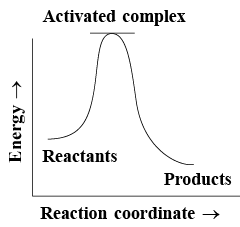
(ii) 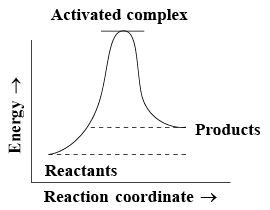
(iii) 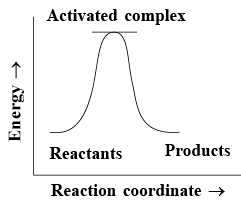
1. During the decomposition of gas on the surface of a solid catalyst, at constant temperature the pressure of the gas at different time was observed to be as follows:
Then, what would be an order of reaction ?
2. If concentration of reactant changes from 0.03 M to 0.02 M in 25 seconds, then average rate of that reaction will be ______.
3. In the reaction 2A + 3B → C + 4D, the rate of formation of product D is ______ times than that the rate of decrease in concentration of reactant B.
4. The units of rate of reaction are:
5. 2N2O5 4NO2 + O2
For the above reaction which of the following is not correct about rate of reaction?
6. On addition of AgNO3 to NaCl, white ppt. occurs:
7. Observe the following reaction,
2A + B → C. The rate of formation of C is 2.2
× 10
–3 mol L
–1 min
–1. What is the value of –

(mol L
–1 min
–1) ?
8. For reaction 2A + B → 3C + D
Which of the following does not express the reaction of rate?
9. The differential rate expression for the reaction H2 + I2 → 2HI is:
10. In the reaction
 (aq) + 5Br–(aq) + 6H+ → 3Br2(l) + 3H2O(l)
The rate of appearance of bromine (Br2) is related to rate of disappearance of bromide ions as following:
11. For a reaction, A+ 2B → C, rate is given by +

= k[A][B], hence, the order of the reaction is:
12. The rate of chemical reaction:
13. For a reaction

A → 2B, rate of disappearance of 'A' is related to the rate of appearance of B by the expression:
14. For a chemical reaction 2X + Y → Z, the rate of appearance of Z is 0.05 mol L–1. The rate of disappearance of X will be:
15. For the reaction
N2 + 3H2 2NH3
The rate of change of concentration for hydrogen is 0.3 × 10⁻⁴ M s–1. The rates of change of concentration of ammonia is:
16. The reaction; N
2O
5 in 2NO
2 +

O
2(g) is of first order for N
2O
5 with rate constant
6.2
× 10
–4 s
–1. What is the value of rate of reaction when [N
2O
5] = 1.25 mole L
–1 ?
17. For the reaction N2 + 3H2 → 2NH3, the rate
= 2 × 10⁻⁴ M s–1. Therefore, the rate
– is given as:
18. The rate of a reaction is expressed in different ways as follows:
The reaction is:
19. For the reaction, Cl2 + 2I– → I2 + 2Cl–, the initial concentration of I– was 0.20 mol L–1 and the concentration after 20 min was 0.18 mol L–1. Then the rate of formation of I2 in mol L–1 would be:
20. For the reaction, N
2O
5 → 2NO
2 +
O
2
Given, – = k1[N2O5]
 = k2[N2O5]
and  = k3[N2O5].
The relation in between k1, k2 and k3 is:
21. The rate constant for the reaction,
2N2O5 → 4NO2 + O2 is 3.0 × 10⁻⁵ s–1. If the rate is 2.40 × 10⁻⁵ then the concentration of N2O5 (in mol/L) is:
22. Among the following reactions, the fastest
one is:
23. For the reaction A + 2B → C, the rate of reaction at a given instant can be given by:
24. The ionic reaction are usually very fast because:
25. In a reaction 2A → Products; the concentration of A decreases from 0.5 mol litre–1 to
0.4 mol litre–1 in 10 minute. The rate of reaction during this interval is:
26. In the synthesis of ammonia by Haber process, if 60 moles of ammonia is obtained in one hour, then the rate of disappearance of nitrogen is:
27. The rate constant of a first order reaction is
3 × 10⁻⁶ per second and initial concentration is 0.10 M. Then the initial rate of reaction is:
28. For the reaction N2(g) + 3H2(g) → 2NH3(g) under certain condition of temperature and partial pressure of the reactants, the rate of formation of NH3 is 10–3 kg hr–1. The rate of conversion of H2 under same condition is:
29. With increase in temperature, rate of reaction:
30. In a gaseous phase reaction:
A2(g) → B(g) + (1/2)C(g), the increase in pressure from 100 mm to 120 mm is noticed in 5 minutes. The rate of disappearance of A2 in mm
min–1 is:
31. The branch of chemistry which deals with the reaction rates and reaction mechanism is called:
32. For the reaction A → B, if rate increase by 100 times on increasing concentration of reactant A from 0.1 M to 1 M. then what would be an order of reaction ?
33. The rate law for a reaction A(g) + B(g) → Product (takes place in a close vessel) is
rate = k[A]2[B]. If the volume of vessel becomes half then what effect will be observed in the rate of reaction?
34. The value of rate constant for reaction
A + B → Product is 4.5 × 10⁻² lit. mole-1 sec-1. If the concentration of A increase by two times the rate of reaction becomes half, then what will be increase in rate of reaction if concentration of B is doubled ?
35. For which type of reaction the order of reaction and molecularity are same?
36. The value of rate constant for a reaction is 2.75 sec–1, then the order of reaction is:
37. For reaction 2SO
2(g) + O
2(g) 
Products,
if pressure of gaseous components is increased by three times then reaction rate:
38. In the reaction A → B if the concentration of A is doubled then the reaction rate increases by 1.59 times then what will be the order of reaction?
39. The value of rate constant for the reaction
A + B
→ Product is 1.25 × 10
-2 
sec
-1. if the concentration of A is doubled the reaction rate increases by two times, then what will be increase in rate of reaction if the concentration of B is increased by four times?
40. Units of rate constant of first and zero order reactions in terms of molarity M unit are respectively:
41. The reaction 2A + B + C → D + E is found to be first order in A, second order in B and zero order in C. What is the effect on the rate of increasing concentration of A, B and C two times?
42. The rate of the reaction
CCl3CHO + NO → CHCl3 + NO + CO is equal to rate k[CCl3CHO][NO]. If concentration is expressed in mol/L. The unit of k is:
43. The unit of rate constant of a third order chemical reaction is:
44. The rate law for a reaction between the substances A and B is given by rate = k[A]n [B]m. On doubling the concentration of A and halving the concentration of B, the ratio of the new rate to the earlier rate of the reaction will be as:
45. For the reaction H2(g) + Br2(g) → 2HBr(g). The experimental data suggest rate = k[H2][Br2]1/2. The molecularity and order of the reaction are respectively:
46. The following mechanism has been proposed for the reaction of NO with Br2 to form NOBr2 (NO(g) + Br2(g) NOBr2(g))
NOBr2(g) + NO(g) → 2NOBr(g)
If the second step is the rate determining step, the order of the reaction with respect to NO(g) is:
47. A reaction involving two different reactants can never be:
48. The burning of coal represented by the equation; C(s) + O2(g) → CO2(g). The rate of this reaction is increased by:
49. Which of the following statement is incorrect about the molecularity of a reaction?
50. For a reaction A + B → Products, the rate of the reaction was doubled. When the concentration of A and B were doubled, the rate was again doubled, the order of the reaction with respect to A and B are:
51. For the reaction A → B, the rate expression is r = k[A]n. When the concentration of A is doubled, the rate of reaction is quadrupled. The value of n is:
52. For a chemical reaction, ______ can never be a fractional.
53. If the rate of reaction A → B doubles on increasing the concentration of A by 4 times, the order of the reaction is:
54. The rate constant for a chemical reaction has units L mol–1s–1, order of the reaction will be:
55. Which statement about molecularity of a reaction is wrong?
56. If the volume of the vessel in which the reaction 2NO + O2 → 2NO2 is occurring is diminished to 1/3rd of its initial volume. The rate of the reaction will be increased by:
57. For a reaction A + B → C + D, if the concentration of A is doubled without altering the concentration of B, the rate gets doubled. If the concentration of B is increased by nine times without altering the concentration of A, the rate gets tripled. The order of the reaction is:
58. For the reaction, 2N2O5(g) → 4NO2(g) + O2(g)
If the concentration of NO2 increase by
5.2 × 10⁻³ M in 100 s then the rate of the reactions:
59. The rate of the reaction A → product, at the initial concentration of 3.24 × 10⁻² M is nine times its rate at another initial concentration of 1.2 × 10⁻³ M. The order of the reaction is:
60. Consider the reaction 2A + B → product
When concentration of B alone was doubled, the half-life did not change. When the concentration of A alone was doubled, the rate increased by two times. The unit of rate constant for this reaction is:
61. The rate of reaction between two reactants A and B decreases by a factor 4, if the concentration of reactant B is doubled, than the order of this reaction with respect
to B i:
62. Rate of reaction can be expressed by following rate expression, rate = k[A]2[B].
If concentration of A is increased by 3 times and concentration of B is increased by 2 times, how many times rate of reaction increases?
63. The data for the reaction, A + B → C;
The rate law corresponds to the above data is:
64. In a reaction, when the concentration of reactant is increased two times, the increase in rate of reaction was four times. Order of reaction is:
65. For a reaction A + 2B → C, rate is given by
r = k[A][B]2. The order of reaction is:
66. During the kinetic study of the reaction
2A + B → C + D following results were obtained.
On the basis of above data which one is correct:
67. For the reaction A → B, when concentration of A is made 1.5 times, the rate of reaction becomes 1.837 times. The order of reaction is
68. A reaction involving A, B and C as reactants is found to obey the rate law, rate = k[A]x[B]y[C]z. When the concentration of A, B and C are doubled separately, the rate is also found to increase two, zero and four times respectively. The overall order of the reaction is
69. In a chemical reaction two reactants take part. The rate of reaction is directly proportional to the concentration of one of them and inversely proportional to the concentration of the other. The order of reaction is:
70. _________ of a reaction cannot be determined experimentally.
71. What is the order of a reaction which has an expression rate = k[A]3/2[B]–1?
72. The rate of elementary reaction A → B increases by 100 times when the concentration of A is increased ten folds. The order of the reaction with respect to A is:
73. The order of a gaseous phase reaction for which rate becomes half if volume of container having same amount of reactant is doubled is:
74. Consider a reaction; aG + bH → Products
When concentration of both the reactants G and H is doubled, the rate increases by eight times. However, when concentration of G is doubled keeping the concentration of H fixed, the rate is doubled. The overall order of the reaction is:
75. In a reaction, the rate expression is,
rate = K[A][B]2/3[C]0, the order of reaction is:
76. Which one of the following statements for the order of a reaction is incorrect?
77. If the rate of reaction between A and B is given by, rate = K[A][B]n, then the reaction is:
78. In a reaction, A + B → Product, rate is doubled when the concentration of B is doubled, and rate increases by a factor of
8 when the concentrations of both the reactants
(A and B) are doubled, rate law for the reaction can be written as:
79. For a reaction between gaseous compounds,
2A + B → C + D
The reaction rate = k[A][B]. If the volume of the container is made

of the initial, then what will be the rate of reaction as compared to the initial rate?
80. In a reaction A + B → C, the rate expression is R = k[A][B]2. If the concentration of both the reaction is doubled at constant volume then the rate of the reaction will be:
81. For the reaction, 2A + B → products, the active mass of B is kept constant, and that of A is doubled. The rate of reaction will be then;
82. For the fourth order reaction, what is the unit of k?
83. For the reaction; 2N2O5 → 4NO2 + O2, rate and rate constant are 1.02 × 10⁻⁴ M sec–1 and
3.4 × 10⁻⁵ sec–1 respectively, then concentration of N2O5, at that time will be:
84. The rate of the elementary reaction,
2NO + O2 → 2NO2, when the volume of the reaction vessel is doubled:
85. If the concentration of reactants is increased by 'x' then rate constant k becomes.
86. The reaction X → product, follows first order kinetics. In 40 minutes, the concentration of X changes from 0.1 M to 0.025 M, then the rate of reaction when concentration of X is
0.01 M is:
87. For first order reaction,

= _____?
88. Mention the value of slope in the graph of rate of reaction versus time for zero order reactions.
89. By which formula the value of

can be found out for the first order reaction, where k = Rate Constant.
90. In the first order reaction R
→ P if the initial concentration of reactant is [R]
0, then what would be the concentration of the reactant left after time

?
91. For the first order reaction what would be the value of Y, if t96% ÷ ty% = 2?
92. What is the formula to find value of t1/2 for a zero order reaction?
93. For a first order reaction the graph log
[A] versus t is given below:
x is equal to
94. The rate constant of a first order reaction is 4 × 10⁻³sec–1. At a reactant concentration of 0.02 M, the rate of reaction would be:
95. The rate of first order reaction, A → Products, is 7.5 × 10⁻⁴mol litre–1sec–1. If the concentration of A is 0.5 mol litre–1. The rate constant is:
96. Half-life period of a first order reaction is 1386 seconds. The specific rate constant of the reaction is:
97. Which is correct about zero order reaction?
98. Consider the following statements, the rate law for the acid catalysed hydrolysis of an ester being given as: Rate = k[H+][ester] = k' [ester].
If the acid concentration is doubled at constant ester concentration:
I. The second order rate constant, k is doubled.
II. The pseudo first order rate constant, k is double.
III. The rate of the reaction is doubled. Which of the above statements are correct?
99. Half-life of two samples is 0.1 and 0.8 s. Their respective concentration is 400 and 50 respectively. The order of reaction is:
100. A reaction proceeds by first order, 75% of this reaction was completed in 32 min. The time required for 50% completion is:
101. The half-life period of a first order reaction is 1 min 40 s. Calculate its rate constant.
102. The halftime of a second order reaction is:
103. Acid hydrolysis of sucrose is:
104. Mathematical expression for t1/4 i.e., when (1/4)th reaction is over following first order kinetics can be given by:
105. The rate of first order reaction is
1.5 × 10⁻² mol L–1 min–1 at 0.5 M concentration of the reactant. The half-life of reaction is:
106. Which one is not correct?
107. In a first order reaction, the concentration of the reactant is decreased from 1.0 M to 0.25 M in 20 minute. The rate constant of the reaction would be:
108. In the reaction,
2N2O5 → 4NO2 + O2 initial pressure is
500 atm and rate constant k is 3.38 × 10⁻⁵s–1 after 10 min the final pressure of N2O5 is:
109. Half-life of a reaction is found to be inversely proportional to the cube of initial concentration. The order of reaction is:
110. For a zero order reaction:
111. The rate constant for the first order reaction is 60 s–1. How much time will it take to reduce the concentration of the reaction to
1/16 M value?
112. The unit and value of rate constant and that of rate of reaction are same for.
113. The time taken for the completion of 3/4 of a first order reaction is:
114. A zero order reaction is one:
115. For zero order reaction, the integrated rate equation is:
116. The half-life period of a first order reaction is 69.3 s. What is the rate constant?
117. A reactiotn has a rate constant of 0.5 mol–1 dm³ min–1. If initial concentration of the reactant is 0.2 mol dm–3, half-life of the reaction is:
118. A first order reaction is 20% complete in 10 min. What is the rate constant of the reaction?
119. The rate constant of a zero order reaction is 0.2 mol dm–3 h–1. If the concentration of the reactant after 30 min is 0.05 mol dm–3. Then its initial concentration would be:
120. For a reaction, x(g) → y(g) + z(g) the half-life period is 10 min. in what period of time would the concentration of X be reduce to 10% of original concentration?
121. For the first order reaction with the rate constant k, which expression gives the rate half-life period? (Initial conc. = a)
122. For a given reaction of first order, it takes
15 minute for the concentration to drop from 0.8 M litre–1 to 0.4 M litre–1. The time required for the concentration to drop from 0.1 M litre–1 to 0.025 M litre–1 will be:
123. At 500K, the half-life period of a gaseous reaction at an initial pressure of 80 kPa is
350 s. When the pressure is 40 kPa, the
half-life period is 175 s. The order of the reaction is:
124. The half-life period for zero order reaction
A → product, is 100 min. How long will it take in 80% completion?
125. In a first order reaction the concentration of reactant decreases form 800 mol/dm6 to
50 mol/dm6 in 2 × 10⁴ s. The rate constant of reaction in s–1 is:
126. The rate constant of a first order reaction whose half-life is 480 s is:
127. 2A → B + C; it would be a zero order
reaction when:
128. The plot between concentration versus time for zero order reaction is represented by:
129. In the first order reaction, the concentration of the reactants is reduced to 25% in one hour. The half-life period of the reaction is:
130. For a first order reaction, the initial concentration of a reactant is 0.05 M. After 45 min it is decreased by 0.015 M. Calculate half reaction time (

).
131. In the reaction A + B → products, if B is taken in excess, then it is an example of.
132. The ratio of the times for 99.9% of the reaction to complete and half of the reaction to complete is:
133. After how many second will the concentration of the reactant in a first order reaction be halved if the rate constant is 1.155 × 10⁻³ s–1?
134. The inversion of cane sugar into glucose and fructose is:
135. What is the two third life of a first order reaction having k = 5.48 × 10⁻¹⁴ s–1?
136. Order of radioactive disintegration reaction is:
137. The rate constant of a first order reaction is
6.9 × 10⁻³ s–1. How much time will it take
to reduce the initial concentration to its
1/8th value?
138. The
of the first order reaction is.
139. The time required for 100% completion of a zero order reaction is.
140. The thermal decomposition of a compound is of first order. If a sample of the compound decompose 50% in 120 min, then, what time will it take to undergo 90% decomposition?
141. For a first order reaction, A → products, the rate of reaction at [A] = 0.2 M is 1.0 × 10⁻² mol L–1 min–1. The half-life period for the reaction is:
142. For a first order reaction k = 100 s–1. The time for completion of 50% reaction is:
143. The rate constant for a first order reaction whose half-life is 480 s is:
144. For a reaction, the rate constant is 2.34 s–1. The half-life period for reaction is:
145. In a first order reaction A → B, if k is the rate constant initial concentration of the reactant is 0.5 M, then half-life is:
146. DDT on exposure to water decomposes.
Half-life is 10 year. How much time it will take for its decomposition to 99%?
147. A first order reaction is 20% complete in 10 min. Calculate the time for 75% completion of the reaction.
148. The half-life period of a first order chemical reaction is 6.93 min. The time required for the completion of 99% of the chemical reaction will be: (log2 = 0.302)
149. A first order reaction has a rate constant 1.15 × 10⁻³ s–1. How long will 5g of this reactant take to reduce to 3 g?
150. For the reaction,
A + 2B → Product.
The rate law is given by  = K[A]2⋅[B].
 If A is taken in large excess, the order of the reaction will be:
151. If rate of reaction doubles on increasing temperature by 10°C, then how many times the rate of reaction will be increased
if temperature of reaction increases to 50°C?
152. Which of the following is the correct relation for endothermic reaction?
153. Activation energy of a reaction is:
154. The activation energy for a reaction is
9.0 kcal/mol. The increase in the rate constant when its temperature is increased from
298K to 308K is:
155. In Arrhenius plot intercept is equal to.
156. The activation energy of a reaction is zero. The rate constant for the reaction.
157. According to the Arrhenius equation a straight line is to be obtained by plotting the logarithm of the rate constant of a chemical reaction (logk) against:
158. In respect of the equation k = Ae–Ea/RT in chemical kinetics, which one of the statement is correct?
159. Effect of temperature on reaction rate is
given by:
160. An endothermic reaction A → B has an activation energy of 15 kcal/mol and the energy of reaction is 5 kcal/mol. The activation energy for the reaction B → A is:
161. The Arrhenius equation expressing the effect of temperature on the rate constant of reaction is:
162. The rate constant of a reaction at temperature 200K is 10 times less than the rate constant at 400K. What is the activation energy (Ea) of the reaction?
163. Activation energy of a chemical reaction can be determined by:
164. The rate constants k1 and k2 for two different reactions are 1016 e–2000/T and 1015 e–1000/T, respectively. The temperature at which k1 = k2 is:
165. The activation energy of exothermic reaction A → B 80 kJ mol–1. The heat of reaction is 200 kJmol–1. The activation energy for the reaction B → A(in kJ mol–1) will be:
166. Temperature coefficient of a reaction is 2. When temperature is increased from 30°C to 100°C, rate of the reaction increases by:
167. The slope in Arrhenius plot, is equal to.
168. A first order reaction is 50% complete in 30 min at 27°C and in 10 min at 47°C. The energy of activation of the reaction is.
169. What is the activation energy for the decomposition of N2O5 as,
N2O5 2NO2 + O2,
if the values of rate constant = 3.45 × 10⁻⁵ at 27°C and rate constant = 6.9 × 10⁻³ at 67°C?
170. The rate constant of a reaction increases by 5% when its temperature is raised from
27°C to 28°C. The activation energy of the reaction is
171. Temperature dependent equation can be written as:
172. When a graph is plotted between lnk and 1/T for a first order reaction, a straight line is obtained. The slope of the line is equal to:
173. For the two gaseous reactions, following data are given;
A → B; k1 = 1010 e–20,000/T,
C → D; k2 = 1012 e–24,606/T.
The temperature at which k1 becomes equal to k2 is:
174. For a first order reaction A → P, the temperature (T) dependent rate constant (k) was found to follow the equation.
logk = –(2000)/T + 6.0
The pre-exponential factor A and the activation energy Ea, respectively, are:
175. In Arrhenius equation k = Ae–Ea/RT, the quantity – Ea/RT is referred as:
176. The rate of a chemical reaction doubled for every 10°C rise in temperature. If the temperature is increased by 80°C the rate of reaction increases by:
177. The rate constant of a reaction is given by
k = 2.1 × 10¹⁰ exp(–2700/RT). It means that,
178. The activation energy of a reaction at a given temperature is found to be 2.303 RT J mol–1. The ratio of rate constant to the Arrhenius factor is:
179. Chemical reactions with very high Ea values are generally:
180. The rate constant is doubled when temperature increases from 27°C to 37°C. Activation energy in kJ is
181. Effective collisions are those in which molecules must:
182. In a reaction, the threshold energy is equal to:
183. Collision theory is applicable to:
184. For producing the effective collisions the colliding molecules must have:
185. According to collision theory of reaction rates:
186. The minimum energy required for the reacting molecules to undergo reaction is:
187. Increase in the concentration of the reactants leads to the change in:
188. Which of the following theory is not related to chemical kinetics?
189. The minimum energy required for a molecule to take part in a reaction is called
190. Assertion : The rate of chemical reaction increases in the presence of catalyst.
Reason : Catalyst lowers the activation energy of the reactants.
191. Assertion : The hydrolysis of ethyl acetate with aqueous HCI is a pseudo first-order process.
Reason : HCl acts as a catalyst in the hydrolysis reaction.
192. Assertion : Mixing an aqueous solution of silver nitrate and sodium chloride immediately precipitates silver chloride.
Reason : Ionic reaction are very fast.
193. Assertion : For a first order reaction,

is dependent on the rate constant.
Reason :
For a first o
rder process, ∝ [R]0.
194. Assertion : Rate of a reaction is the change in concentration
of reactant or product per unit time.
Reason : Rate of reaction remains constant throughout the reaction.
195. Assertion : All collisions of molecules lead to the formation of products.
Reason : Reactant molecules do not undergo chemical change regardless of every collision.
196. Assertion : The rate of a reaction never depends on the concentration.
Reason : Lower the activation energy, faster the reaction.
197. Assertion : Not more than three molecularities are found.
Reason : The overall molecularity of a complex process is equal to the molecularity of the slowest step.
198. Assertion : For reaction
CHCl3 + Cl2 → CCl4 + HCl, Rate =
k[CHCl3] [Cl2] .
.
Reason : The rate of a reaction is always equal to the sum of the stoichiometric coefficients of the reacting species in a balanced chemical equation.
199. Assertion : Following reaction is first order reaction.
C12H22O11 + H2O  C6H12O6 + C6H12O6
Sucrose Glucose Fructose
Reason : Change in concentration of H2O is negated.
200. Assertion : A catalyst increases the rate of a reaction without causing any permanent chemical change.
Reason : A catalyst changes the free energy of a reaction and the equilibrium constant of the reaction.
201. Assertion : A complex reaction takes place in different steps and the slowest step determines the rate of the reaction .
Reason : Order of reaction and molecularity are always the same .
202. Assertion : With respect to any reaction, the order of reaction can be zero, positive, or fractional.
Reason : Increase in concentration of reactants or products does not decrease the rate of the reaction.
203. Assertion : 10°C in temperature increases For a chemical reaction rate constant become almost doubles.
Reason : t + 10°C, the fraction of molecules with energies equal to or greater than the activation energy doubles.
204. Assertion : The decomposition of gaseous ammonia on a hot platinum surface is a zero order reaction at high pressure.
Reason : For a zero order reaction , the rate of the reaction is independent of the initial concentration.
205. Assertion : In a reversible endothermic reaction the Ea of the forward reaction is greater than that of the backward reaction.
Reason : Increasing the temperature of a substance increases the fraction of molecules, which collide with energy greater than Ea.
206. Assertion : In a zero order reaction, if concentration of the reactant is doubled, half life period is also doubled.
Reason : Rate of reaction of zero order reaction is independent from concentration of the reactants.
207. Use the appropriate symbols T (True) and
F (False) for the following statements regarding chemical equilibrium.
(i) Concentration of reactant and product are constant.
(ii) Rate of forward and backward reaction are same.
(iii) The reaction is moving fast.
(iv) Factors like pressures and temperature are constant.
208. Select the correct option using T (True) or F (False) symbol for the following statements regarding Elementary reaction:
(i) It is a multi-step reaction.
(ii) Its rate constant is very small.
(iii) It has the same molecularity and order of reaction.
(iv) It is always endothermic . So it is a high temperature reaction .
209. Select the correct option using T for (True)statements and F for (False) statements given below.
(i) Molecularity means the sum of
mole-numbers of reactants in a balanced process.
(ii) Molecularity means number of molecules associated with slow step of the reaction.
(iii) Molecularity means order of reaction.
(iv) Molecularity can be defined only for elementary reaction.
210. Choose the correct option using T (True) and F (False) notation for the following statements:
(i) Rate = = k [A] [B] [C]
[C] Is rate equation for initial reaction.
(ii) Ionic reactions are instantaneous.
(iii) The unit of rate of reaction varies with the order of the reaction.
(iv) Every first order process is unimolecular.
211. Choose T (True) or F (False) for the following statements.
(i) Molecularity can be fractional.
(ii) Molecularity and order can be 0, 1,2 and 3.
(iii) For a gaseous reaction the rate of reaction depends on the pressure of reactant or product.
(iv) Integral rate equation is more practical than differential rate equation for determining rate of reaction.
212. Choose T (True) or F (False) for the following statements.
(i) Molecularity is a theoretical derivation, while order of reaction is practical derivation.
(ii) The value of molecularity is a positive integer, while the value of order of reaction can be positive, negative or zero.
(iii) The molecularity explains the methodology of the reaction , whereas the order does not provide any information about the methodology.
(iv) Order of reaction and molecularity are same for elementary reaction.
213. Choose T (True) or F (False) for the following statements depending on the order of reaction.
(i) The molecularity of a second order reaction can be two.
(ii) The value of the order of reaction can be positive, zero, negative or fractional and is determined experimentally.
(iii) Reaction of higher order are rare.
(iv) The order of reaction increases with increasing temperature.
214. Choose T (True) or F (False) for the following statements related to the order of reaction:
(i) Order of reaction increases with increasing temperature.
(ii) Higher order of reaction are rare.
(iii) The order of reaction depends on the concentration of the product.
(iv) The overall reaction order of
H2 + Br2 → 2HBr is 2.
215. For the reaction A2(g) + 3B2(g) → 2AB3(g) use notation T or F depending on the statements given below. (Molecular weight of A = 14, Molecular weight of B = 1)
(i) When 7 g of A is used 17 g of AB3 is produced.
(ii) when 28 g of A is used 34 g of AB3 is produced.
(iv) – 2  = +
= + 
216. Choose the correct option using T (True) and F (False) notation for the following statements.
(i) The cooking time of rice in a closed pressure cooker on a mountain top or at sea level is the same at both places.
(ii) Bornvita powder dissolves faster in milk than frozen Bornvita pieces.
(iii) Catalysts reduce the amount of energy that has to be supplied externally to the reaction.
(iv) The rate of reaction is same whether the reactant is in liquid state or gas state.
217. Determine the statements True (T) and
False (F), for the first order reaction,
2N2O5 → 4NO2 + O2.
(i) The concentration of the reactant decreases exponentially with time.
(ii) Both the half-time of the reaction decreases with increasing temperature.
(iii) The half-time of the reaction depends on the initial concentration of the reactant.
(iv) The reaction proceeds to 99.6% completion in eight half-life duration.
218. Determine the True (T) and False (F) statements from the relationship between the rate of consumption of A and the rate of production of B for the reaction
A → 2B.
219. When can nitrogen and oxygen combine? Determine the True (T) and False (F) statements for it.
(i) A collision between N2 and O2 must occur.
(ii) The molecules do not need to have maximum total activation energy.
(iii) The molecules must have a minimum amount of kinetic energy.
(iv) The molecules must have the proper orientation.
220. The rate equation for the reaction 2A + B → C is found to be: rate = k [A] [B] determine the statements True (T) and False (F).
(i) The value of k is independent of the concentrations of A and B.
(ii) Unit time of k is sec–1.
(iii) The half-life time of the reaction is constant.
(iv) The rate of production of B is twice the rate of consumption of A.
Class 12 Chemistry (Part 1) 014